

A Conversation with Tammy Oberhausen
Author of The Evolution of the Gospelettes

Tom: The Evolution of the Gospelettes is the book and Tammy Oberhausen is the author of this historical novel about a religious Kentucky family that spends decades performing together, even if everybody is hardly on the same page over most of that time. Tammy, thanks for joining us.
Tammy: Thank you for having me.
Tom: First of all, where is home?
Tammy: I now live in Bowling Green, Kentucky. I've been living there for quite a long time. And I'm from near there, Russellville.
Tom: What brought you around to writing this book? What was the initial spark?
Tammy: It's so hard to remember because it was so long ago when I started it.
Tom: You were in your 20s, right?
Tammy: Yeah. It was the early ‘90s, and I was actually living in Lexington at that time. And I don't know what exactly sparked it. It may have been a little homesickness. I mean, homesickness is not just for a place but as Silas House puts it, time sickness [is] for a particular time. I grew up listening to gospel music at home and at church. My mother had it on all the time on the radio. And I think that so much had changed in those intervening years from when I remember listening to it in the early ‘70s, when I was a child, to that time period. And it was just kind of a longing for another time. All the changes that I'd seen over those years came together in this story with these characters. I was thinking, well, what would it be like for a family of gospel singers to encounter all this cultural change that we've all been through?
Tom: So, that's a teaser for the story. Tell us more about the story.
Tammy: It starts in 1972 when Garland Holliman hears his three daughters harmonizing in the kitchen while they're doing the dishes. And he gets this idea that they should start a family gospel group. So, that's what they do. It's Garland and his wife, Big Jean; and their twins, Jeannie and Junior; and the younger daughters, Debbie and Patty. They start singing at their own church. Then they start traveling around Kentucky and they start out in the region.
They start out as just old-time gospel singers. And there are a lot of changes, of course, going on at that time. It's kind of like the '60s finally showed up in small-town Kentucky in the early ‘70s. And so, they're dealing with all those changes in society and their kids, what they're up to. Then we get into the ‘80s and they are part of a televangelist's program. He's kind of a shady preacher that they've gotten hooked up with. And then into the ‘90s when they start a megachurch on their family farm.
Tom: Is the Holliman family based on anybody you know?
Tammy: No, it isn't. Maybe just a lot of people I know, but no one in particular.
Tom: Kind of a compilation.
Tammy: Yeah. Yeah.
Tom: Well, that term "evolution" in the title implies that we're going to follow this family, as you just implied, through a lot of changes as this story unfolds from the ‘70s into the ‘80s and the ‘90s. An awful lot happened in the world and society over those decades. Was it difficult to contain a story over such a span of time and events?
Tammy: It kind of was. And I actually had a couple people that I respected advise me to narrow it down to maybe like one year or one summer. That would be so much easier to manage. And I’m sure that's true, but I think all along I saw it as a story about evolution. And that takes time, whether it's the evolution of an individual, the family, their town, the whole country and just the evangelical church in America. There were so many changes over those decades, and that was really what I wanted to write about.
Tom: I understand that you turned to Vestal Goodman of the Happy Goodman family as a model for your main character, Jeannie. Why Vestal Goodman?
Tammy: Yeah. Not so much her in terms of her thinking, maybe, because Jeannie does kind of depart from her family over these years and starts to see things differently, but definitely her singing style.
I think she's just one of the most powerful voices in gospel music, and so I really wanted Jeannie to have that kind of voice that is just so powerful it grabs every listener.
Tom: Is there a particular Vestal Goodman song that we could dip into just to give our listeners a sense of that sound?
Tammy: I think “The Eastern Gate” is a great one. It still gives me chills when I hear it.
Tom: People of faith are often made into caricatures in literary fiction, stereotyped, yet yours are so three-dimensional. How did you do that?
Tammy: Well, that was really important to me because I have seen those portrayals. I think we've all seen them come out of Hollywood and out of publishing, I guess you would say New York City publishing, and I wanted them to be more nuanced. I wanted them to be more complex than that, which is one reason that I’m so happy that Silas House has this imprint at the University Press of Kentucky, Fireside Industries, that I published with, because that's really the mission that they have for literature, is to have stories that are about complex, nuanced characters, not stereotypes.
How did I do that? Well, I mean, I'm writing about the culture that I grew up in and the people that I know, so I know what they really are, what they really are like. So I guess I was drawing more on that rather than on other models.
Tom: Having Silas House as an editor must have been wonderful.
Tammy: Yes.
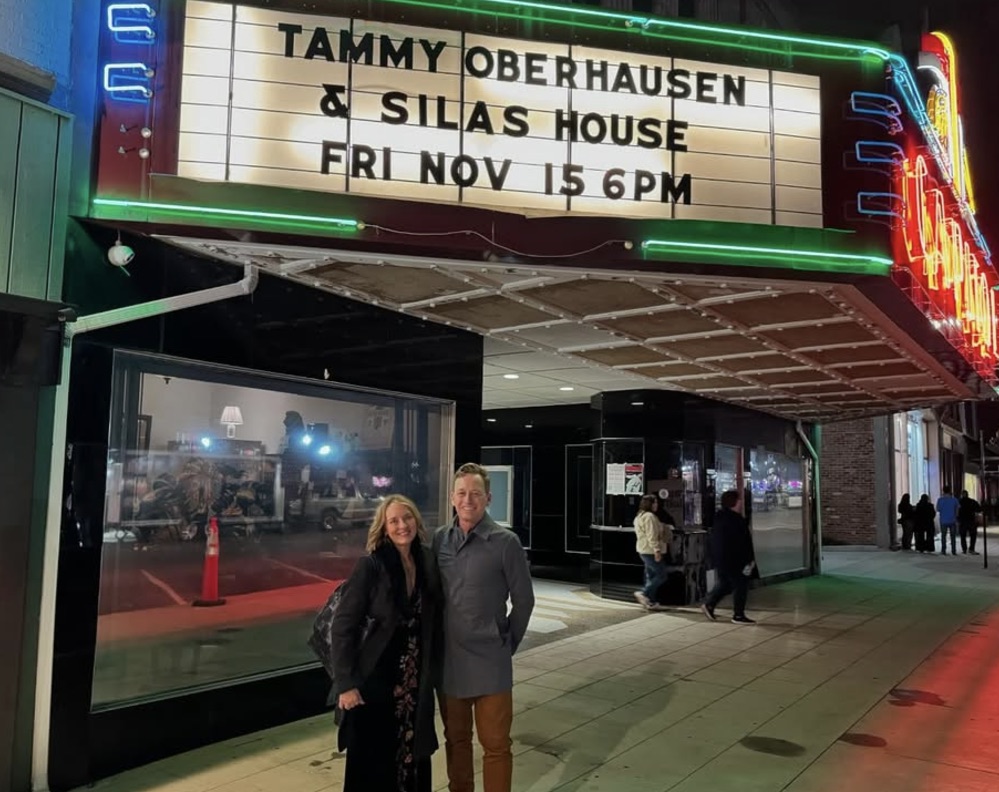
Tom: First of all, he was my mentor at Spalding University for my last semester there when I was getting my MFA and then my editor, so I feel very, very fortunate. Just the example that he sets as a writer and the way that he thinks about writing — I mean, I may be speaking for him when I say this, I don't know how he thinks about it other than what he has taught us as a teacher, but in a lot of ways it felt like he — it's like a mystical or spiritual experience when he's writing, not just writing a story, not just coming up with characters in a plot, but really embodying those characters.
Like he has these exercises where he will go into the character, and even, I remember one time him talking about getting shoes that the character would wear and walking around outside in the woods like this character would. That's really going above and beyond.
Tom: And you touched on something else about Silas that is even a larger issue for all of us in Eastern Kentucky, and that's the narrative that goes out there about the people of Appalachian Kentucky. And so, I take it from what you were saying that that's important to you too.
Tammy: Yes. I'm from South Central Kentucky, so it's kind of the Western border of that Appalachian region, not the mountains. So, it is a different part of Kentucky, but a very similar culture, certainly. And I think culture, like animals and plants, don't really care about our man-made borders. But yeah, I was certainly aware that I wanted to create characters that felt real, that were nuanced, as I said. And I know that that's very important to Silas as well.
Tom: Getting back to the book and some of the challenges that you encountered, I know that exploring issues of faith can be among the most challenging things a novelist can do. Did you find that difficult?
Tammy: Yeah. I think I would not have chosen that if I were choosing subject matter. I feel like it chose me. We had a book launch in Bowling Green right after the book came out, and Silas actually had a conversation with me there. And he asked, you know, about choosing faith. And I said, "Well, did I?" You know, I don't think I did. I would have chosen, I don't know, whatever's popular now, vampires or something, something that would sell.
But it felt like it chose me. And so, I had to make it as honest as I could, which is a challenge, especially when you want to do it right, you want to do these characters justice, you want to be honest, but also critical when you need to be. And that may be part of why it took me so long because I didn't want to do it wrong.
Tom: It's tough to get that one right too. Now, somehow, and I can just imagine people scooting to the edge of their chairs to hear what you have to say about this, but somehow, despite the arguments, the silent treatments, lack of communication sometimes, the fears and just the division in general, you find something that holds this family together, a tie that binds. Tell us about that connection.
Tammy: I think, of course, that it's love that holds them together. I think also the music binds them. They love the music, and they love the experience that they have when they're singing together. It is really a transcendent experience when they're singing together. So, that's part of it. And just that love and loyalty to family even when Jeannie, who is the protagonist of the story, kind of starts taking a different direction, starts seeing things differently, sees the televangelist that they're following in a different way than the rest of the family does, even when that happens, they still love each other. They still want to be there for each other. I feel like that's kind of—I mean, I know everybody loves family. It doesn't matter what part of the world you are from, but in Kentucky, it just seems like we have an especially strong family bond. We have a hard time leaving the state, leaving our people. And I certainly thought that that was true for the Holliman family.
Tom: Well, one thing I think it's important for our listeners to know is that this is a beautifully written book, and you move the story along with plot twists and such, but it's also very literary. And so, it has a foot in both worlds, the scholarly and the commercial. Was that balance intentional or does it really boil down just to a reflection of the way that it turns out that you write?
Tammy: I have bachelor's and master's degrees in English and then I got an MFA in creative writing, so I had a lot of great classic literature kind of in my head that I had studied, and I wanted to write a literary novel. That's the kind of novel that I like to read. I think I was also aware, though, that the marketplace demands that we tell a story that is engaging, that we want to try to sell books. That's important as well. And I think that was another reason that maybe that it took me so long, was figuring out how to do that because I feel like my education in writing was more about literary writing. And late in the revision stage, I took a Zoom workshop. Actually, it was in 2020 during the pandemic. And there was a Broadway director named Kristin Hanggi who did this workshop, and I took it, and she talked about the hero's journey and the save the cat method. I had always just kind of looked askance at those like that's formula. I'm not going to do that. But after that workshop, I took my novel and kind of laid it out on that format to see how it fit. And I saw, yes, I have all these steps, but what I didn't get was how long each step was supposed to take. Like I'm spending way, way too much time in the setup and not enough in the parts toward the end. I kind of blew through those. So, I had to figure out the pacing, the right pacing to make the story more engaging. Again, that didn't come naturally. I had to figure that out, but I'm glad that I learned that.
Tom: That attention to the process, does that explain why it took 30 years to write the book? I mean, it was three decades in the making. That's a long time to have an unfinished book sitting there calling to you every day, come finish me. Why did it take so long? I guess you've explained it in part here. And how did that process figure into your life?
Tammy: Yes. Part of it is just learning how to do it and learning how to write a novel. Even if you've read hundreds of novels, that doesn't mean you know how to do it yourself, and as I mentioned before, the subject matter being a bit daunting. I think back to when I was in my 20s. I think I had this mindset of I just have all the time in the world. I'll just take my time. I'm not worried about it. And then I got into my 30s, I got married, I had kids, I had a full-time job. It was just really hard to find the time, and not just the time, but more the mind space.
Because when you are writing a novel, I think it's different from shorter forms where you can dip in and out pretty easily. You really have to kind of immerse yourself in that world. And I found it very difficult to do when I had all these other things going on. I felt like I had three full-time jobs. I was working, I was raising a family and then I was trying to write. So, yeah, that's another. But people do that, and I would love to know how they do that. But it was very difficult for me. I think confidence is another thing that I had to really develop that I didn't have at the beginning. So, yeah, all of those things.
Tom: This may be getting the cart way before the horse, but it seems pretty cinematic. Any thoughts about a film adaptation?
Tammy: I would love that. I would love to see it as a series. I think it would make a really great series.
Tom: Where can our listeners find out more about you and about this book? Do you have a website?
Tammy: Yes. tammyoberhausen.com. Also, I have an author page on Facebook, Tammy Oberhausen. And on Instagram, tammyo.writer.