

“The ability to shape your voice, whether it’s as a friendly announcer or an odd character, comes from truly listening and understanding what the client wants.” — Laurie Preston
“Who Am I, Again?” — The Art of the Voice-Over

By David T. Miller
Contributing Writer
They’re all around you but you rarely see their faces. From the public address system echoing across a crowded football stadium to the intimate reading of a favorite poem, voice artists occupy a unique place in our collective imagination. Why are their voices so memorable? Are we engaging with the sound through a different part of the brain? We forget the name of someone we've just met, but have instant recall of a voice from an annoying commercial.
UnderMain Contributing Writer David T. Miller reached out to a few Lexington voice artists to ask about their work. Featured are Melissa Reizian, Brad Wills, Ana Leon Bellamy, Carl Nathe and Kathie Stamps.
Click on the artist's name in the photo captions below to listen to a sampling of their voice work.
To start with you, Ms. Reizian, among many other credits, you’ve been the bilingual voice of a laundromat detergent dispenser and the voice that tells shoppers which cashier to go to at TJ Maxx, Burlington and Ross stores across the country. How does a person get into such an unusual line of work?
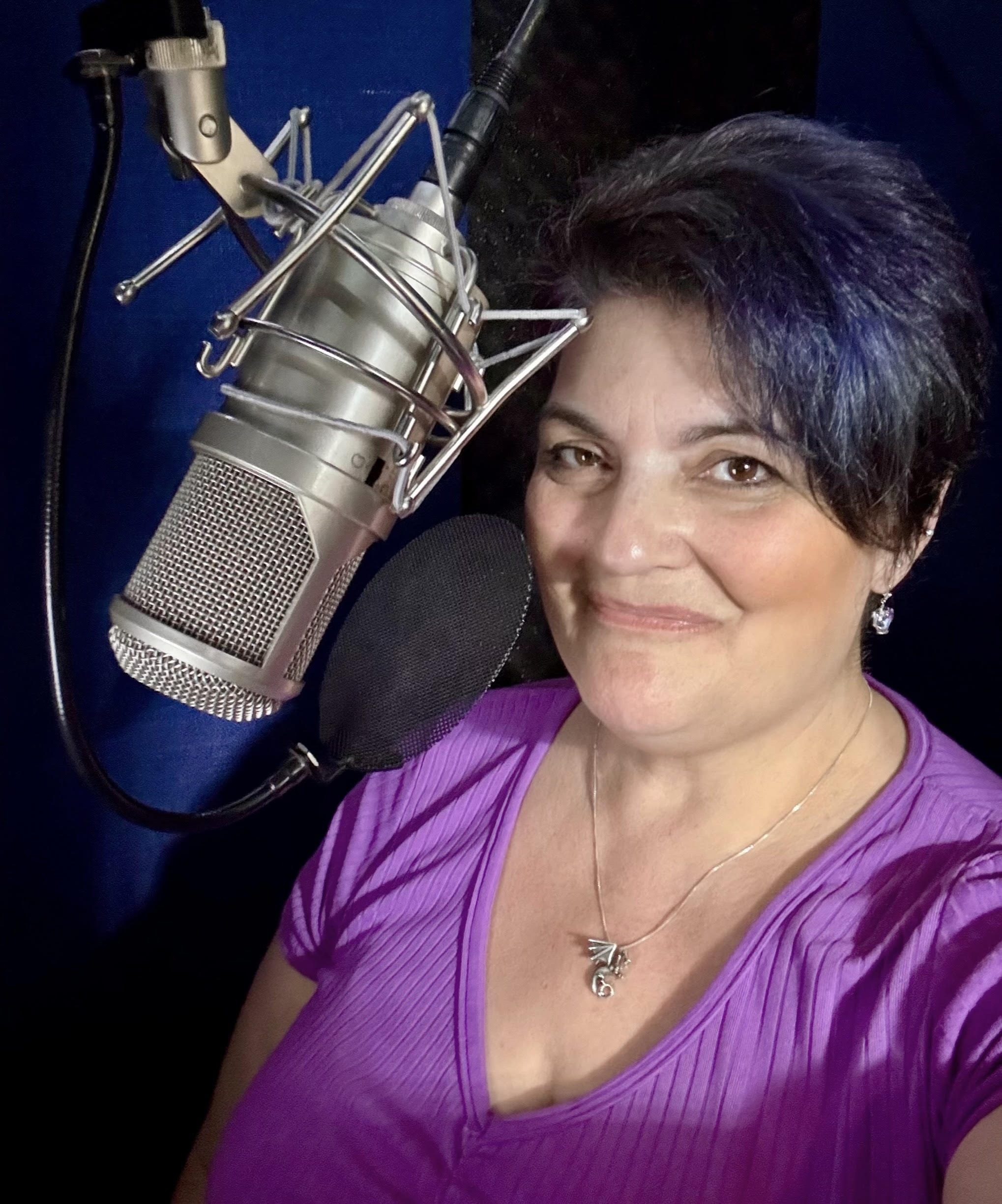
Melissa Reizian Healander has been a voice actor for 25 years, with hundreds of tv and radio ads, audiobooks, training videos
and e-learning courses to her credit. (Photo by Niko Reizian)
Reizian: I was a television journalist, most recently as a reporter and weekend anchor at WLEX in Lexington. When my oldest son was about a year old, I realized that the demanding and unpredictable schedule of a TV reporter conflicted with how I wanted to parent my children. I wasn’t satisfied with missing any part of their lives or letting a nanny help with homework. I started thinking about what I could do that allowed me to have a creative career but also be there for my kids. Viewers had often mentioned liking my voice and found it recognizable and I thought perhaps I could do what are called “news imaging” spots (“Tonight on LEX News at 6…”). I used my reporting skills to research voice-over as a career. I discovered that, (in late 2000), station imaging work was done by a handful of voice actors — predominantly booming-voiced men — around the country. I decided to expand my scope to include any type of voice-over — commercials, narrations, e-learning and more.
Stamps: I was a disc jockey back in the day. Voicing radio commercials was part of the job, and I enjoyed the performance aspect of that.
Nathe: I got my start as a public address announcer in high school and then went into radio and television broadcasting, mostly as a sportscaster. In addition to being the public address announcer at UK for almost three decades now, I’ve served as a host and producer of "UK News Report" on television, as a reporter for TV half-time segments during UK football and basketball games, and host and producer of the radio feature "UK at the Half." In the past, I also acted as emcee for significant university announcements and events but am mostly retired now.
Wills: I got into the business by pure happenstance. Long story short, it had never occurred to me to use my voice professionally, despite receiving numerous comments about it. After living in New York, I returned to Kentucky to care for my aging mother. I reconnected with an old college friend who was doing audiobooks in Louisville. She thought I might be good at it and offered to set me up with her engineer. I booked gigs almost immediately and things took off from there.
Preston: When I was in college, I was working as a waitress for Lexington restaurateurs Roy and Lucie Meyers. I heard Roy talking about putting together a series of radio spots. I said, “I could voice those for you.” He hired me and it took off from there. Now I’ve been doing it for over 30 years for local, regional and national clients.
Leon-Bellamy: I’m a math professor by profession, originally from Guatemala, but have been in Kentucky for almost 38 years, after a few years in Alabama. I came to audio work purely by chance when a client for [the local media company] Tower Communications needed a voice-over for the Spanish version of on-hold messages for State Farm and a regional discount store, ALCO. I only do voice-over work occasionally; it's never been anywhere near a full-time job for me.
Miller: Do you have a background in theater?
Wills: I had done children's theater in Lexington in my early mid-teens, then took a long hiatus until college at the University of Kentucky, when I was a cast in a three-character mainstage play despite not being a theater major. It snowballed from there to a stint at the American Academy of Dramatic Arts in New York City, through a return to UK, [where I] majored in vocal performance — even though I'd never had a vocal lesson in my life! — and a leap of faith return to New York City when I was 32, during which I booked the first thing I auditioned for. And I had a really good twenty-year run that included a show on Broadway and three national tours, among other things.
Preston: I have a BFA in acting and still do a lot of stage, film and commercials in addition to my voice work.
Reizian: I did theater throughout my life: starting with Miss Hannigan in “Annie” in third grade, and most recently Miss Shields in Woodford Theatre’s production of “A Christmas Story: [The] Musical.” I was a theater minor in college and have supported my kids in all their school and community productions for the past 20 years. I plan to audition for shows in the future, but, at the moment, I’m rehabbing two brand-new knees!
Miller: How do you go about your voice work? And how much do you shape the content of the work?
Reizian: The client usually communicates what type of vocal style they have in mind. Sometimes they show me a rough cut of the visuals, so I can get an idea of pacing. Hearing any music involved helps too. If it’s a live session, we just record takes until the client is satisfied, and my job is done. If it’s not a live session, I record the audio (usually multiple takes in slightly different styles for a commercial), edit out breaths or lower their volume, adjust for any pacing changes I think are needed, or re-record at a faster or slower pace if the script doesn’t fit the requested time.
Preston: Every session brings new opportunities for direction from clients. The ability to shape your voice, whether it’s as a friendly announcer or an odd character, comes from truly listening and understanding what the client wants. The challenge for me is always finding a way to deliver or surpass the client’s needs in a way that makes it as effective as possible. To do that, you have to be able to hear yourself clearly and shape the tone and sound quickly. Sometimes I need to contort my body or face to do that. I don’t care if it looks funny if the sound is right.

Laurie Genet Preston is an actress, director and producer in Lexington theater as well as a radio host. (Photo by Greg James)
Wills: I've been lucky to have found authors who trust me with their work, and we've built up strong collaborative work relationships. When we start on a new project, I ask for a character breakdown with a brief description of each, which helps create an anchor point. I record with my ace engineer, Neil Kesterson of Dynamix Productions in Lexington, usually by myself in the booth and taking notes as I go, and Neil takes my very rough sessions and whittles them into shape. He's an invaluable asset.
Miller: How did you learn to work with audio?
Reizian: I very much learned on the job. I loved video editing, which was one reason I wanted to be a “one (wo)man band” at WLEX. I hadn’t edited audio since my journalism school days, where we physically spliced tape, so I asked a lot of questions in online audio forums about the process. I credit my journalism background with being able to find the right people to ask. Lots of my questions would begin with, “In layman’s terms…” I was constantly wondering if the key to getting more work was better audio equipment or better vocal coaching. (Spoiler alert: the answer is almost always coaching.)
Wills: My first engineer, the late Joel Timothy, guided me through the whole process of that first audiobook and taught me everything I know. I'd never even listened to an audiobook before, but had a knack for it, including an innate sense of mic technique. No idea where it came from.
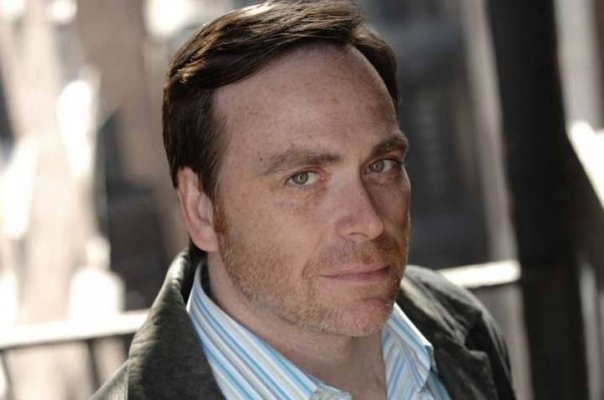
Brad Wills works in audiobook narration, voicing more than 100 titles. (Photo by Arthur Cohen)
Miller: Do you have a home studio?
Wills: I don’t. Tech work is best left to the pros in that field.
Preston: I have some basic equipment, but I tend to use it for audition purposes. I work with local producers and studios to get the final product.
Stamps: I don't have a home studio. For voice-over work, I record in [the free software program] Audacity on my laptop, using a desk microphone and headphones, sitting on the bed with a sheet over my head. For my podcast, I sit at a desk like a human and record on Zoom, using a desk mic and headphones. For a thirty- or sixty-second commercial, I record all the way through and then go back section by section. For a narration, I typically do one section at a time. If I'm sending a voice-over to someone else for editing, I still clean it up by deleting any extraneous noise…I prefer being directed, especially in a recording studio like Dynamix Productions.
Reizian: I do have a small studio. Home studios were just beginning to be accepted by voice-over clients when I started, so, on the one hand, my pool of potential clients was somewhat limited, but on the other, I was coming in on the ground floor. At first, I used a bedroom closet with a blanket for a door and some audio foam inside. That didn’t last long — the most important thing for finding work is being able to create broadcast-quality audio, so I invested in a small sound booth.
Miller: Do you ever ask permission to adjust the copy you’re asked to read?
Nathe: In my experience, any client/producer who is interested in having the finished product sound the way he or she wants it will be totally open to a give and take with the narrator/announcer.
Preston: Some things that work on the page are awkward when spoken. I’ve found that most clients are happy to listen to some restructured phrasing if it gets the message or dialogue out more clearly and naturally.
Wills: Just about every single time I’ve suggested changes to the copy or the approach. One of the things I tell authors is that there's a huge difference between the written word and the spoken. What looks good on paper might not sound so terrific. Unintentional rhymes, for instance, or some syntax that makes a sentence confusing to the listener. Fortunately, all my authors have been amenable to any small changes I suggest in those instances.
Leon-Bellamy: The work I did for national companies, such as State Farm, was more straightforward, because it was somewhat technical and standardized; but I often needed to change the copy for the local company’s commercials — slang and some English idioms just don’t work in Spanish, and different words have different meanings in different countries. One word in Guatemala can mean something entirely different or even be offensive in another Spanish-speaking country, so that was challenging.

Ana Leon-Bellamy voices Spanish-language translations for telephone messaging systems. (Photo by Frank Becker)
Reizian: Whether I ask for changes in the script depends entirely on the client. Some of my clients have a definite rule that the script must be read as-is. In the case of an obvious typo, I’ll go ahead and fix it; but, if I’m just suspicious of a wording, I’ll usually give them an alternative reading of the sentence at the end of the audio file. When it comes to a script that’s just a little clunky, I try not to speak up unless asked. Sometimes in a live session, I’ll have three or four people from the creative team discussing how to cut down a script for time. Since I had to do this kind of thing frequently as a TV reporter, I’ll sometimes offer to try a cut a different way to see if they like it. You can usually get a feel very quickly for whether the client will be receptive to that, or if they just want you to read what they tell you.
Stamps: Copywriters usually don't want their words changed but I can't help myself sometimes, such as if there's a grammatical error that needs fixing.
Miller: How did you train your voice for this kind of work?
Preston: My voice has aged and deepened some but really has stayed pretty consistent. My stage training taught me to understand my vocal limits, and how to breathe properly and use my posture to create effect. Really, it’s about focus, breath and hydration. The fewer takes you have to do and the more repairs or errors [you] catch on the fly, go a long way to shortening a session.
Miller: How do you preserve your voice?
Nathe: I learned vocal exercises from some excellent people at the Voice and Swallow Clinic at the University of Kentucky/UK HealthCare, as well as breath control from being a member of the Lexington Singers.
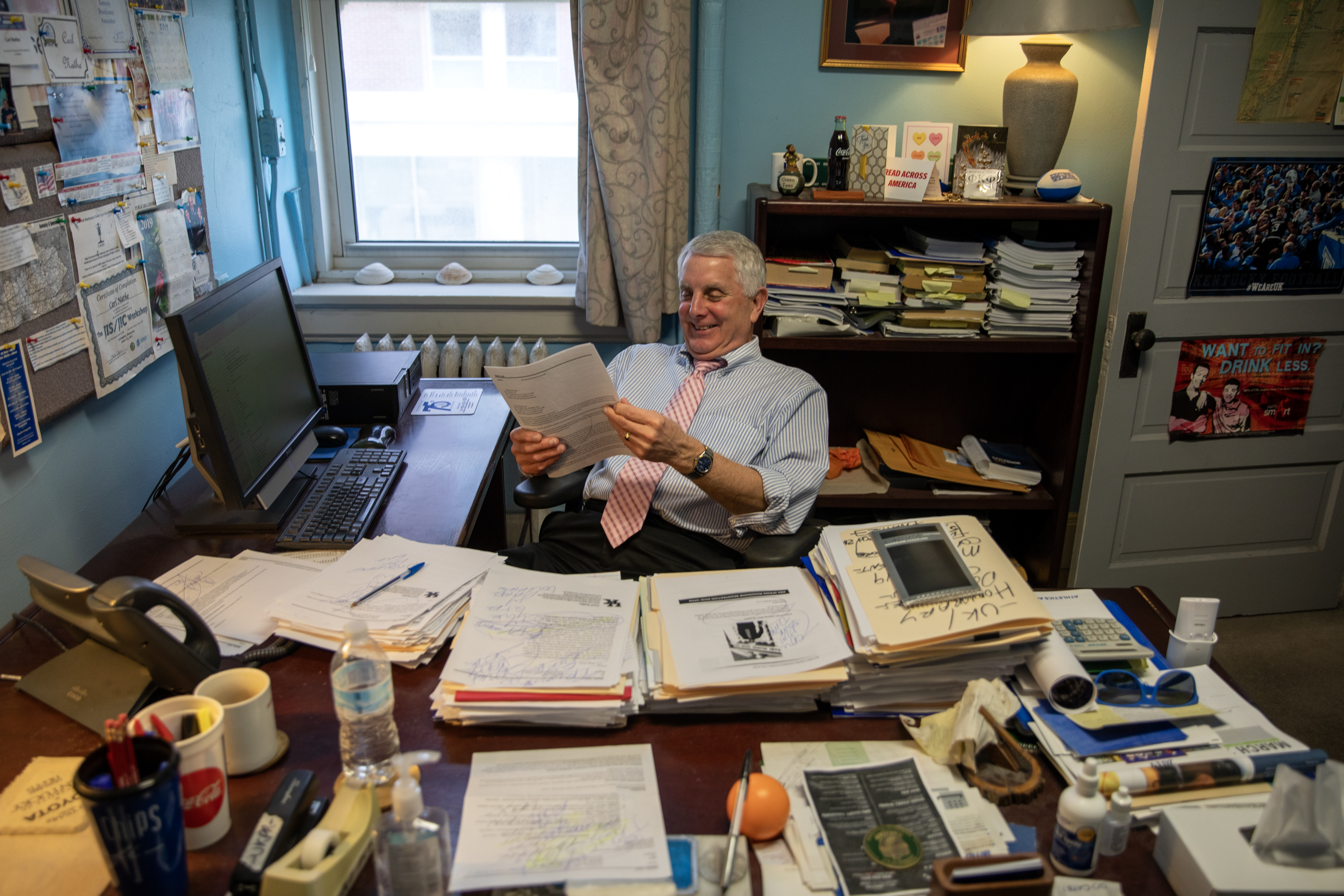
Carl Nathe is best known as the announcer for UK football games, after earlier work in broadcasting. (Photo by Mark Cornelison)
Wills: I don't do a doggone thing voice-wise [laugh]. For whatever reason, I've been blessed with good pipes. I don't do anything special, and they've never let me down. Even as a singer, I loathe warm-ups and find them a huge waste of time and energy. I prefer to just open my mouth and let the sounds come out. But that's just me. Others may find that process to be extremely beneficial.
Stamps: Before and during voice-over work, I drink black coffee or room-temperature water. Sugar is anathema to vocal cords. I practice deep breathing before recording (and throughout the day), not quite as formally as any of the yoga pranayama techniques, but close enough.
Reizian: I preserve my voice by trying not to do dumb things! Once I couldn’t record for a few days because I had screamed on a roller coaster with my kids. If I feel a cold coming on, I immediately start hydrating more (Throat Coat tea is a staple in my medicine cabinet). When sick, I use cough drops and medications so I don’t “drain” into my throat as much, because once the damage is done, it can take days to get back to full voice. Since I mainly work independently, I can record in multiple sessions and only go as long as I feel comfortable before taking a break.
Miller: What was (or is) your natural accent? Did you have to work to change that?
Preston: I was born in Kentucky but grew up in Indiana and Pennsylvania, so my natural accent tends to lean a bit Central Kentucky. But, because of my upbringing, I’ve always been fairly neutral and hard to place.
Wills: I was born in California and grew up in Kentucky. My parents were both from the hills of Eastern Kentucky and had heavy accents, but for some reason I didn't. I’ve been asked many times, “You're not from here, are you?" This was when regional accents were still quite prevalent even in metropolitan areas, so I may have had more of one than I knew.
Stamps: I was born in North Carolina and have lived in several states, mostly southern. I have a Kentucky-ish accent, but it goes away when there's a microphone in my face. There's just something about the mic that brings out the "neutral American accent” in me.
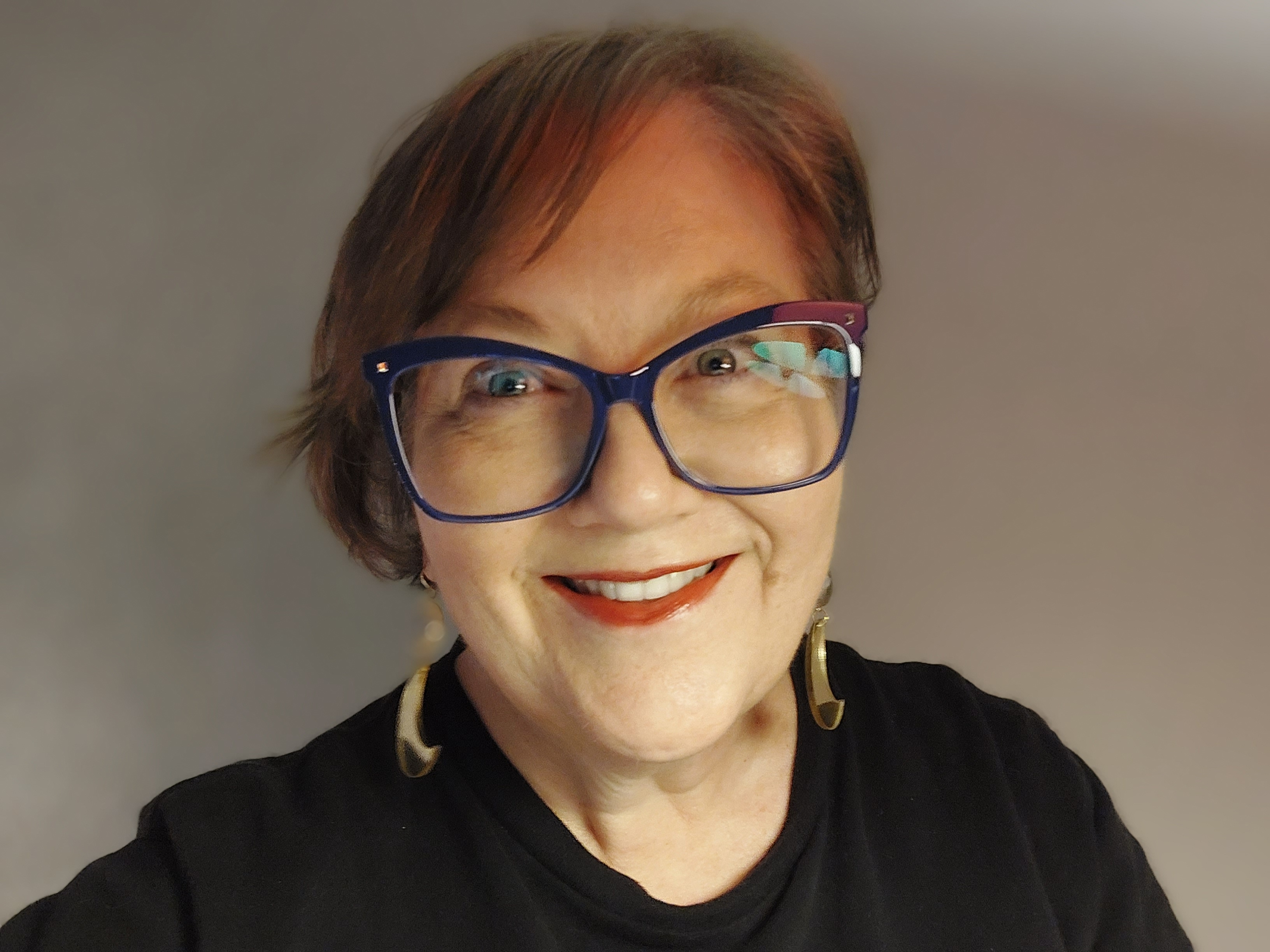
Kathie Stamps, a former dj and current podcaster, is a familiar voice of advertising, employee training and commercials.
Reizian: I’m from a suburb of Detroit. Listening back to recordings of my speech team days, reveals that, unbeknownst to me, I did have a rather thick Michigan accent. I lost it in journalism school at the University of Missouri-Columbia. I think between focusing on diction in journalism classes and theater, it just kind of happened.
Miller: How do you approach scripts that call for different dialects?
Reizian: The vast majority of my work by far is in my own voice, pitched or adjusted to match the desired tone of the piece. That said, there are times when a client will ask for an accent. I talk to the author about the pronunciations they have in their head for fictitious names or places and discuss whether they want “indications” of character voices or full-on, distinct voices. Some voice actors spend years with dialect coaches perfecting every suburb of England, for example, but I’m not one of them…But my acting training does allow me to play with my own voice, to the point where I can do distinct characters for audiobooks. And I’ve had tons of fun creating original accents for science fiction/fantasy books. I keep track of them all by creating audio files with the voice recorder on my phone. When I come to that character, to make sure I’m doing him or her the same way as I did four chapters previously, I listen to the recording and say the sentence that leads into the dialogue. And I learned the hard way to always read the copy in advance — I was narrating one of my first audiobooks and halfway through I found, to my surprise, that the author has a side character saying something “in his thick Scottish brogue.”
Preston: I’m always conscious of regional sound, but luckily, it’s always been easy for me to manage. I’ve played everything from a film noir femme fatale to a goat. I’ve been tasked to play all sorts of dialects from Cockney to Brooklyn.
Wills: I've been a mimic since childhood, always imitating people and doing silly voices. Likewise, I've had a facility for accents and dialects. The majority of my projects have involved affecting a British or Scottish accent, specifically in the historical romance genre for Kathryn Le Veque and Suzan Tisdale, among others, as well as for the high fantasy novels of Jonathan Moeller, which require a bizarre assortment of voices and noises for a huge array of creatures, monsters and plain old people. This isn’t something I like to analyze — someone says "accent,” I say "okay” and it just comes out.
Miller: How do you handle voicing characters of a different ethnicity or cultural background from yours?
Preston: I always recommend that dialogue be captured authentically. I’ve brought other colleagues in to do that work.
Reizian: If a commercial is specifically written so the listener knows it should be voiced by someone of a different race or ethnicity, I think the client should hire a voice actor who is of that race or ethnicity. If it’s a character in an audiobook, I will not use a voice that one might consider “stereotypical” or derogatory. I will give them a voice change, some distinction to make them a “recognizable” individual, just like any other character in the book.
Wills: Since voices have always been easy for me and having grown up in a very different socio-political era, I have to be cautious. Case in point, I recently did a book that had as a major secondary character a young Black man who was modeled after the comedian Kevin Hart. We had to tiptoe carefully around that, and [my producer] Neil and I took an entire test session to record some of his dialogue. Since I have no director, I often rely on Neil's ear when any potential issues come up. Here, it was crucial, and he kept suggesting that it needed to be dialed down lest it turn into an offensive stereotype. I asked the advice of numerous authors, Black friends and so on. But I was trepidatious about it.
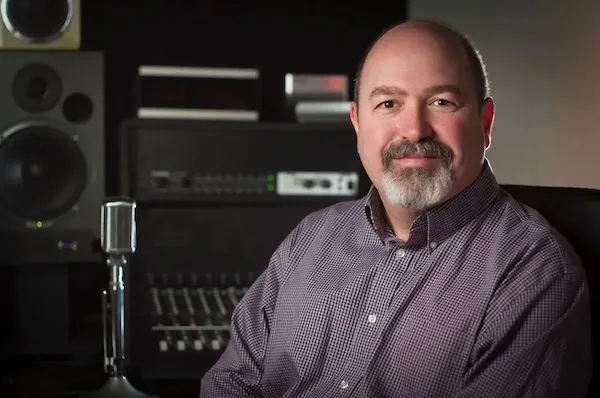
Neil Kesterson (Photo provided by Dynamix Productions)
Miller: Where can we hear your work?
Reizian: My website is www.YourChoiceVoice.com. It’s been more like a digital business card than something I actively market, as most of my clients find me on sites that have a number of voice actors to choose from, or from auditions from my agents. I’m an Audible-Approved Producer, which means the audio from my studio has been checked by engineers there and has “passed muster.” I have over thirty Audible titles as narrator. Also, each month I voice dozens of local and regional commercials around the country, and those sometimes run on television or radio in the Lexington area or as commercials on YouTube or streaming services, etc.
Stamps: I started a podcast called Writers Rotation in late 2023. (No apostrophe in “writers" because I decided to use the attributive form.) I'm also the telephone voice of Blue Grass Airport when you call and get a recording telling you to press this for that. I've recorded training modules for UK HealthCare employees, television commercials for Lexington Furniture, online videos for Kentucky Performance Products and vignettes for the past two Breeders' Cup race cards.
Preston: I’m the voice of the Visitors Center at Shaker Village currently and have narrated videos for Toyota, Pet Smart and local and regional non-profits.
Nathe: You can hear me during University of Kentucky football games and other UK-related events.
Wills: You can listen to my Audible books.
Artificial Intelligence in Voiceovers

AI is replacing human voices (Image: Shutterstock)
“One of the most popular ways that artificial intelligence is being used in voice acting is through ‘voice clones.’ Using speech synthesis tools, voice actors can clone the sound, vocal patterns and inflections they use in everyday speech for future projects. AI voices can also be generated by using already developed voices and editing their tone, timbre and emotion to produce a new, unique sound for use in audiobooks, video games and more.” — 11ElevenLabs
How Two of Our Guests View the Arrival of AI
Reizian: I hate it! First of all, we often hear the same “voice” over and over on Reels, etc., which gets old. Secondly, they can only “read” what they’re given. I roll my eyes when I hear incorrect words because of typos, wrong pronunciations of similarly spelled words or really bad intonations from AI that use the wrong em-PHA-sis on some words. It stands out like a sore thumb, and in my opinion, degrades the product associated with the voice. That said, as AI gets better and better and more accessible to the mainstream, I worry that people will use it more and more. That’s one reason I have started stressing “the human touch” in my work. An AI doesn’t take the time to call a business in your city because you’ve forgotten to tell me how to pronounce a proper name; I do. An AI doesn’t know that you’ve forgotten an obvious word in your script or repeated a phrase accidentally; I do. And I fix it or give you an alternate take. I think that as time goes on, customer service and caring about the product is what will keep clients from using AI.
Preston: I don’t believe the technology has caught up quite yet with the ability of the human voice for nuances , pace and emotional variety…but, of course, the market is always looking to find ways to be efficient and that may likely eliminate some areas of opportunity. I hope that the humanity of a live voice will still be attractive to invoke the depth of feeling needed for storytelling.
Your First Time? Some Tips From a Pro
We asked an audio engineer what advice he’d give to someone who has never recorded an audio piece before, but is called on to voice a training video or commercial. “Drink lots of water and avoid coffee or soda beforehand. Breathe deeply. Talk more slowly than you think you need to. Eat a red apple. When you go into a studio, wear cotton clothing and don’t wear lipstick or jewelry. And smile, because that comes through in your performance.” — Neil Kesterson