

Rosanne Cash: “Curious to a Pathological Degree”

Rosanne Cash (Photo by Pamela Springsteen)
In an interview for Eastern Standard on WEKU, Tom Martin's guest is Grammy-winning recording artist, author, poet, advocate and activist Rosanne Cash. Ms. Cash is performing at the Norton Center for the Arts at Centre College in Danville, Kentucky on Saturday, Feb. 15. You can read along as you listen. Note: the Q&A text has been edited for clarity and flow.
Tom: She describes herself as curious to a pathological degree. Her memoir, “Composed,” has been described by the Chicago Tribune as “one of the best accounts of an American life you'll likely ever read.” A best-selling author and poet, she recently became an honorary member of the American Academy of Arts and Letters. Her fiction and essays have appeared in the New York Times, Rolling Stone, the Oxford American, and she's frequently invited to teach classes in English and songwriting. And, inducted into the Nashville Songwriters Hall of Fame in 2015, she is a musician's musician who joins us from the latest tour of a more than 40-year journey as an artist, songwriter and storyteller, a tour that will bring her to the Norton Center in Danville, a WEKU supporter, on Sat., Feb. 15. So, it's quite an honor to welcome to Eastern Standard, Grammy-winning recording artist and author, Rosanne Cash. Welcome, Rosanne.
Rosanne: Good morning, how are you?
Tom: Great, great. You're beginning 2025 with the release of “The Essential Collection.” It's a 40-song, two-CD compilation that's drawn from a deep catalog of music, 10 number one hits among them. And that coincides with the Country Music Hall of Fame and Museum exhibit, “Rosanne Cash: Time is a Mirror.” I've read your memoir, “Composed,” and it's filled with accounts of a lot of big years in your life. There certainly have been many, but this one seems especially important. Is that a fair assumption?
Rosanne: It does seem like some big things are happening for me in the last year, this year coming up. This compilation that you just mentioned, the 40 songs in 40 years, basically, I had to be careful when we were putting it together. And also when the curators were putting together the exhibit at the Country Music Hall of Fame, I had to be careful in not looking at these things as an end-of-life review, you know? I mean, at my age, you go, "Oh, wow, this is a lot of work, and this is a lot of time. Is this it?" And no, I don't think it's it, but it is nice to take stock and to appreciate the work I put in in the last 40-something years.
Tom: The exhibit's title is interesting to me, “Time Is a Mirror.” Tell us about that.
Rosanne: Well, I have a little bit of an obsession with time, and the idea of time travel, and the idea that time doesn't move in a linear fashion, and that you step in and out of the stream of time and that time is happening all at once. And I've written about this in my songs and in prose, too, and it just interests me, the whole concept of time and where we are in it. And I think the curators after reading a lot of my work and talking to me, they thought "Well, this is an appropriate title for the exhibit."
Tom: The collection of music that you're releasing includes the 1981 hit, “Seven Year Ache.” There's a take on your father Johnny Cash's cover of Lefty Frizzell's “Long Black Veil.” You go even further back in time, almost a century, to the “1927 Bristol Sessions,” which are considered by many to be the most influential country music recordings ever. You go back that far to honor the Carter Family women with “Bury Me Under the Weeping Willow.” How did you go about making those selections? As you say, it must have been really tough.
Rosanne: Yeah, it was interesting. I mean, it was kind of obvious that we should include the number one records, that fans would want that to be part of a collection, and they were important milestones, definitely. But then pulling things that were deeply influential to me, the songs I recorded, like the one you just mentioned, “Bury Me Beneath the Weeping Willow,” I mean, the Carter women are who taught me to play guitar. And those were some of the first songs I learned to play on guitars, those old Appalachian ballads. So, that was important to include. “Long Black Veil” was on my album “The List,” which was taken from a list of songs that my dad made for me when I was 18 years old. So, that one was important. And then some that I was just proud of as a songwriter, you know, that may not have been a hit, but that were important to me.
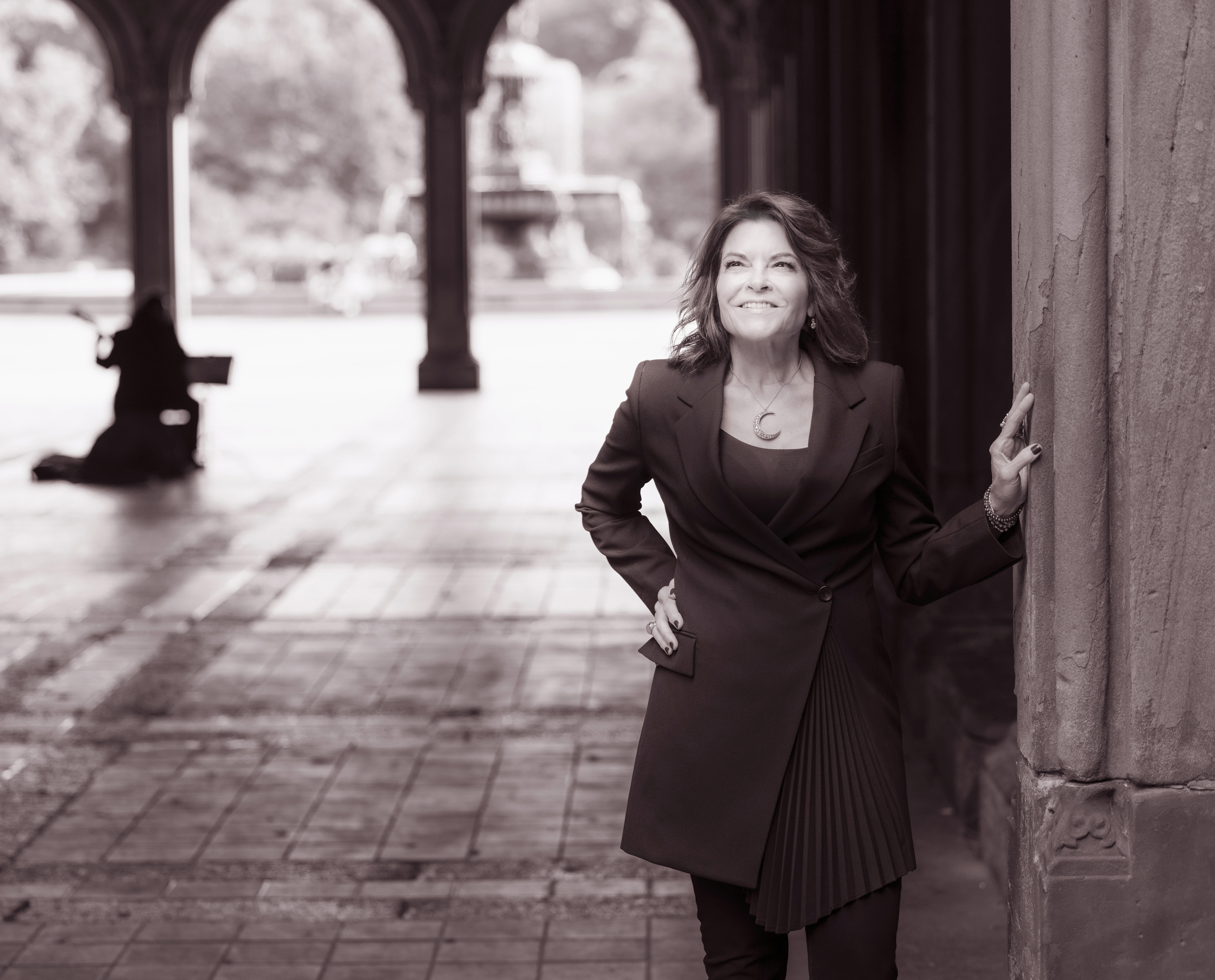
Rosanne Cash (Photo by Pamela Springsteen)
Tom: I want to ask you about something that I hope it's okay to talk about, because I think many of us can relate and are curious and need the information from somebody who's been through it. So, wave me off if you don't want to talk about this, but I know that you lived through a lot of pain and debilitating headaches, neck pain, stiffness for most of your adult life. And it took a lot of time to pin down the cause. The condition turns out to be one that is difficult to diagnose, something called, I think it's Chiari 1 malformation, is that correct?
Rosanne: Chiari.
Tom: And so, you tried everything: migraine medications, yoga, acupuncture, massage, chiropractic. Nothing seemed to work much. And then finally, in 2007, you opted for brain surgery. So, a couple of questions, if I may. First foremost, how are you?
Rosanne: I'm good. I am very, very lucky. I really don't have any deficits since the surgery.
Tom: Well, that's great to hear. And on behalf of many of us who have been advised to undergo some pretty scary surgery and have tried just about everything to avoid it, how did you bring yourself around to that decision to do it, to undergo brain surgery? How did you prepare?
Rosanne: The decision was really taken out of my hands because one neurosurgeon showed me my MRIs and he said, "You see that little trickle of fluid in your spine going into your brain?" I said, "Yeah." He said, "That's what's keeping you alive." And it was so compressed that it was limiting my life in way too many ways as pain, as you mentioned, but it was interfering with everything. I mean, my quality of life had diminished so much, and it was just the right thing to do. I could have lived on a shortened, kind of unhappy life without doing surgery, but it was the right thing to do. And it was scary. I had a lot of support, and then it took a long time to recover. But like I said, I'm so lucky I have no deficits. I don't have the pain anymore. It was the right thing to do.
Tom: You just said something I think is also important. What have you learned about giving yourself the time to recover? I think we all have a tendency to try to rush back into life, but you discovered that you needed time.
Rosanne: Well, I discovered the hard way. I mean, I had the surgery in November of 2007, and I had shows booked for March, thinking, "Oh, I'm resilient, I'm strong, I'll be fine by March." And not only was I not fine, I set myself back. And then my neurosurgeon, who I still talk to, I really adore him, he said, "Yeah, I thought you were kind of crazy for booking shows that soon." And I said, "Why didn't you tell me?" He said, "I thought you, you know — I was like surprised." But yeah, giving yourself time to recover, it's essential. You can set yourself back. And a lot of us who are type A, [think], you know, “Well, I'm resilient, I can do it, I can do it,” and you end up paying for it.
Tom: You have something important in your life that may have helped with that. And that is the healing quality of music.
Rosanne: Yes.
Tom: Talk to me about that.
Rosanne: Well, that's interesting you bring that up because this book has just come out that Renee Fleming edited called “Music and Mind.” And it's a lot of essays from people in different walks of life, some who are music therapists, some artists like myself, some who are scientists, all about how music affects the mind, and the body and the emotions. And I contributed an essay too about this very thing we're talking about, about brain surgery and about the healing power of music, but not as simple as that. Like, really, the depth of music and how it affects you on a cellular level and a spiritual level. And in the first several months after the brain surgery, I couldn't stand music with lyrics, like I didn't want to listen to words. I just listened to classical music or music without lyrics. And then I could gradually integrate lyrics back into it. But also, I did an unusual thing, which is that I still had my piano practice book from second grade. And I got it out and retaught myself all those pieces. And that was really helpful to me as well.
Tom: Oh, that's so interesting. Well, you've written that time hangs over you and how that pathological curiosity that I mentioned earlier, and the hourglass of life, make it feel more urgent than ever to connect, to find community, to create. What can you say to somebody who might feel that same sense of urgency, but doesn't quite know how to channel it?
Rosanne: Sometimes I don't know how to channel it. I feel incredibly urgent and then I don't want to do the work that's in front of me. I'm working on some songs right now. I'm stuck, I don't know where to go with it, and yet feel the urgency of it. I think taking a breath and pausing is really helpful. A cup of tea is helpful. Taking a walk, talking to a friend, stirring up the inspiration in other areas so you can bring it back to what you're working on. But the thing you talk about, about the urgency of time when you get older, it's like I'm not young anymore. I have more to say, but less time to say it. And it requires focus.
Rosanne Cash (Photo by 1ManGuy)
Tom: I know that you have a passion for social activism and advocacy for creator's rights, for children's causes, including education and gun violence prevention. And I'm wondering, what words of encouragement and maybe caution can you offer young artists who share that passion and want to write about it, but they fear that to go there with their music politicizes them and all that that can imply in this year of 2025?
Rosanne: I take comfort and guidance in what Toni Morrison said, which is that now is the very time that artists go to work, that now is the time we need to go to work. And I think that art and music are the antidote for hatred, and division, and so many ills of society right now, and so many ways people have felt emboldened to just be cruel to each other, that art and music are the antidote to that. And that staying true to that and keeping your head down and going to work, trusting your own instincts, that those things are really important. I feel really a lot of compassion for young artists, young musicians today, who are also fighting against digital platforms who don't want to pay them and who think music should be free and in the air. It's like you pay everybody else who provides a service. Well, musicians are in the service industry, particularly right now.
Tom: You've advocated for artists' rights to get paid fairly by Spotify and Apple and so forth. And I think you even testified before the House Judiciary Committee about this.
Rosanne: I did. I'm with a group called Artists' Rights Alliance, and it is about fair pay, fair play, fair play, fair pay, and getting paid by the streaming services. The streaming services are not music companies. They're big tech companies who have built billions on the backs of musicians who they don't want to pay. And it's not fair. And young artists are quitting left and right because they can't pay their rent. And that's a heartbreak. So, I'm fine. My colleagues are fine, but we're working in a garden. We may never see flower, but it's important to do it for young artists.
Tom: I wonder, has that technology and what it's done to music distribution, has that kind of taken the interest out of doing an album and instead focusing on song by song by song? Because albums themselves can be a story.
Rosanne: Yeah. I mean, that's interesting. I am old school and I am very interested in albums. And I was making an album several years ago, and I was on social media, and I was obsessing about the sequencing of the album, which in the world I grew up in, sequencing was super important. You wanted to see how an artist sequenced their album because, as you say, there was kind of a narrative to it, an arc to it. And I was obsessing about the sequencing and I said publicly, "Why do I care about this? Everybody just listens song to song separately." And I got back immediately a hundred comments. "I care. I care. I care. I want to know how you want to sequence this. Please, please keep obsessing about it."
Tom: Well, I would be remiss not to include some mention of your lineage as the daughter of Johnny Cash. And you write in your memoir, “Composed ” that you learned from your dad, as you put it: how to live with integrity as an artist day to day. So I can imagine the artist listening to us right now drawing closer to the speaker. What can you tell us about those lessons?
Rosanne: Well, in the most real life example, it's to show up for work on time. Don't make people wait for you. Respect your audience. If you're performing, don't ever forget what city you're in. Remember your audience used their discretionary income and got a babysitter and paid that babysitter to come out and see you. And you need to show up for them and not phone it in. Yeah, you may be sick of singing your big hits, but they're not sick of hearing them. And it's one reason they came. So, don't do them the disservice of not playing them. Just kind of real world things like that. But then, you know, in the larger picture about not doing things for commercial reasons, to let it come from your own truth, and your own instincts and your own sense of who you are and what you do best, not because some record label person told you you should do this.
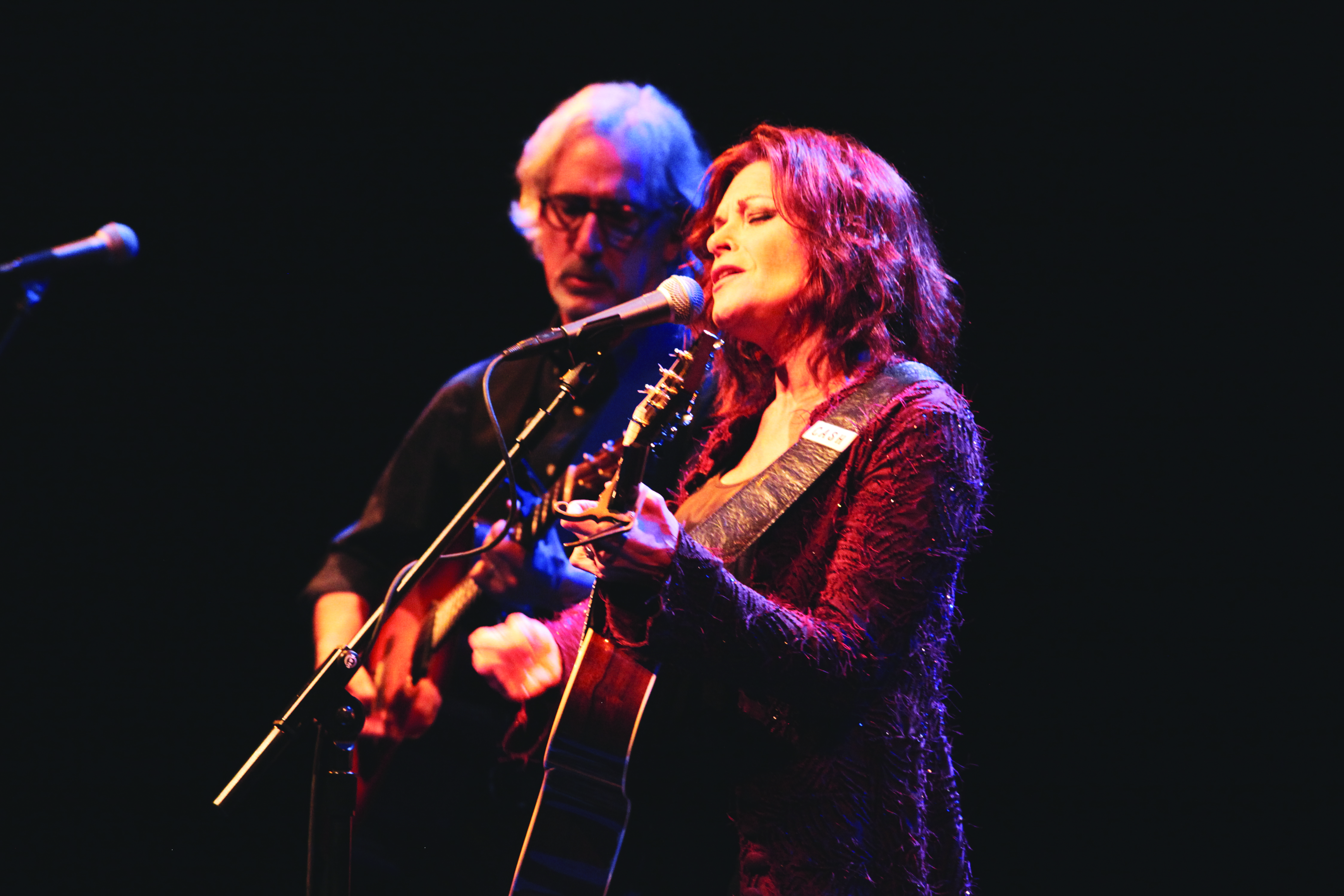
John Leventhal, Rosanne Cash (Photo by Sam Rayner)
Tom: I understand that you and your husband, the Grammy-winning songwriter, producer John Leventhal, have been writing the music for the musical production of “Norma Rae,” the film that starred Sally Field in the title role. Why “Norma Rae”?
Rosanne: Well, the book writer for “Norma Rae,” the play musical came to us and a producer and said, "We want to do this. Do you want to write the music for us?" And we said, "Yeah." I mean, it's a fascinating story. It's timely. And we've been working on it now seven years. But I understand this is how long it takes in the theater world. So I'm not discouraged.
Tom: You see light at the end of that tunnel?
Rosanne: Yeah, we can see the light at the end of the tunnel. Yes.
Tom: Well, it's been 15 years since “Composed” was published and an awful lot, to say the least, has happened since 2010. Will there be a follow-up memoir?
Rosanne: Yeah, I think I should write volume two, don't you?
Tom: We would appreciate it. Yeah.
Rosanne: I think it's time.
Tom: So what book are you reading right now?
Rosanne: Oh, that's so interesting you asked. I am reading Peter Wolf's memoir. I don't know if you know Peter Wolf and the J. Geils Band, a musician, artist, really wonderful guy. He sent me an early copy of his memoir. I don't think it comes out until March, actually. But he led the most fascinating life. He was in the Greenwich Village scene when Dylan first came up. And he knew all of those people, the early folk scene artists. And just he grew up in the Bronx. Most interesting guy. And I'm really, really enjoying his memoir.
Tom: And music? What music's in your rotation right now?
Rosanne: Oh, I was listening to Aretha yesterday. Oh, we were listening to Bill Frisell, wonderful musician. And Dolly Parton. Bill Frisell and Dolly Parton. Now, that would be a great duo, don't you think?
Tom: Wouldn't that be something? Somebody needs to make that happen, that's for sure.
Rosanne: I'll mention it.
Tom: Well, listen, your connection to this region's music heritage — Kentucky, has deep, deep, deep roots in music, of course — so, that makes your visit to Danville extra special for all of us. We so appreciate it.
Rosanne: I love your part of the country. Looking forward to coming down for the beauty and the people. I can't wait.
Tom: Rosanne Cash, we appreciate you for sharing some of that precious time with us. Thank you so much.
Rosanne: Thank you for having me. I'll see you soon, I hope.
Tom: You will. Rosanne Cash is performing at the Norton Center in Danville on Saturday, Feb. 15. The Norton Center is a supporter of WEKU.

Rosanne Cash (Photo by Clay Patrick McBride)