

“Their efforts expand access to the amazing world of art that exists in our region to communities who may not otherwise feel like art exists for them, while creating something new and unique for those of us who already frequent these kinds of spaces.” — Emily Goodman
Art for All: The Mission of Muse Collective
By Emily Goodman
Photos:
Samantha Simpson (Becky’s garage)
Elijah Howe (Luigart Court)
Samantha Simpson and Nick Alley (Loudon House)
A work of art is never just seen; it is experienced. Where we are, who we are, and what surrounds us all inform our understanding of an artwork as much as what the creator has put into their piece.
Artists have known this for decades, creating “site specific” pieces away from galleries and making works of “institutional critique” that call attention to the experience of viewing art in museums. In their new endeavor, Muse Collective, Becky Alley and Samantha Simpson have merged these two concepts to create a refreshing series of pop-up events, collectively titled “Blink Projects.” Their mission is, according to Simpson, to “take art to many spaces, to reach many different audiences and locations.”
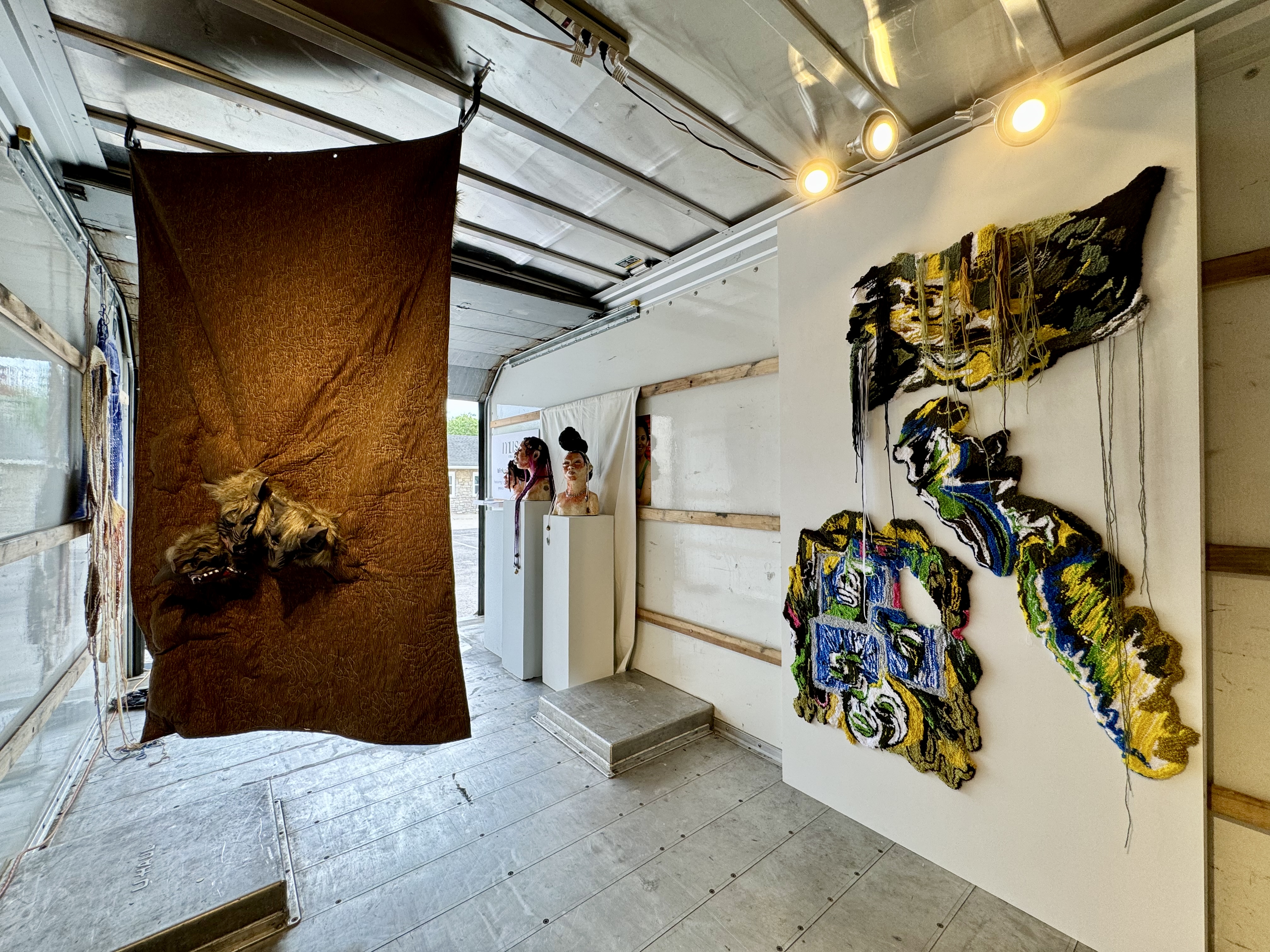
For their first iteration, Simpson and Alley curated an exhibition of works by Claire Thompson, Colleen Merrill, Lina Tharsing and Melissa Vandenberg that took place in the unusual venue of Alley’s home garage. In July, the pair mounted two exhibitions in a 20-foot U-Haul truck: one featuring fiber artists Baylee Schmitt, Brianna Armstrong, Jessica M. Simpson and Sevaan Perrow at Luigart Court, and another showcasing an installation piece by Hannah Smith, shown outside the Lexington Art League. They intend to re-use the U-Haul for an upcoming project during Gallery Hop on Sept. 20, located outside Transylvania University’s Morlan Gallery.
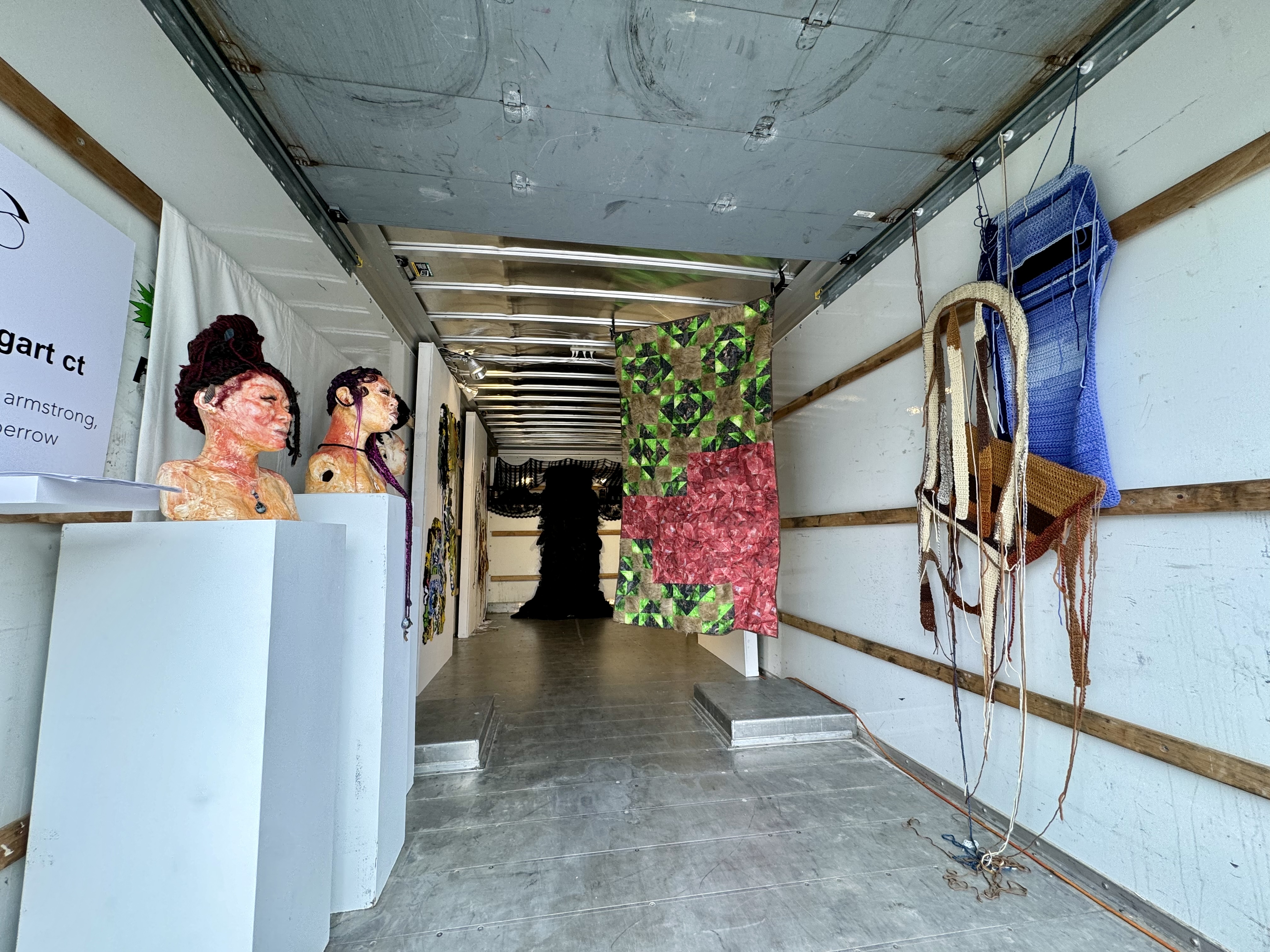
In developing these exhibitions and finding different venues for them around town, Simpson and Alley have used their curatorial talents to transform non-traditional sites of art viewing into experiences that make art feel more a part of the lived, real world. Their efforts expand access to the amazing world of art in our region to communities who may not otherwise feel like art exists for them, while creating something new and unique for those of us who already frequent these kinds of spaces.
Muse Collective derives its name from Greek Mythology. Simpson points out, "The idea of the muses are these nine sister goddesses that kind of embody this idea of feminine creativity and inspiration.” The name is quite fitting, given that museums originated as temples to the muses and sites to both house works of art and encourage creative expression. Moreover, Alley and Simpson root their project in the feminine and feminist energy that muses often represent. In their projects, Muse Collective supports experimentation and innovation—fulfilling the original role of the Greek muses—in both the work they exhibit and the unexpected and playful ways they are displayed.
Simpson and Alley established Muse Collective earlier this year out of mutual recognition of Lexington’s need for a space conducive to experimentation and exploration. For Alley, the idea of creating such a curatorial space came when Parachute Factory closed in spring of 2023. “That was the moment when I thought, ‘Now is the time to start seeing if there's something that I can do, or some way to make something happen,’” she recalls. Alley and Simpson recall that Parachute Factory was a place where artists and curators could develop new ideas because of their open call system and the welcoming environment that characterized the space. Parachute Factory’s closure “definitely left a void in Lexington that meant either we sit around and wait for somebody else to eventually fill or we just become those people,” Simpson said. And become those people they did, receiving grant funding from Lex Arts to create a new exhibition space in Lexington, albeit one that exists ephemerally and changes from iteration to iteration.
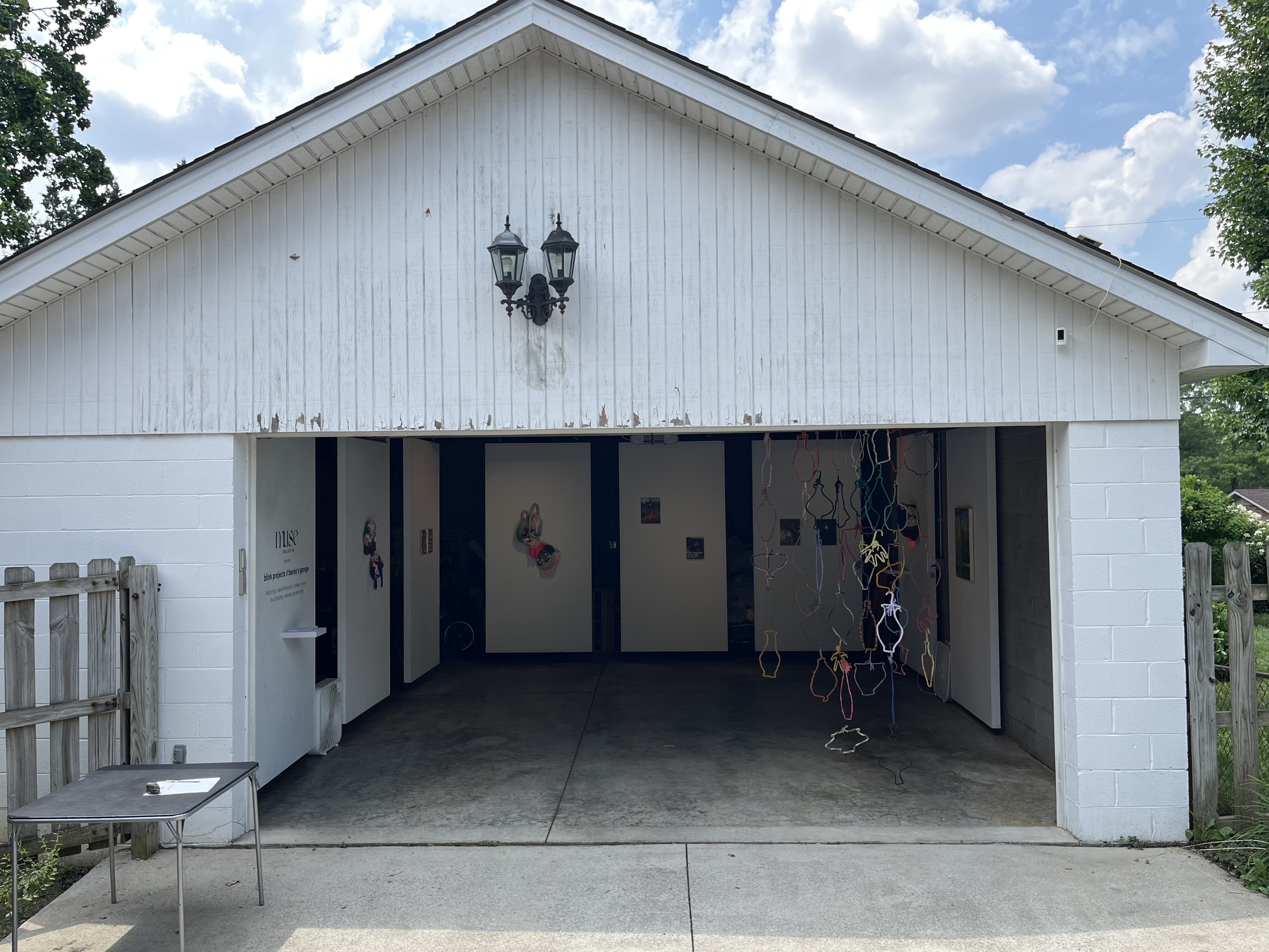
For Muse Collective’s creators, the flexibility and transience of their curatorial space was a feature, not an obstacle. Deciding to begin their collaborative ventures by carrying out pop-up exhibitions was born somewhat out of necessity, given the heavy financial overhead involved in opening a new art space. But the pair consider the lack of a permanent home to be beneficial to the kinds of creative ventures they want to showcase.
Given that both Alley and Simpson have considerable experience working in traditional spaces, the pair well understand that galleries are not without their limitations. As Alley said, “I love traditional spaces. I love museums and galleries. I work in one. But they come with some inherent barriers to access.” By creating a viewing experience that exists outside of museums and galleries, Simpson and Alley hope to unburden their audience of the baggage that comes with seeing art in traditional spaces. Although very few art spaces in Lexington charge admission—removing one of the systemic barriers to accessing art—our numerous museums and galleries nonetheless exist within a culture that limits who feels that they have a right to be in art spaces in the first place. Because museums and galleries are highly surveilled places, with gallery attendants or museum guards constantly looking, people who already face the burden of being overly visible—specifically people of color, women, LGBTQIA+ folx and disabled people— often feel a deep discomfort with the monitoring that happens in these venues.
Because galleries and museums carry with them centuries of baggage about whose art is worthy of viewing, with BIPOC and LGBTQIA+ folx and women often excluded from that consideration, the curatorial choices can reinforce the idea that art belongs only to certain people. In moving outside of the conventions of a traditional gallery for their “Blink Projects,” Muse Collective offers viewers the chance to experience art in a new, more comfortable way.
It's not simply that Muse Collective is moving art out of galleries and museums, but the sites that they have been using, like the U-Haul truck and Becky Alley’s garage, are so dramatically distinct from the viewing experience in a conventional gallery that Alley and Simpson are encouraging us, as their audience, to reconsider what it means to see art at all.
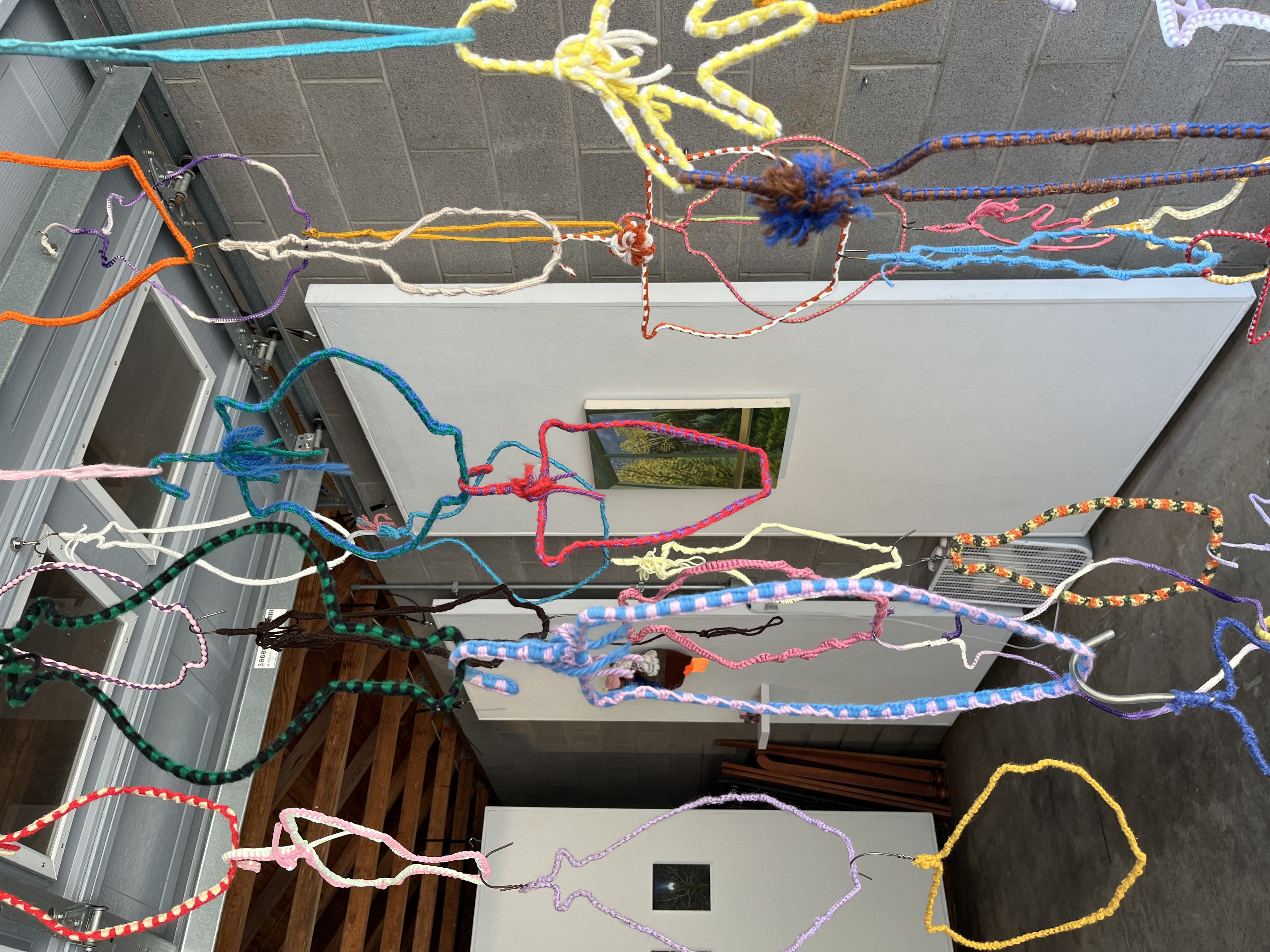
The experience of viewing art in these sites is truly novel. Instead of displaying works in a completely sterile space, like the quiet, white walls of a gallery or in a site that is unquestionably noisy and cluttered, like the urban scene surrounding the myriad PRHBTN murals throughout Lexington, Muse Collective’s “Blink Projects” exist in some middle space between the two. The garage and the U-Haul are separate from the streets, giving the viewer the opportunity to transition into the headspace for viewing art, much as we do when walking across the threshold of a gallery. But that separation is minimal at best, since both the garage and the U-Haul are functionally indoor/outdoor spaces, with one whole wall given over to the outside. This means that the shows are subject to the environment, including the heat and humidity of a Lexington summer, street sounds and whatever nearby scents waft into the air. For Alley and Simpson, this lack of complete separation was by design. “There's no neutral space at all,” Alley said. “I think that's part of where we're coming from too, not ignoring or denying the realities of the space that we're in.”
By abandoning the idea that art can exist in a neutral space, Muse Collective invites us to view art as we are in that instant. Their current projects are quick and ephemeral; they are pop-up exhibitions that last only a few hours as opposed to the weeks- and months-long runs of shows in more traditional spaces. And they take place in exceptionally small spaces; a 20-foot U-Haul truck with a complete art installation, like the one by Hannah Smith at Loudon House in July, leaves little room to walk or stand, especially when other people are in the space as well. As such, we cannot avoid feeling in ourselves, in our bodies and in the moment because the space does not allow us to experience it any other way.
In establishing Muse Collective, Alley and Simpson wanted to add an art venue to the Lexington scene that will meet people where they are—literally and figuratively. And they have succeeded, broadening the art experience while reinvigorating the spirit of exploration and innovation.
Emily Elizabeth Goodman is an art historian, curator, critic and Associate Professor of Art History at Transylvania University in Lexington, KY. Her research focuses on issues of gender, labor, and food in American women’s art in the 20th and 21st centuries.
Listen to an ArtThrob interview with Becky Alley and Samantha Simpson