

"With a laugh, she likens herself to a Tibetan monk with a sand mandala, crafting a work of art that will be demolished on the spot." — Shannon Barr
Delicious to View and Devour
The Fleeting Beauty of a Most Unusual Art Form
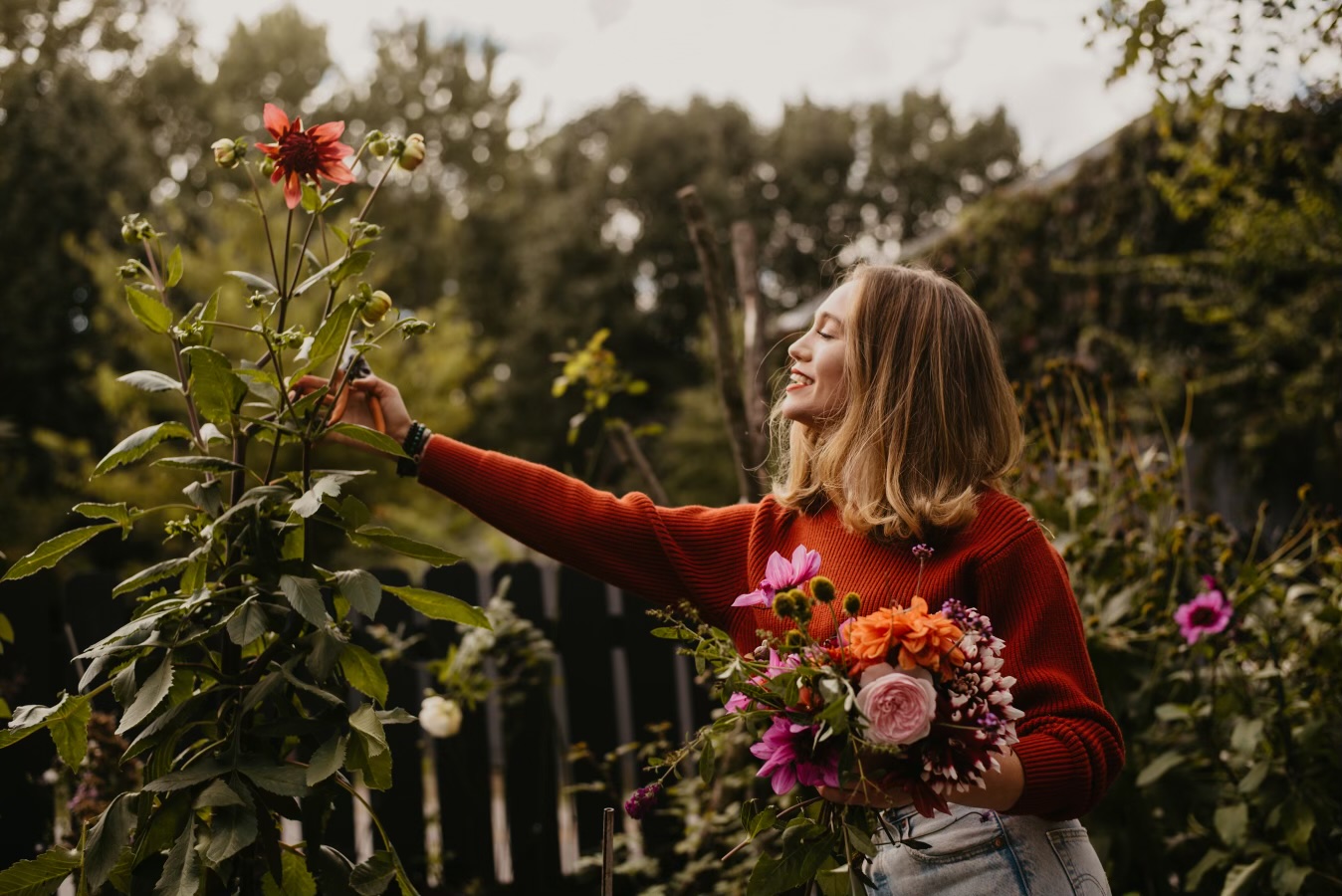
“Mischief Maker” Alex Narramore
By Shannon Barr
Alex Narramore defies easy classification. She’s a baker, a gardener, a sculptor, a painter, a lifestyle blogger and, from the looks of her Instagram page, an outstanding hostess. These days, to be a multihyphenate is not so unusual; you might even say it’s a requirement for creative professionals. But a single glance at the sugar flowers adorning Narramore’s award-winning cakes confirms that she’s one thing above all else: an artist. Her floral confections — botanically accurate down to the stamen and hyperreal in color and texture — evoke some sort of dream collaboration between Martha Stewart and Willy Wonka. Maybe that’s why it seems so fitting that she works under the name The Mischief Maker. Her artistry feels at once playful, intense, risky, soulful and gravity-defying.
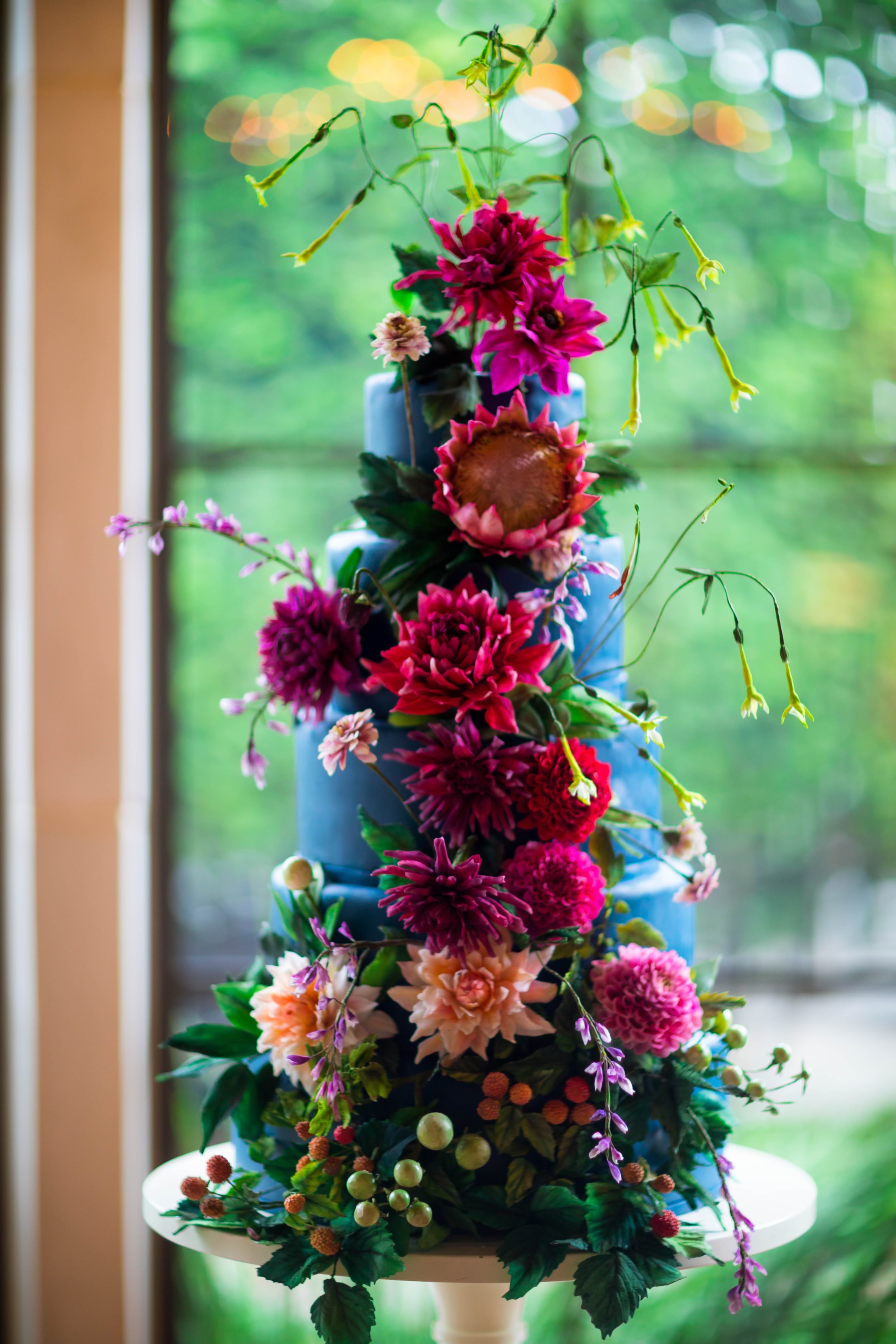
Every petal, leaf and fruit is handcrafted from edible sugar dough.
Narramore studied studio art and art history in college at Eastern Kentucky University, but she understood from an early age that she needed to be able to support herself with something practical. In her case, that was baking cakes. “I jumped in headfirst,” she says with a laugh. “There was no progression, no cupcakes or brownies to start out. Straight to stacked cakes.” When Alex accepted her first wedding cake assignment, her mom, Lisa, said, “This is crazy — it’s someone’s wedding!” She rolled up her sleeves to help her daughter, and they’ve been working together ever since. It was Lisa’s suggestion that they take inspiration from the great Sylvia Weinstock (once dubbed “the Leonardo da Vinci of wedding cakes”) and try their hand at sugar flowers. That turned out to be a good idea.
“There was a lot of trial and error at first,” Alex recalls. Her studio art classes had not included sculpting, and the edible dough from which the flowers are crafted resembles cold porcelain or clay. “Once we figured out how to make the flowers, we didn’t know how to attach them.” Gradually, piece by piece, the technique evolved, though Alex acknowledges that even now there is no set way to do it. “It’s just however your mind has decided to put the flower together that day.”
The most important revelation was the need for live models, so they could capture each blossom’s distinctions and imperfections. And they quickly realized they needed multiples of each type of bloom — some to pull apart and some, at various stages of life, to look at while sculpting. That was when Alex expanded her focus to include gardening — yet another world in which to dive headfirst.
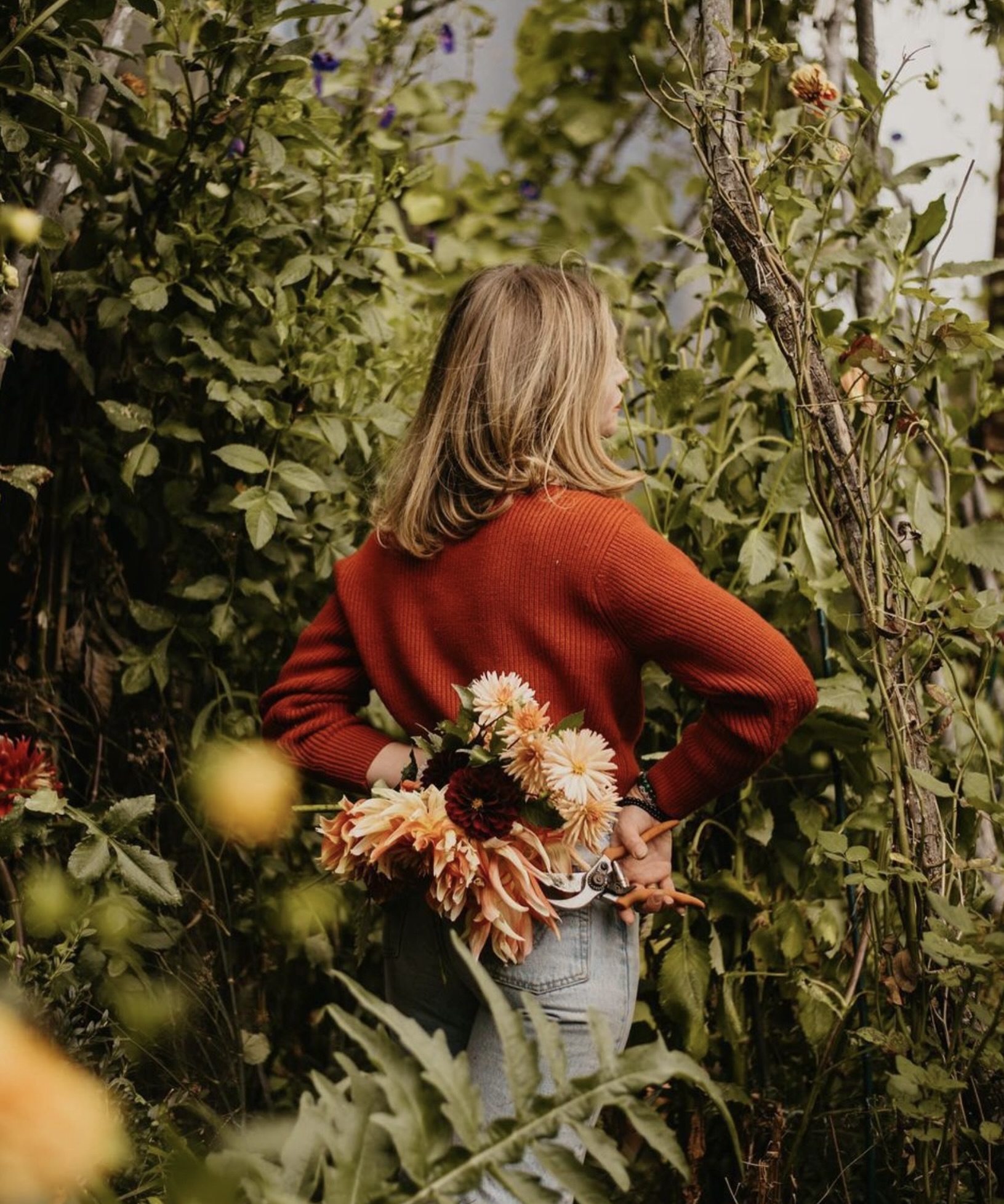
Alex in her garden
“Kentucky has this rich tradition of self-taught artists and makers,” she says. “I think it’s the effect of living in isolated places.” She started to grow flowers from seed, experimenting with different hybrids and varieties. “If what you grow is beautiful, what you sculpt will be beautiful. And sculpting what we grow gives our cakes a real sense of place.” Her family is full of gardeners, and if the right bloom can’t be found in one of their gardens, they’ll take a cutting from a neighbor’s. When Alex moved to Lexington from the family’s home base in the mountains of Jenkins, Kentucky, she gained an additional impetus to plant her own garden: entertaining. Now her backyard garden flourishes, and a busy social life fuels her creativity. (Her newsletter on Substack is a great source of recipes and ideas, not to mention a fascinating window into a working artist’s life.)
Mischief Maker cakes take months to come together and are usually commissioned at least a year in advance. The process begins with a client sharing their idea or ideas — “communicating what their soul wants,” as Alex describes it. They might provide her with a few preliminary images, to which Alex will respond with dozens more, asking them what resonates and why. The dialogue continues until a more refined vision has emerged. Then she’ll formally pitch the idea in writing, including the type of cake and number of tiers as well as detailed descriptions of the flowers. Only after the concept is accepted does she turn it into an elaborate sketch, which she then submits for final approval. “At that point I usually have to go for a walk around the neighborhood,” she laughs. “It’s very nerve-wracking!”
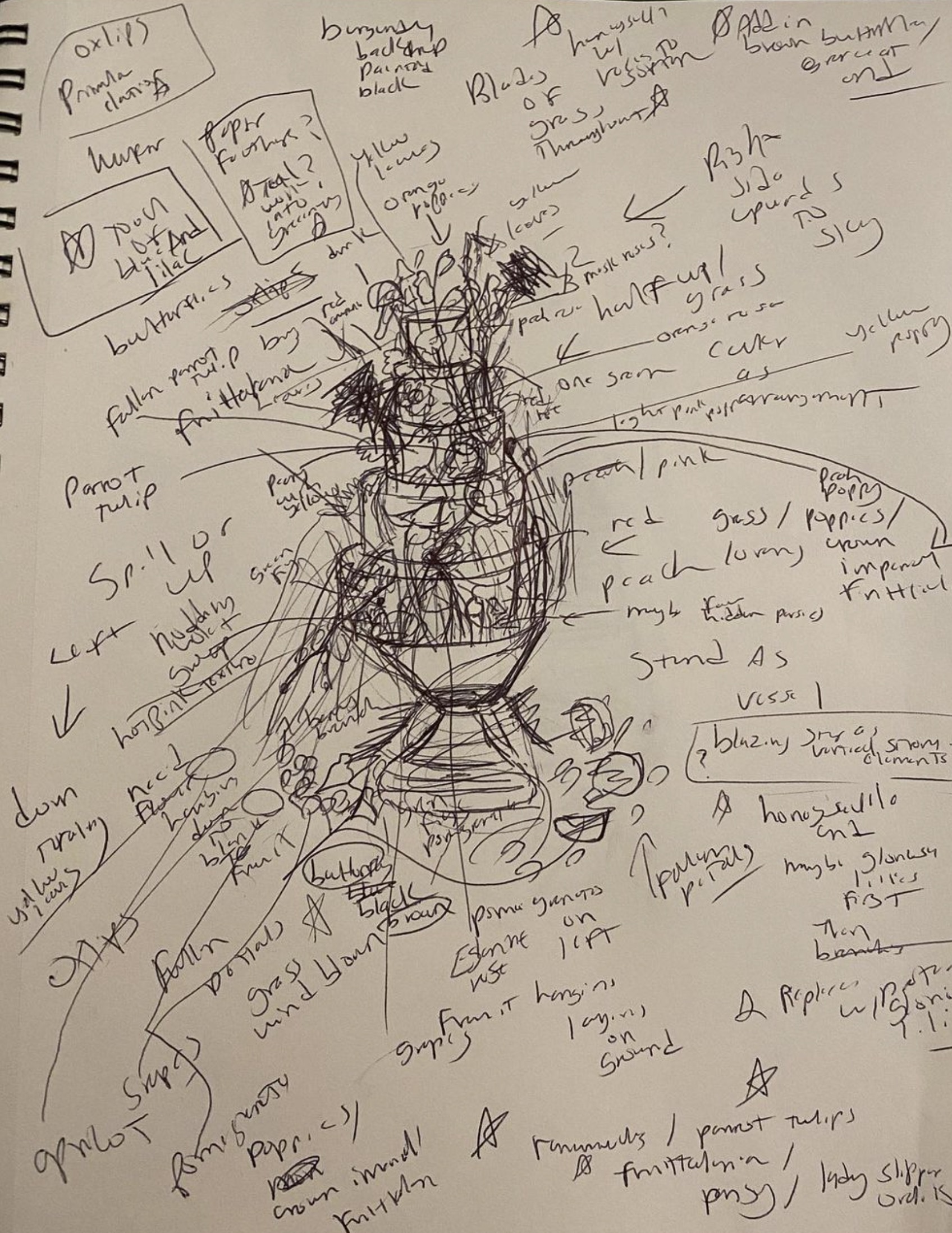
Alex’s design scratch sheet for a cake inspired by A Midsummer Night’s Dream
Once the commission is approved, it’s time to gather the materials, colors and tools. The sugar flowers are made first because of the time required (for a recent Midsummer Night’s Dream–themed cake: three months). All baking happens in Lexington, but the flower-making takes place on multiple fronts; Alex often feels the need to return to the mountains, where she and Lisa will pass flowers back and forth to get them just right, building color and depth over time. “They’re best at their most hyperreal,” she notes. “The mission is always to make them feel alive.” When the flowers start to communicate emotions, Alex believes, is when the craft becomes art. She recalls a cake they decorated with poppies — some vibrant, some fading, all wrinkly and dramatic — and how it made her feel when it was done: on top of the world.
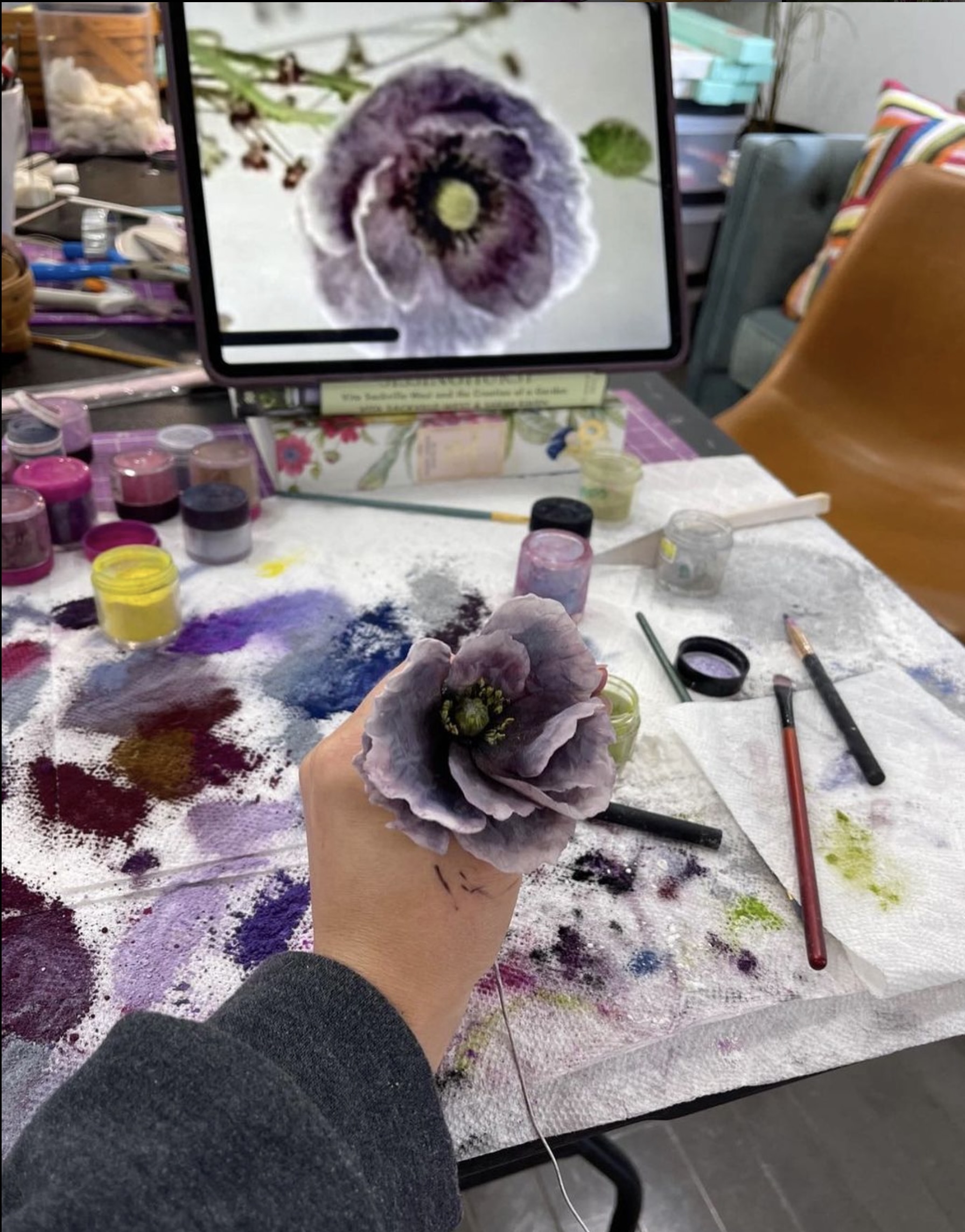
Sugar poppy painting in progress
Once achieved, that vividness is a challenge to retain. Dehumidifiers and air conditioning in the workspace are a must. The sugar absorbs color, which must then be reapplied right up to the last minute. “I always want to add more and more detail, so I push the baking back as long as possible. I’m kind of an agent of chaos.” Once the cakes are baked and all flora crafted, construction happens on the site of the event; the flowers, easily shattered, are transported on layers of foam. The assembly process often takes several hours, but this performance element has become part of the experience — a balancing act between studied patience and on-the-fly energy.
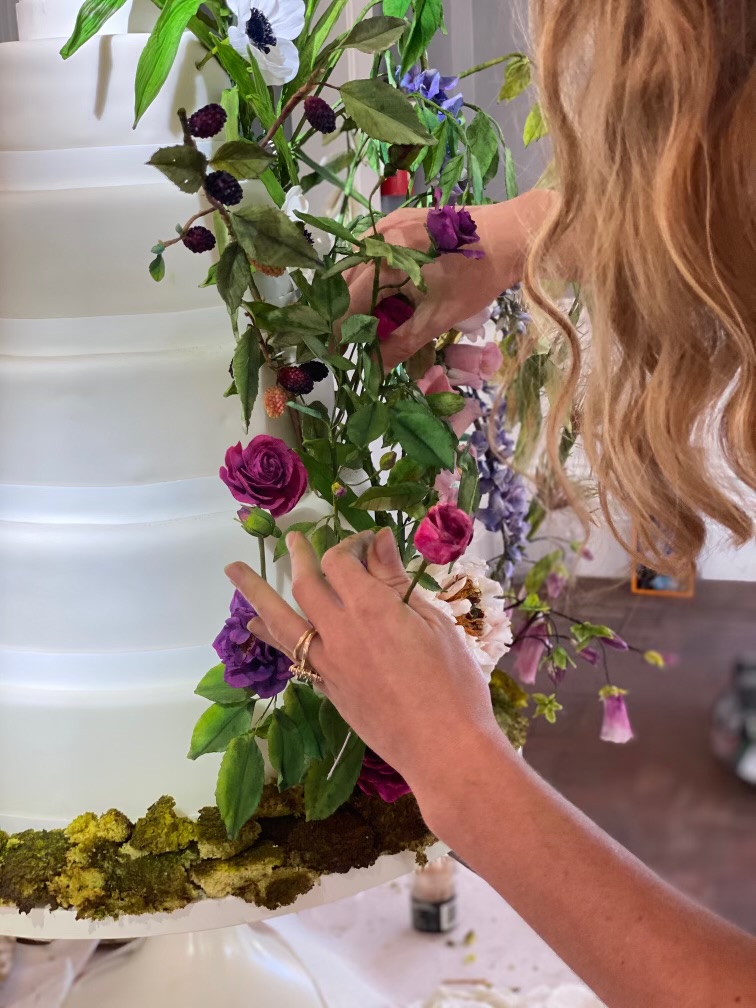
On-site assembly is part of the show.
As a baker first, Alex never feels bad that these stunning cakes are destined to be eaten. “Of course, they’re delicious; they just have to be. Maybe that’s a Southern thing.” She’s even producing an eight-week baking course on video (another self-taught project), using a favorite family recipe. The sugar flowers, though, are another story. While they’re completely edible, Alex recommends saving them instead. “Grooms think it’s funny to eat them,” she says. “They taste like Froot Loops.”
Each design is made once and then retired forever. Would it be easier, and cheaper, to just offer certain set flower packages? Sure — but that is not what The Mischief Maker does. “It’s kind of crazy,” Alex says. “Months of work, to be enjoyed in an hour or two.” With a laugh, she likens herself to a Tibetan monk with a sand mandala, crafting a work of art that will be demolished on the spot. This is part of the point — the temporary nature of the cakes, like their flower models, is inseparable from their beauty. “It’s as perfect as can be in this moment, and then it’s gone.”
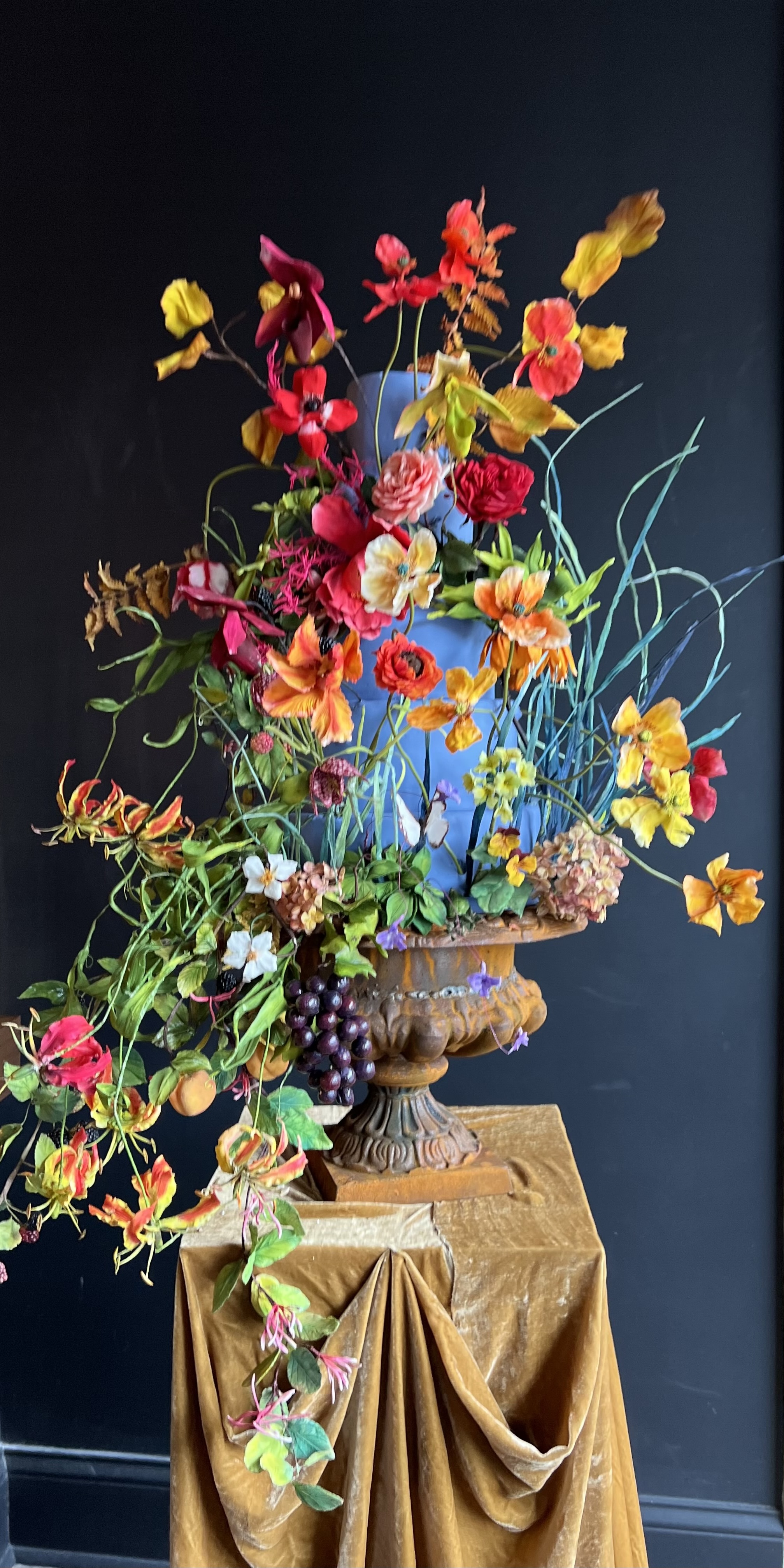
“Lull’d in these flowers with dances and delight…” — The finished Midsummer Night’s Dream cake