

For the East End to need “revitalizing” would suggest that the area was ever without a lively and thriving community, and that assertion is remarkably untrue. — Emily Goodman
…It Just Needed Mark Lenn Johnson

Mark Lenn Johnson (Photo by Chris Begley)
By Emily Goodman
Contributing Writer | Photos by Chris Begley
Mark Lenn Johnson—the 2024 recipient of the Kentucky Governor’s Milner Award for “outstanding philanthropic, artistic, or other contributions to the arts”—is proud to be from Lexington’s East End. As an artist and as the director of the non-profit organization Art Inc., Johnson has focused his attention on his home community, developing numerous projects to showcase the vibrant history of the neighborhood and to help establish the East End as an art center in the future.
Johnson’s efforts with Art Inc. may appear to be a form of “revitalization” of the neighborhood, but that would be a misnomer. For the East End to need “revitalizing” would suggest that the area was ever without a lively and thriving community, and that assertion is remarkably untrue. As Johnson readily points out, “You hear about all the negative things that happen here, but there’s a pride and a sense of history and culture here in this neighborhood. And I’m proud, you know, I’m proud to be a part of that.” It is that sense of pride that is on full display in Johnson’s work with Art Inc., and it is a pride that the organization showcases in all of its spaces.
Art Inc. was established by Johnson as an off-shoot of Community Ventures, with the goal of providing resources and opportunity for Kentucky artists to develop their practices and sell their work. At the outset, Art Inc. was developed to be an incubator for up-and-coming artists, modeled after Community Venture’s project “Chef Space,” which provided resources and education to people attempting to break into the restaurant industry. Borrowing from that model, Art Inc. began by offering educational programming to help artists get started in their careers. “We would bring in professionals,” Johnson recalled “and they would talk about specific issues. We have a lady that comes in and talks about how to sell your work on Etsy, for example, a gentleman that comes in and talks about how to price your work, one that comes in and talks about marketing, how artists can market themselves.”

Mark Lenn Johnson outside Art House on 3rd Street in Lexington (Photo: Chris Begley)
As Art Inc. grew, Johnson heard from artists that they needed more than just workshops on marketing. Artists began telling Johnson that “the education is great, but, you know, it's not doing us any good, because we're not able to make any money off of it.” From that feedback, Art Inc. established their own gallery, Art House Kentucky, as a space for artists who may not have access to gallery representation due to structural factors, providing them with entry into the art world. Having experienced a similar marginalization at the beginning of his career and recognizing how important early opportunities to show and sell work within a gallery are to an artist’s livelihood, Johnson wanted to remove the barriers to access and share more work by Kentucky artists with the world through Art House Kentucky.
In addition to the gallery, Art Inc. has constructed a studio space in the MET complex and an Artists Village, a set of houses built around a central greenspace that function as live/work spaces for Lexington creatives on Powell Street. In establishing these spaces, Art Inc. has sought to create community among the artists who show, live, and work in their spaces, fostering opportunities for more established Kentucky artists to work in conjunction with up-and-coming creatives. Those connections deeply excite Johnson, who notes “I think part of what makes us special is that you do have those […] novices just getting into it, and they have the opportunity to sit right next to Frank Walker, you know, and have those conversations and get inspired by him, or sit right next to LaVon Van Williams or Kiptoo Tarus. I’m not sure that that happens in a whole lot of other places as comfortably as it does here.”
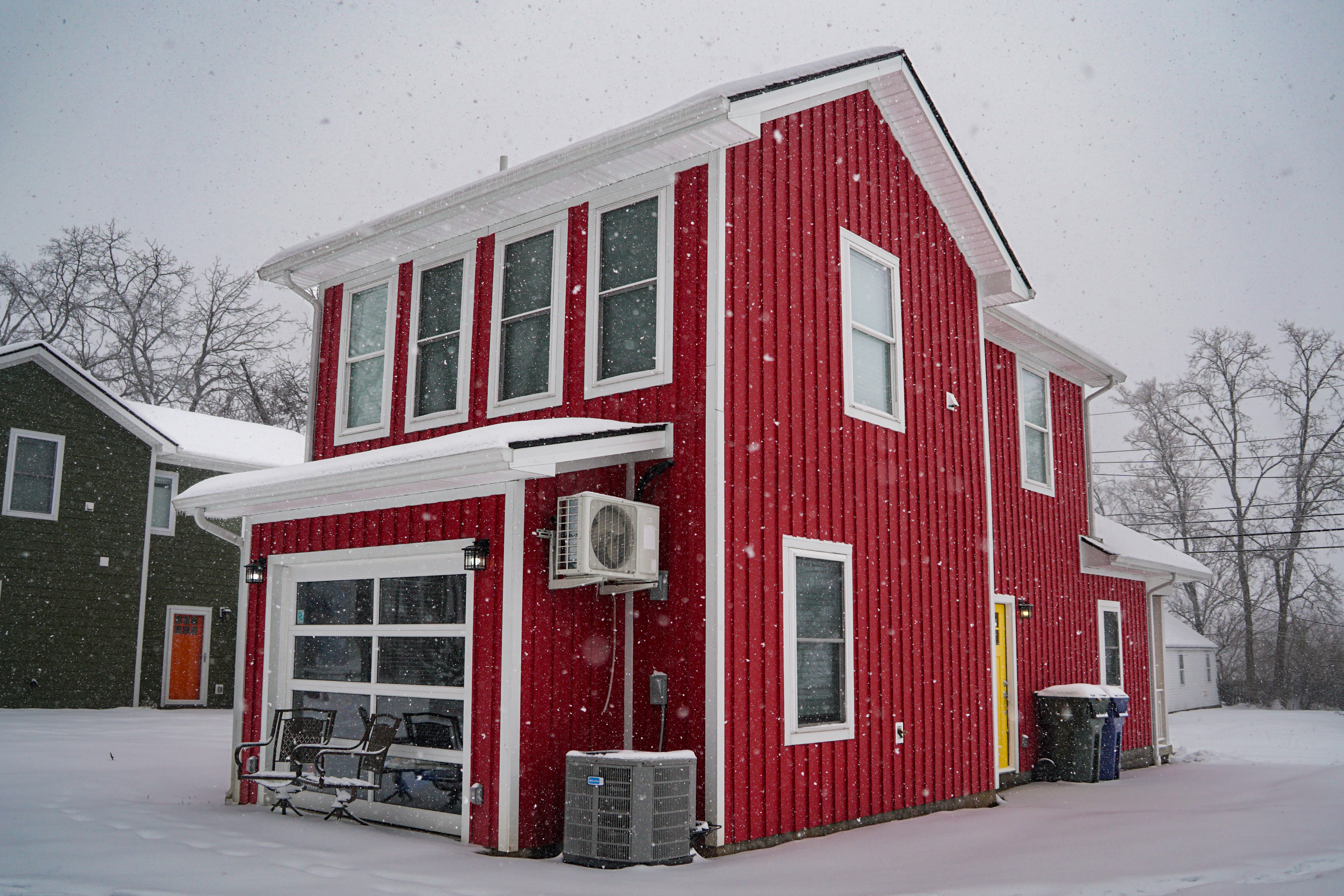
Artists Village, live/work spaces for Lexington creatives on Powell Street (Photo: Chris Begley)
Part of the reason that the community that Art Inc. has fostered has led to great creative success is, of course, the location. Johnson maintains that the neighborhood is central to the work being done, stating “we're all here for the same reason, and we're all kind of brought together in this space, the East End.” For Johnson and the artists he works with, art is central to the vibrancy of the East End, and Johnson has found many ways to showcase the importance of the East End to Lexington’s past as well as its future throughout his ventures.
One of the most visible ways that Johnson has embraced the East End through his work with Art Inc. is through his curation of public artworks across the organizations’ physical space at the MET, a Community Ventures property named for the corner of Midland and East Third Street, where the building sits. Adorning both the interior and exterior spaces of the building are several works by prominent Lexington artists including poems by Frank X Walker and Stephanie Says;l a mural by Keaton Williams[a]; photographs by the late Patrick J. Mitchell; glasswork by Johnson himself; and sculptures by LaVon Van Williams[b], Stephen Johnson, and Kiptoo Tarus, almost all of which address the past and present of the East End. For instance, Walker’s poem “Ode to the East End” evokes the legacy of the Black horsemen in the lines: “your stained-glass churches and neighborhood/ schools all jockeying for position with your/mean streets reputation/and your sometimes-racy past.” Walker’s poem acknowledges the area as “where Isaac Murphy once slept,” highlighting the historical legacy of the neighborhood’s contributions to Kentucky’s horse trade.
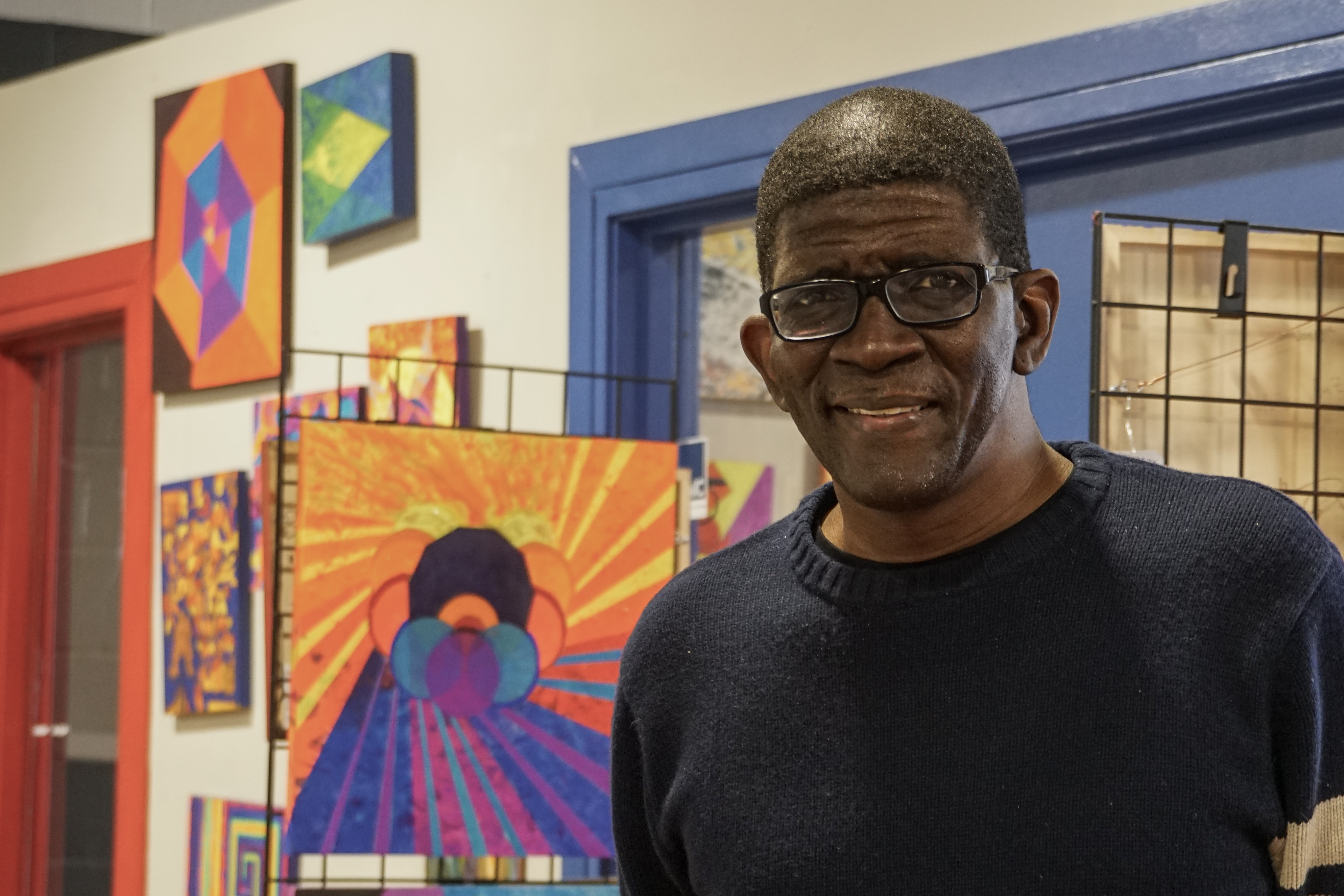
Mark Lenn Johnson (Photo: Chris Begley)
The history of the East End as the original home of Keeneland and the community that birthed some of the most famous (African American) horsemen of all time is present throughout the MET. On a wall facing out towards Charles Young Park, Keaton Young has painted a cadre of jockeys rushing out of a tide that evokes the famous Hokusai print The Great Wave Off Kanagawa (1831). Similarly, in the plaza connecting the East End location of DV8 Kitchen, Manchester Street Coffee and Art House Kentucky gallery, Kiptoo Tarus has crafted a portrait of Will Harbut, the Black man who cared for Man o’ War and preserved the horses legacy for approximately 15 years during the 1930s and 1940s. Harbut is presented in full, embracing just the head and face of the famous horse for which he cared, an illustration of the whole person whose efforts were essential to the preservation of Man o’ War and the history of that horse to the region. Moreover, by highlighting these prominent Black horsemen around the MET, Johnson is able to tie the flourishing of the East End community of today to that of generations past. Afterall, the wealth brought into the community through the horse trade as well as several other industries led to the East End becoming a haven for Black culture in Lexington, a legacy that is preserved through historic establishments like the Lyric Theater and newer ventures like Art Inc.
In all of his projects, Johnson uniquely understands how important the arts are to community and ties all of his work—both his own practice as a glass maker and his role as the director of Art Inc.—to the neighborhood of the East End. Johnson is proud of his home and believes that its future can be brighter than its already vibrant past. He is invested in manifesting that future for the East End, envisioning a day when Third Street, once the main retail thoroughfare of the neighborhood, could be a hub for galleries and culture and where the artist village he has established will be renown for producing some of the most significant works of art in Kentucky. Through his work with Community Ventures and Art Inc., Johnson is interested in bringing businesses and artists into the East End to engage with the vibrant community, both past and present, to develop a bright future for the neighborhood. Johnson is interested in bringing partners “into this historic place, yeah, to be a part of it, to help it grow and to make a difference here. I think that's pretty, pretty amazing.”
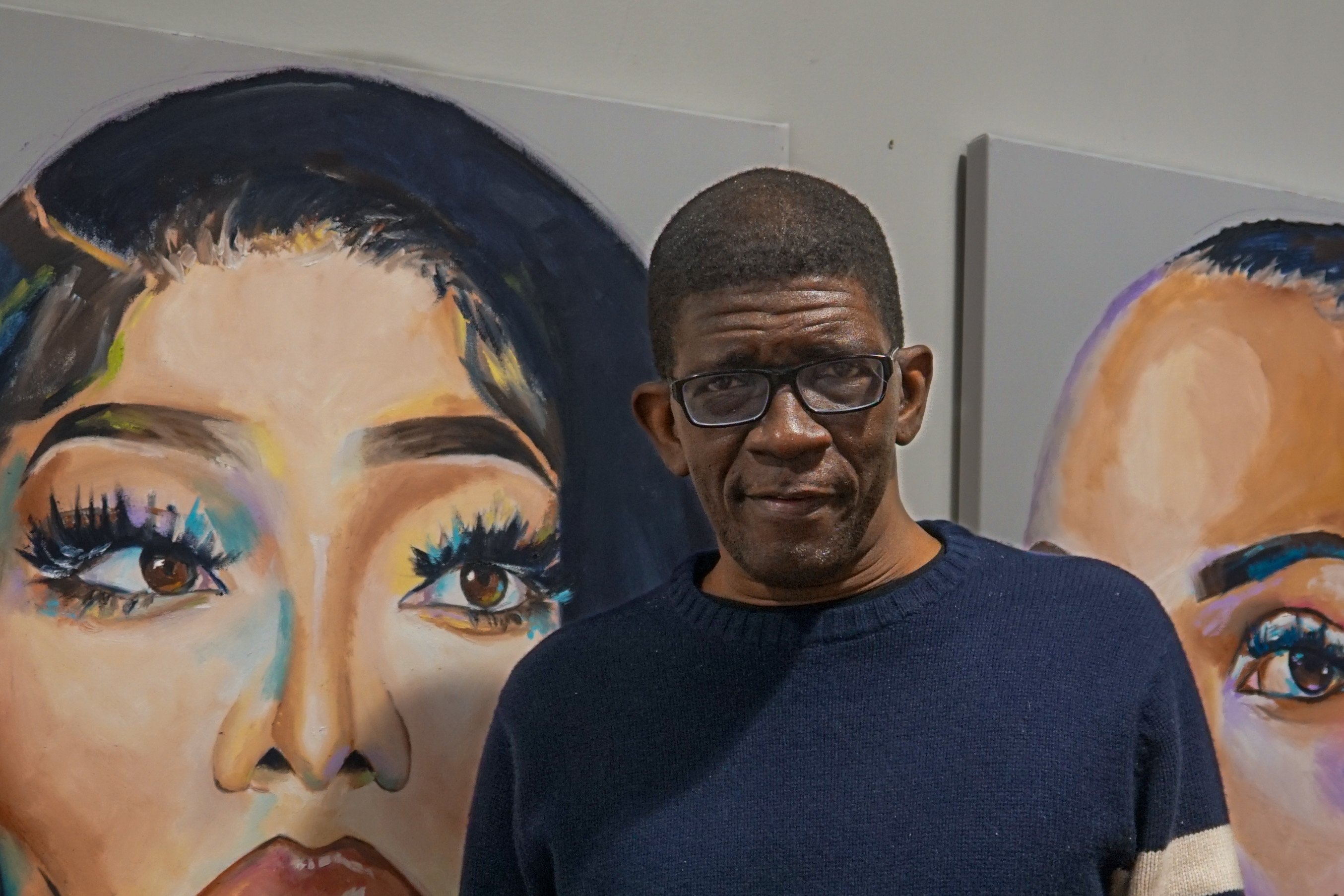
Mark Lenn Johnson (Photo: Chris Begley)