

Sharing the Vibe: M'Power Rhythm
“When we get to the grooving part of a concert, where everybody in the crowd is into it – that’s the best part for me. It gives me confidence, and I start to show it.” - M’Power student Ian Johnson.
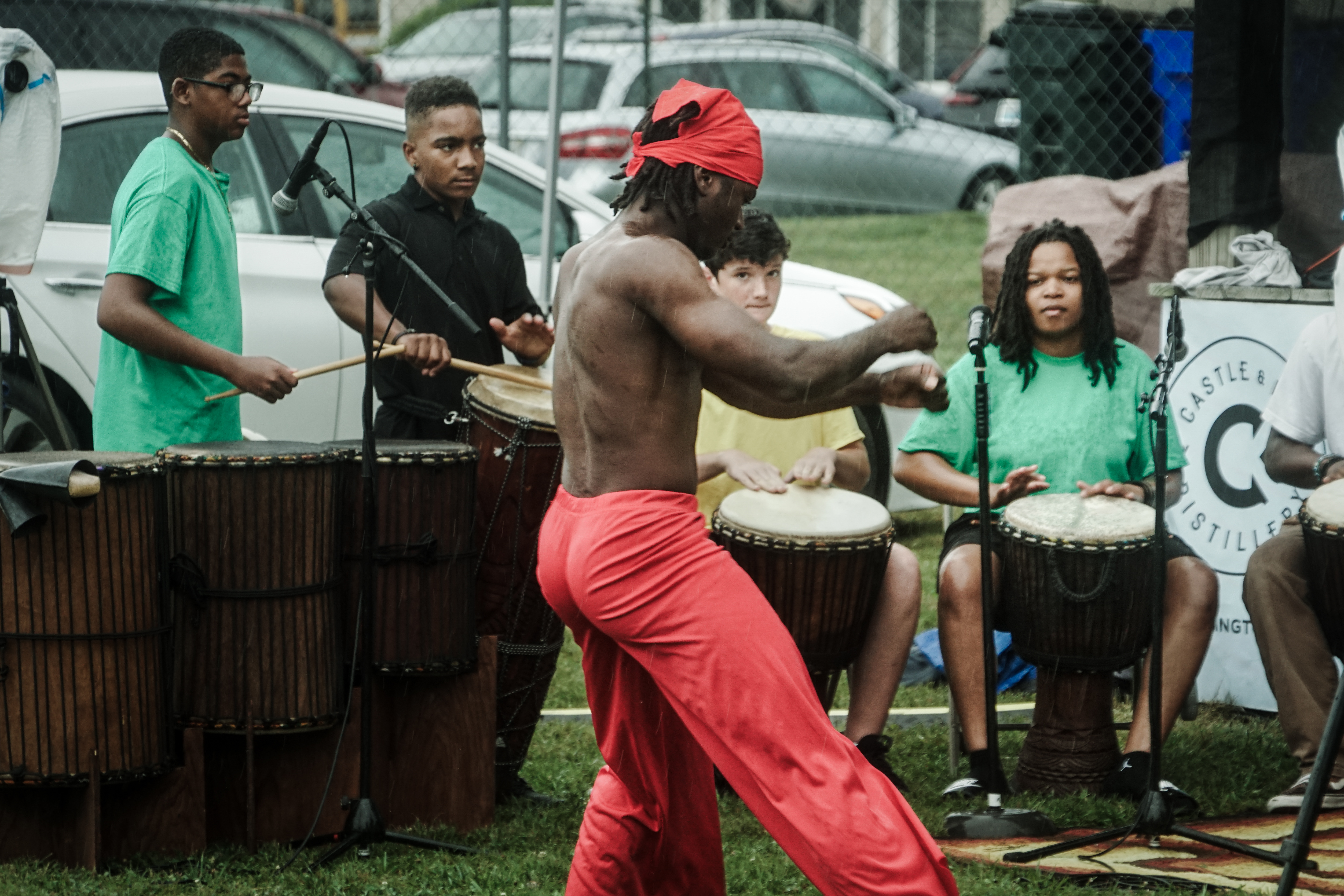
Professional dancer Smitty Jacques performs with M’Power Rhythm
Story and photos by Chris Begley
The origin story of M’Power Rhythm, a youth ensemble drumming program serving young people in Lexington, reveals and contextualizes the essential elements of the organization; not just what it is, but why it is. Origin stories make explicit the ways in which a thing was shaped, enabled or maybe even limited. The origin story of M’Power Rhythm positions the organization and its founders in a unique and dramatic moment in our history.
Leslie Stamatis and Tripp Bratton started M’Power Rhythm in 2023, but I first heard Stamatis talk about this idea back in 2020, and that is the true moment of creation in this origin story.
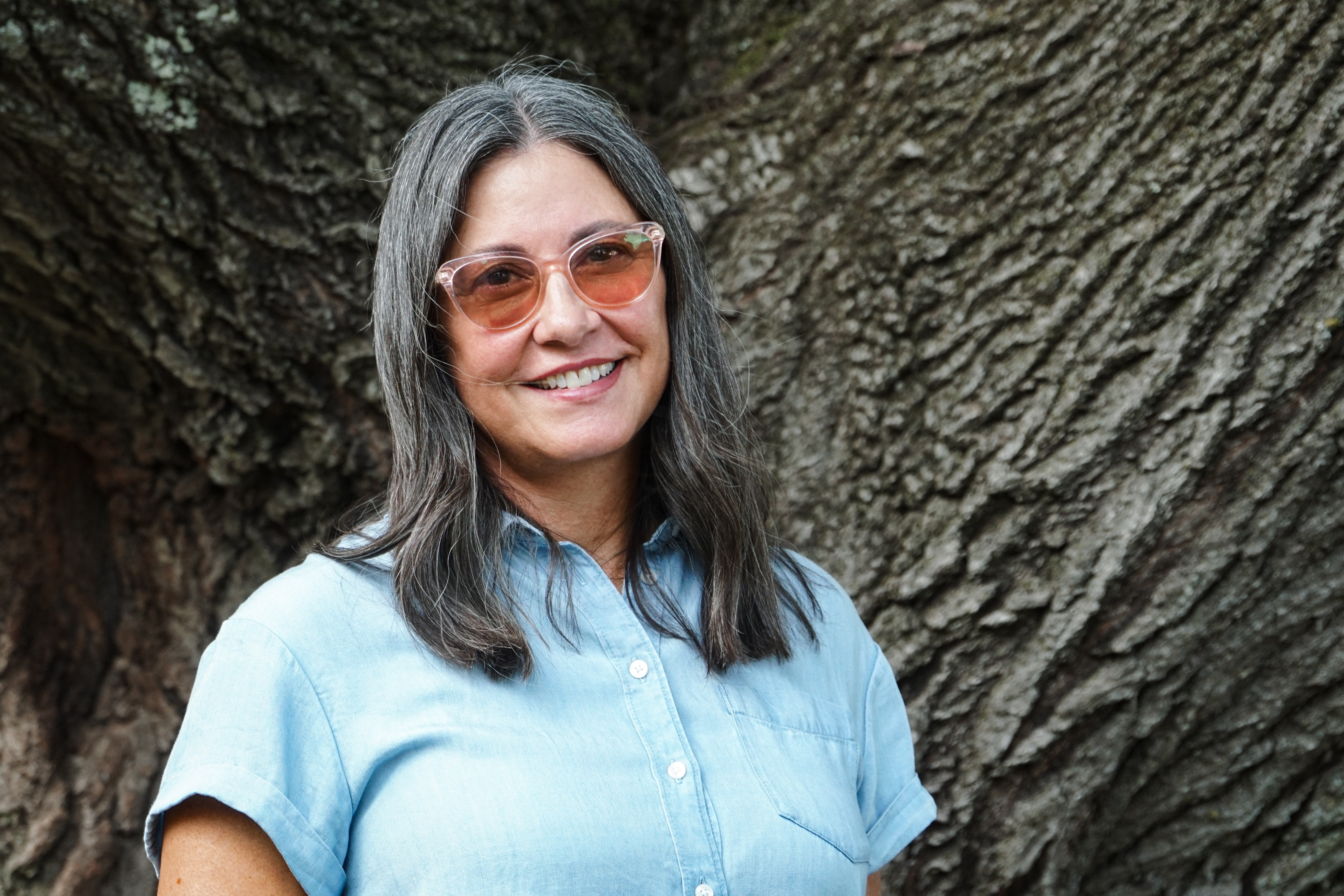
Leslie Stamatis had just retired from her position as a professor of Health Sciences at Georgetown College and the pandemic had just started. The country was into its fourth year of the Trump presidency, with a perceived (and subsequently well-documented) increase in prejudiced violence, hate crimes and a normalization of racist, sexist and xenophobic attitudes. People were protesting against police violence all over the country following the deaths of Breonna Taylor, George Floyd and so many others. It is hard to recall how unsettling and disturbing that moment was, even a few years later. Would we ever get back to normal? Because the pandemic laid bare so many inequities and problems, did we want to get back to what we had?
In that moment, as needs mounted during the pandemic, the importance of our community and our mutual interdependence became more evident than ever. Stamatis saw this, and like many of us, she felt compelled to do something that impacted the community in a positive way.
Stamatis had a background in and passion for drumming, and she wanted to do something around that specific activity, leveraging her enthusiasm and knowledge in a way that would reach folks who were especially vulnerable. That, together with her experience as a scholar and an educator, shaped the form that M’Power took. Her scholarly focus was on motivation among yoga practitioners, studying what happens when they reach something called a ‘flow state,’ when they are completely focused on that singular activity: what we colloquially call being ‘in the zone.’ This relatively rare occurrence is associated with positive outcomes such as increased happiness. She had seen the social and psychological implications of focused activity all her life, from her scholarly studies and from being immersed in sports programs for a big part of her life. She saw the impact of those programs on the participants far beyond the skills related to a specific game, activity or musical instrument. She knew the power of creating community around a particular activity and that the activity itself could be just about anything.
These experiences, both lived and studied, formed a vision of an activity-focused organization that would build community, provide opportunities for leadership
and challenge people. In her vision, this organization could enable the kinds of positive outcomes she had witnessed when people reached that flow state. This seemed important, especially in that historical moment of turmoil and uncertainty. She saw, as we all did, that children were being severely impacted by changes in educational and social realities, perhaps more than most adults.
She turned to her friend, teacher and renowned percussionist Tripp Bratton. Tripp, recent recipient of the 2024 Lifetime Achievement Award from the Lexington Music Awards, teaches and leads musical ensembles at Centre College and Berea College, is featured on hundreds of CDs, albums and TV shows and has played with too many bands to list here, local and otherwise. Bratton had similar ideas and they collaborated on this project.
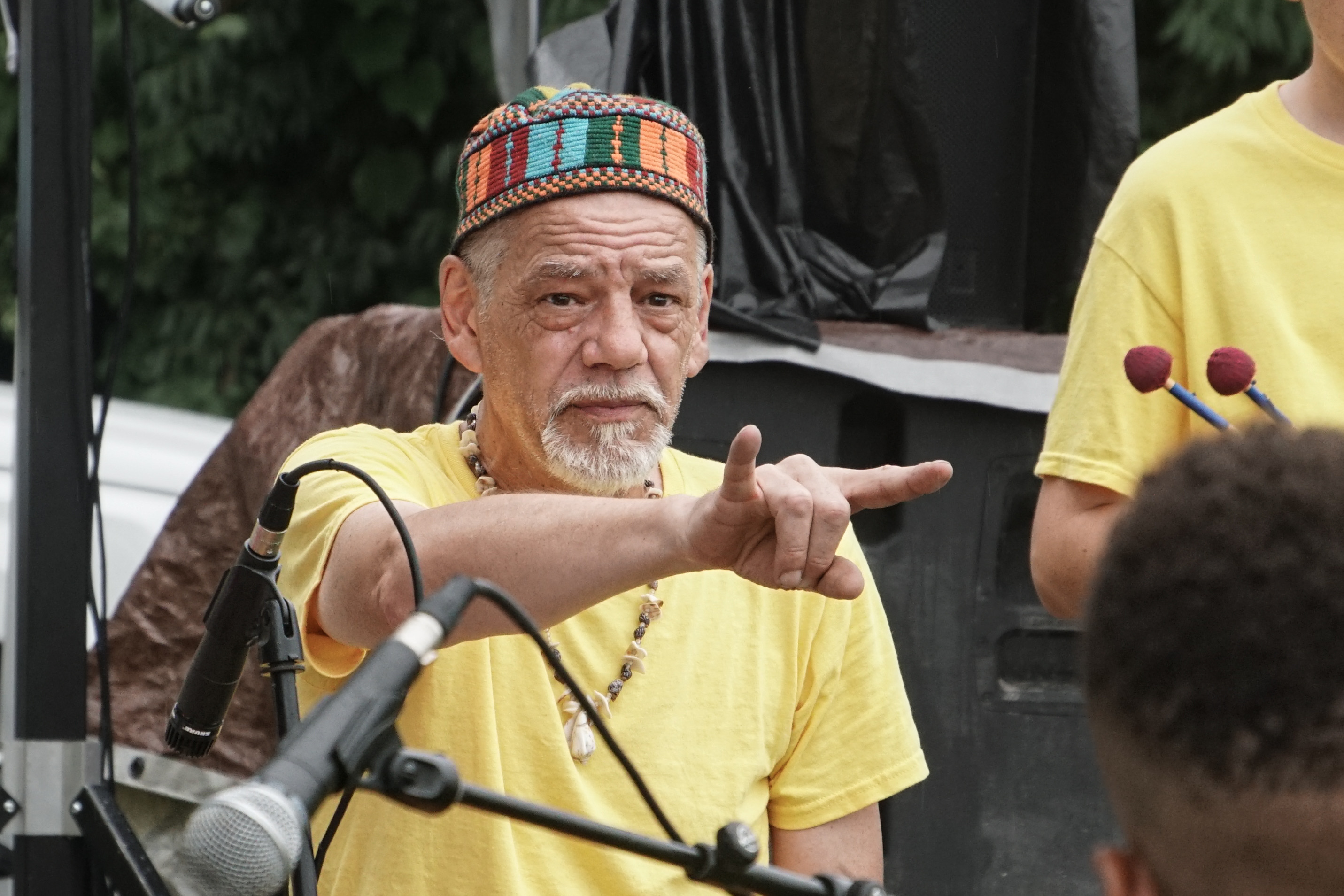
To get started, Stamatis looked at some examples of similar youth percussion organizations, including River City Drum Corps and Louisville Leopards.
“In my mind, I was thinking ‘youth percussion program.’ Simple enough,” she said. “But like everything in life, once you start doing it, you can’t replicate what other people have done. You have to do it your own way.”
Doing it her own way meant returning to her roots as a scholar and researching what elements are central to creating a successful youth program. “I didn’t want to reinvent the wheel,” she says. She found several things that scholars had identified as critical to the success of programs like the one she and Tripp envisioned.
The first was to have expert instructors. “Kids can spot that. You can’t fool them,” she notes. Having a highly sought-after working musician as the artistic director and instructor at M’Power meets that requirement and sets them apart from many other youth art organizations. M’Power also collaborates with other performers, like the professional dancers Wislin Pauleus and Willsmith ‘Smitty’ Jacques, originally from Haiti. This expertise sets a high bar for excellence in performance and is a key component of creating an atmosphere of mutual respect and pride.
Video by Nicole Rodriguez
Another important aspect of successful organizations is having ‘culminating events’ — the performances. “Everybody needs a game day. It doesn’t have to be competitive, but you need to have that culminating performance.” M’Power has performed 5 times over the last year. Finding a balance between being performance-focused while still having flexibility in other ways is a challenge. “How much emphasis do we put on performance? We don’t want it pulling us around by our nose,” Stamatis notes.
Equally important to creating a successful youth arts program is finding an inspiring place to meet. That has proved more of a challenge. M’Power currently gathers at the Lexington Friends Meeting House on Price Avenue, between Sixth Street and Delcamp Drive.
I asked Leslie about the desired outcomes of the organization. “Our tagline is ‘Empower youth, honor culture and build community.’ We want to build a place for belonging, teamwork, accountability, communication and focus — but we’re coming in through the side door. We don’t preach about those things.” She sees those things happening. So do the students.
I spoke with Ian Johnson, one of the first students to join M’Power. Ian is a 14-year-old ninth-grader at the STEAM Academy with a background in percussion. I asked Ian what he liked best about the program. For him, it was the culminating experiences, the concerts. “When we get to the grooving part of a concert, where everybody in the crowd is into it — that’s the best part for me. It gives me confidence and I start to show it.” I then asked him what he thought was the most important part of the experience. “The important part about the group for me is that we all come together, and it forms a big family around you.”
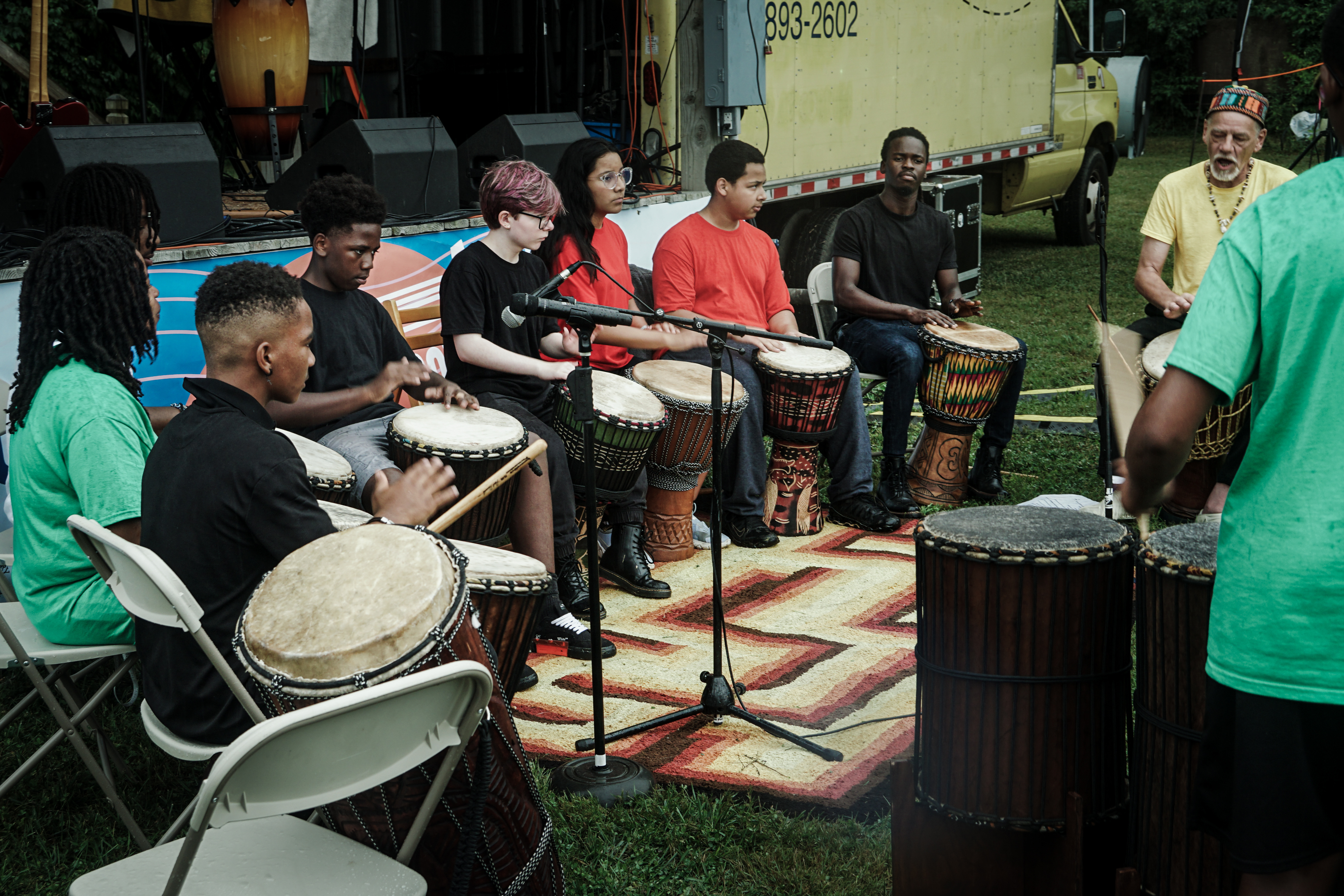
From an idea born in the first dark moments of the pandemic, when longstanding needs were more visible than ever, M’Power recently celebrated its first anniversary. To date, more than 30 students have participated in 5 performances, 4 drumming intensives, 4 in-school workshops, and hours of practice. The group is free to all participants, funded by donations and grants, including a ONELex grant and a Lex250 grant.
M’Power Rhythm can be contacted through their Facebook page, Facebook.com/MPower Rhythm. They will be performing with Lee Carroll’s C The Beat for Jazz on the Lawn at the Henry Clay Estate, 120 Sycamore Rd. in Lexington., 5:30 pm on Sunday, Sept.1, 2024.