


STUDIO VISIT: THE ART OF OBSERVATION
In a new show in Lexington, painter Kevin Neal Gardner looks hard at the world he’s traveled
By KEVIN NANCE
Contributing Writer/Photographer
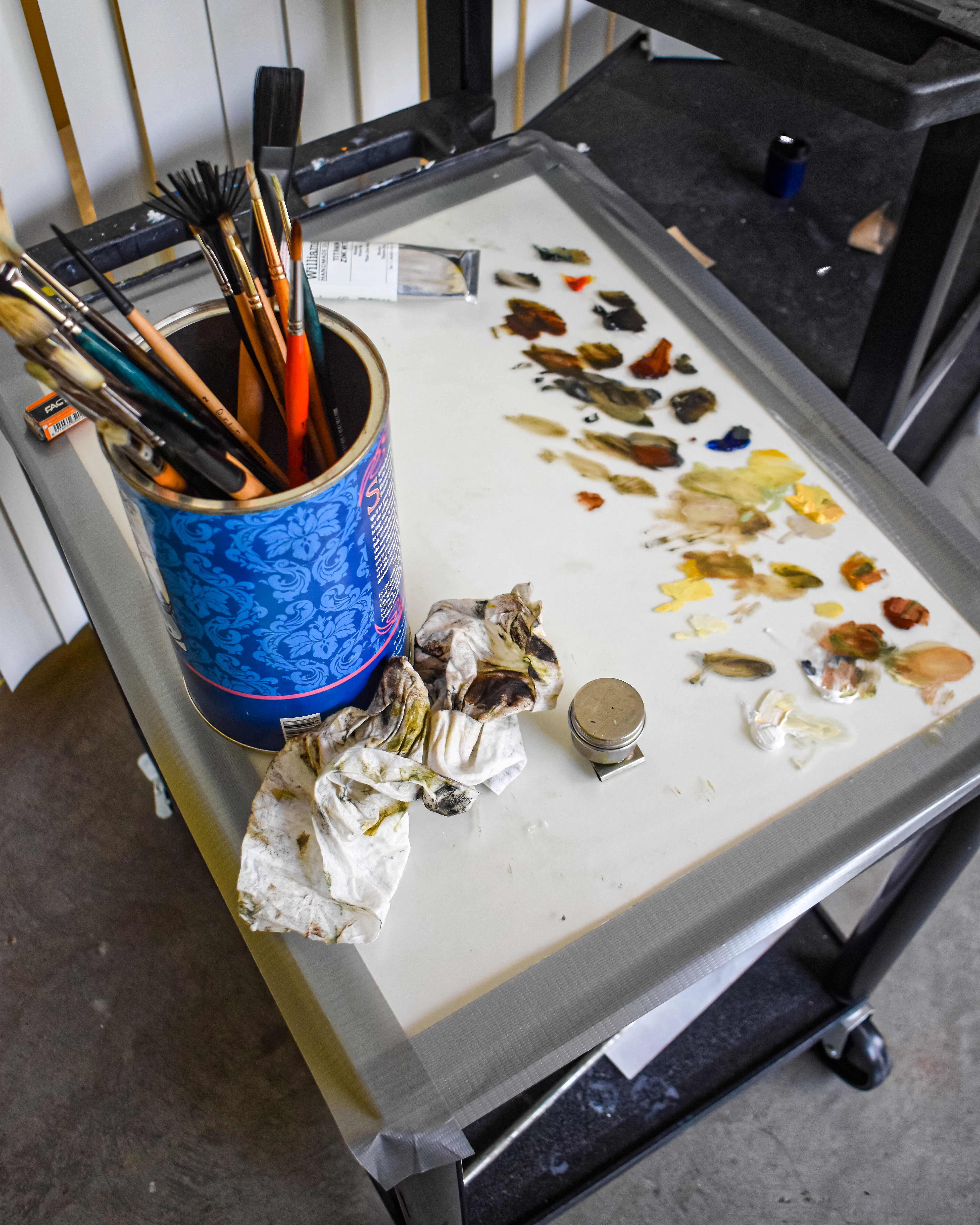
BEREA—You can learn a lot about artist and professor Kevin Neal Gardner just by sitting in his office at Berea College and doing what he always tells his students: Observe. The room is full of books and art, including a skull and casts of classical sculpture and busts that he draws and uses to teach drawing and painting. There are several examples of his own work here and there, including charcoal drawings on paper and a painting-in-progress of Virginia Woolf. “It’s going to be a gift for somebody,” Gardner says. “I’ve been spending forever on it.” And unlike many artists’ workspaces, which are often chaotically messy, everything here—as well as in his painting studio down the hall and his home studio a few blocks away—is immaculate, orderly, every object in its proper place. Tools and materials close to hand, light streaming in. There’s a meditative quality about the spaces he creates for himself, a calm attention to surfaces and what’s beneath them, and an awareness of the act of seeing as his mantra and his life’s work.
What Gardner sees, and how he sees it, is the subject of Otium: Summer Observations, an exhibit of his travel-related paintings and drawings opening Aug. 9 at the Pam Miller Downtown Art Center’s City Gallery. (The show also features three-dimensional art and crafts by basket designer Derek Downing and willow artist Justin Roberts.) In this case, the artist turns his powers of observation mostly on people and places in Europe, including Italy, Spain and Ireland, where he has often taught during the summers as part of the Kentucky Institute for International Studies (KIIS).
“The word otium refers to an idea that goes back to ancient Rome,” Gardner explains in an interview at his home and on the Berea campus. “It’s a notion of leisure and pleasure, often in the countryside, but it’s more than that. It’s about what we do with the time we control for ourselves.
He has used such times wisely, both in the moment and in retrospect. Inspired by his sketchbooks drawn on site, Gardner has created a series of sun-drenched, light-filled landscapes and portraits in watercolor and gouache, as well as oil paintings from photographs, featuring scenes from his downtime from teaching at several picturesque spots. The images exude serenity and the sensual pleasure of looking at things: a group of friends relaxing on a beach in Sitges, Spain; a young girl on a bicycle visiting a bucolic park with classical statuary overlooked by a magnificent arch in Barcelona; the view of a courtyard at a monastery in that city, framed by a lattice of columns; and the ruins of an ancient building on the island of Inishmore, Ireland, persisting next to Galway Bay in a shimmering blue mist.
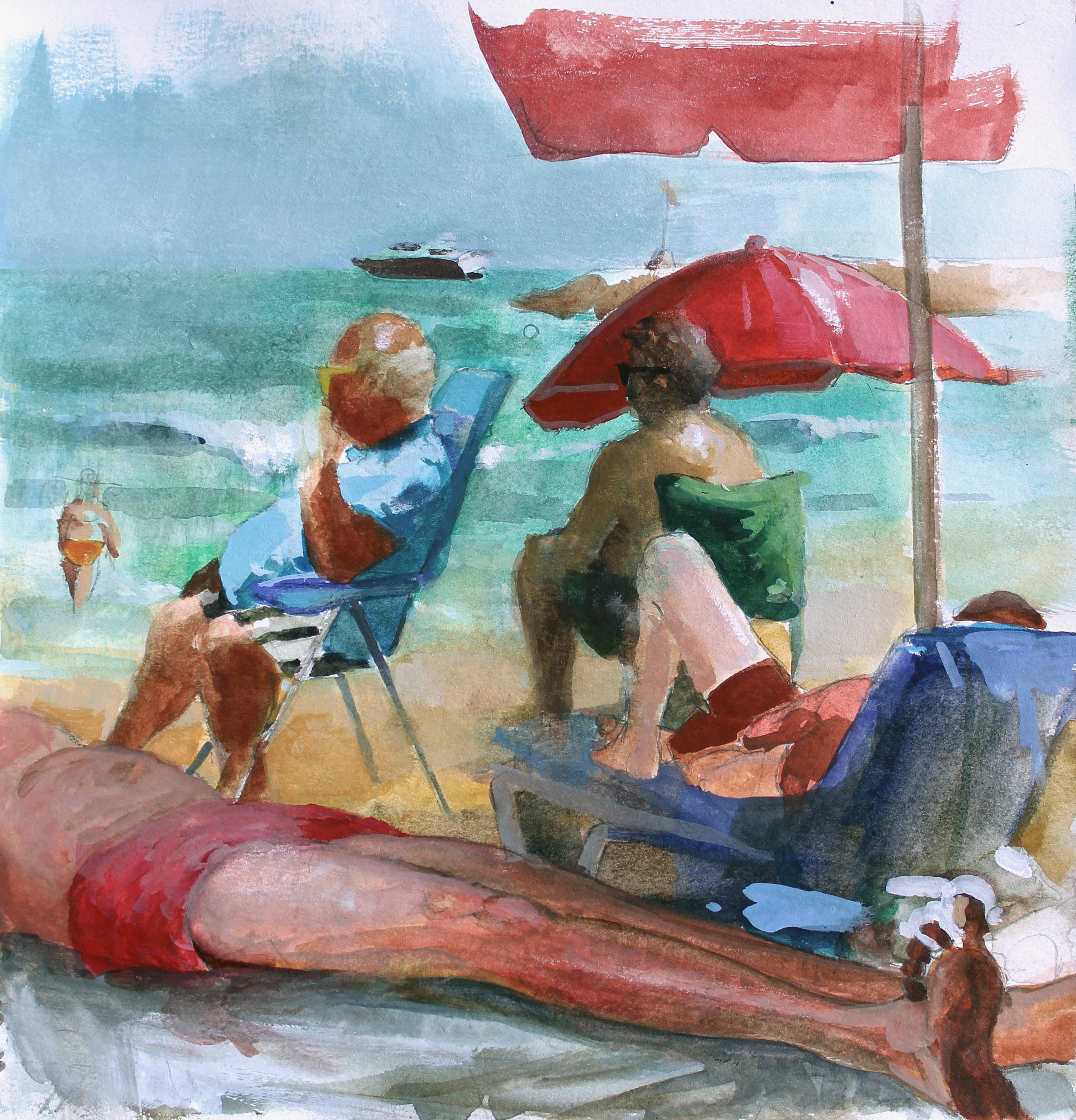
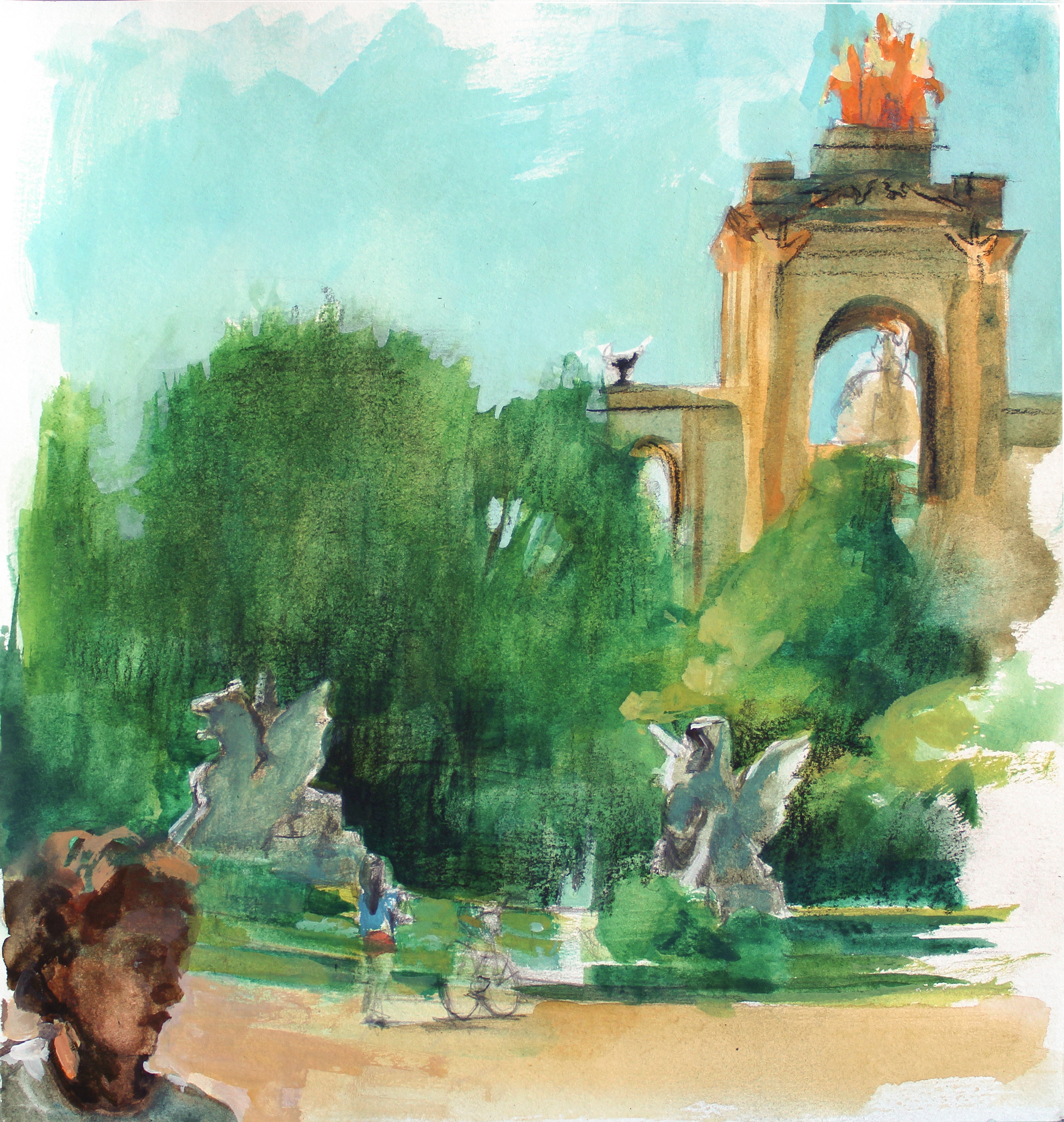
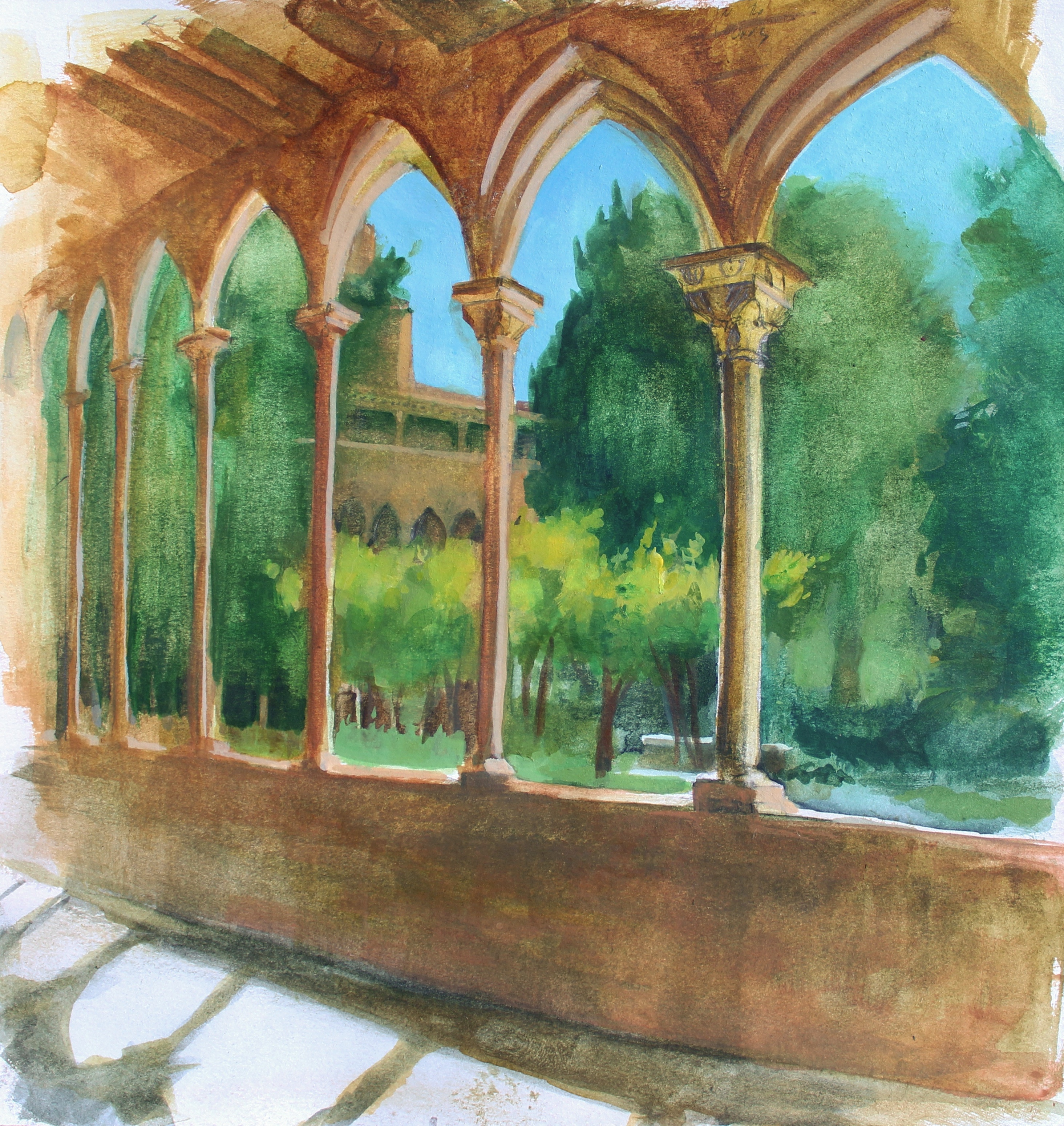
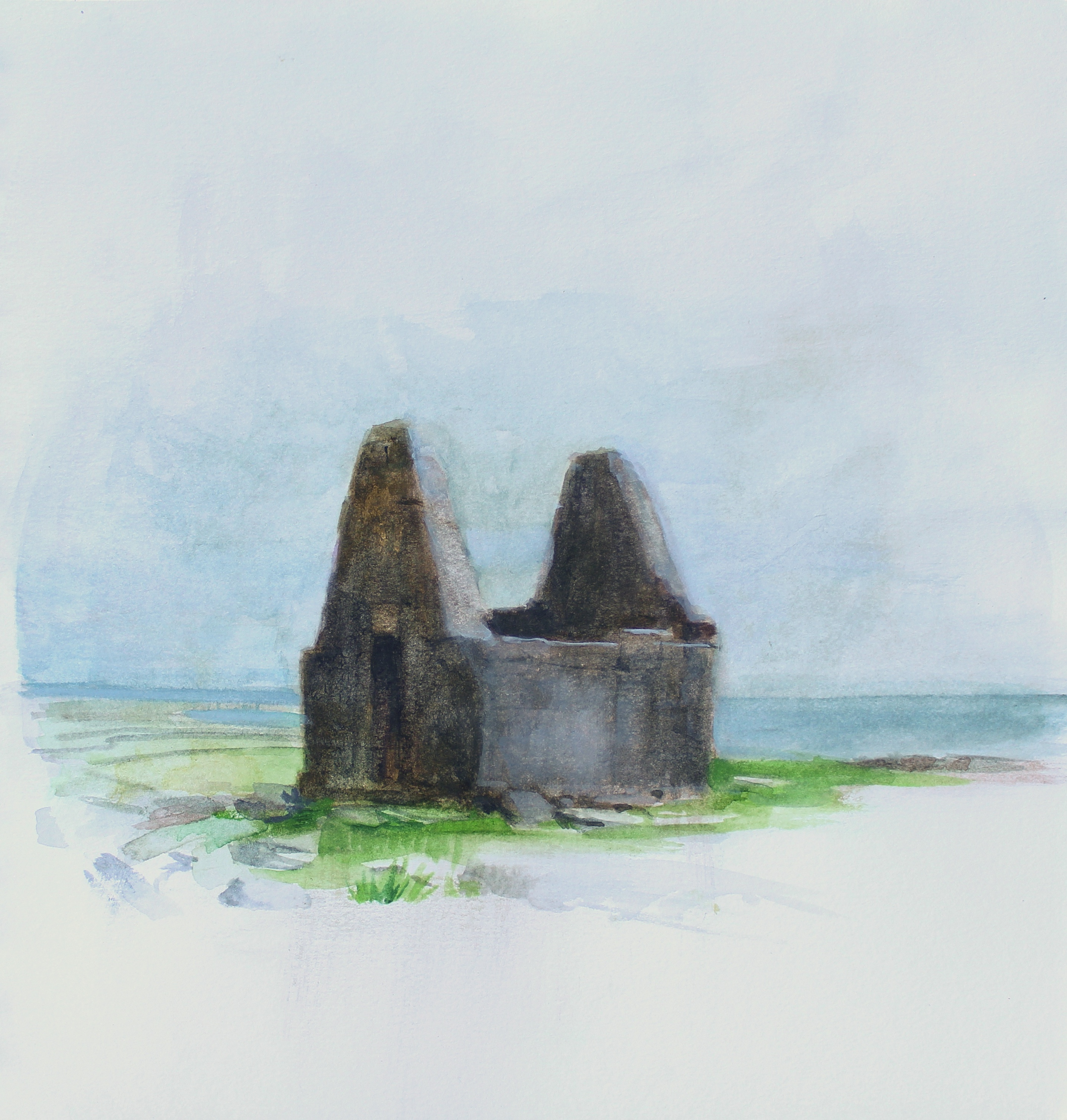
Behind all these pictures, you feel Gardner’s roving, probing eye.
“Kevin’s great gift is his deep observation, a key thing required to make art,” says Kentucky Poet Laureate Silas House, a longtime friend who has traveled with Gardner on several occasions including a three-week teaching trip to Ireland in 2013. “We designed a class about the art of observation, and our goal was to teach writers and painters, including each other, how to observe. Part of that was not just going to the touristy things—in fact avoiding the touristy things, understanding a place deeply, spending time with the land, talking to people who live there. Being a traveler, instead of a tourist, is a constant in his work, and certainly in his new show.”
Celeste Lewis, manager of the Downtown Arts Center, called the images in Otium both carefully observed and delightfully atmospheric. “They have a free, breezy, vacation-y look that’s perfect for a summer show in the gallery,” she says. “He’s capturing a vibe.”
Growing up in the small port town of Escanaba in Michigan’s Upper Peninsula, Gardner’s observational skills were shaped in part by being gay, which “made me mindful of how someone can feel disconnected while also being present,” he wrote in his artist statement. “A teacher once told me that it’s an either/or . . . that you could either be in an experience or be aware of it, be connected or distant, but not both simultaneously.”
Gardner began to explore that dichotomy as a late-blooming art student at St. John’s College in Annapolis, Md., and later at the Pennsylvania Academy of the Fine Arts (PAFA) in Philadelphia, where he received classical training in drawing and painting. (It was at PAFA, recently closed, where he developed a lifelong interest in the work of one of the school’s most famous former faculty members, Thomas Eakins, the great 19th-century realist painter whose “The Gross Clinic” [1875] and “The Swimming Hole” [1884-85] are touchstones of American art.) By the end of graduate school at Indiana University in Bloomington, where he received an MFA in Painting in 2010, Gardner had learned to exploit the tension between participating in an experience and observing it.
“Writing an artist statement is a bit of a challenge for me, because I see my art as a way of approaching different ideas and different reactions to what I’m seeing,” he says in his living room in Berea, his two cats Ajax and Hector playing at his feet. “Observation is the center of my work, but it includes a self-awareness of it in the very moment of observing. In observing, there is a separation from what or whom you are observing. There’s a distancing. But you’re still looking to engage, looking to be part of what you’re experiencing.”
It’s telling, maybe, that two charcoal drawings in progress on an easel in his private studio upstairs—where he maintains a 9-to-5 work schedule that stretches even longer during the intense phases he calls “campaigns”—are both focused on the act of seeing. One is a drawing of a cast of “The Dying Gaul,” an ancient Roman marble copy of an even more ancient Greek bronze sculpture. “I use the cast to teach drawing,” he explains, “but I also love to draw it myself.” The other is a self-portrait of the artist, the face soft, the black frames of his glasses almost harshly etched. The face’s right eye is piercing and solidly dark; the other is as yet arrestingly unformed, half-hidden behind a foggy lens that may or may not eventually become clear.
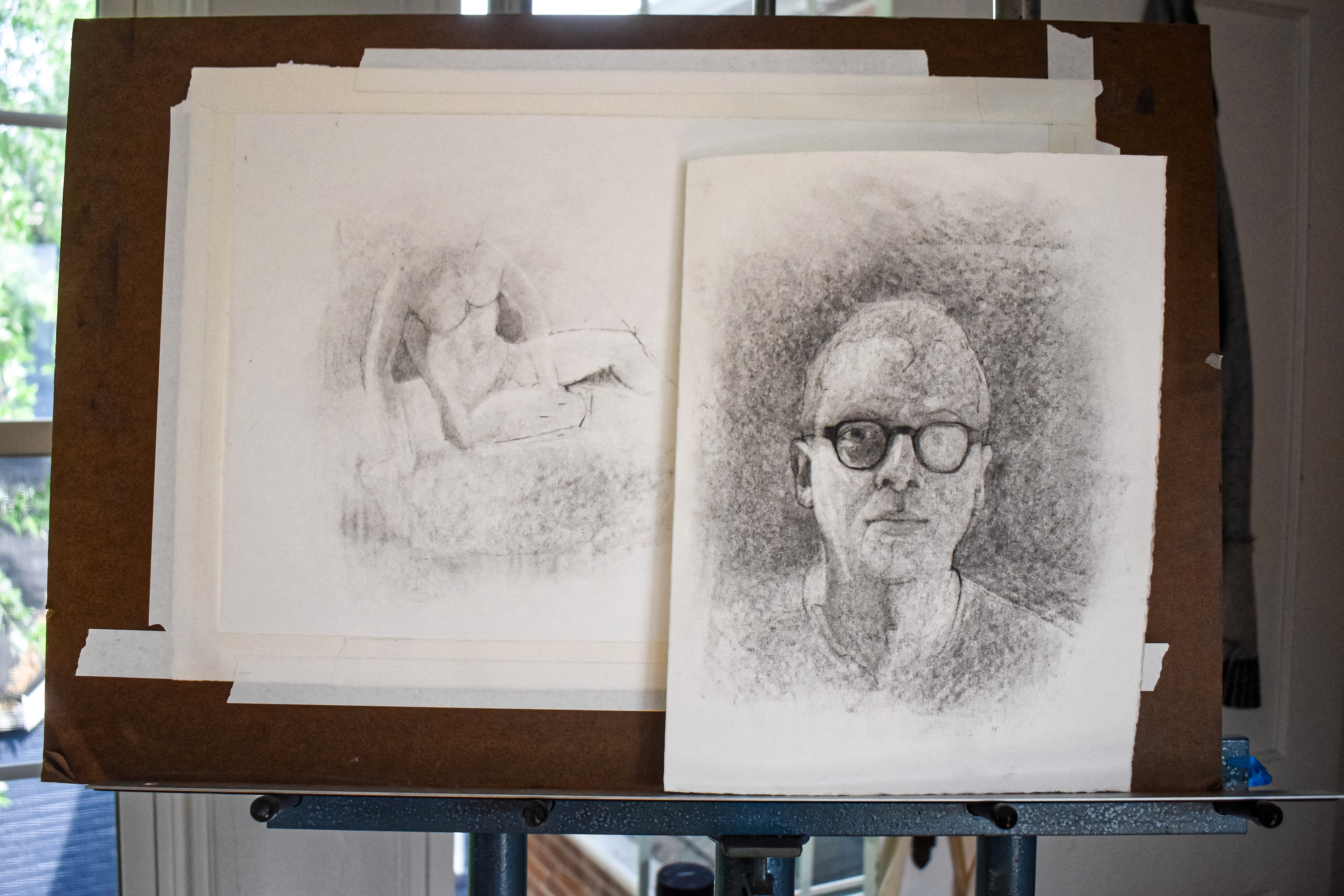
In some of Gardner’s paintings (digital versions of which are viewable on his website, (kevinnealgardner.com), the act of seeing is emphasized by various framing devices, such as windows and other architectural elements. Seen in the flesh, the pieces reveal themselves as framing devices in their own right, the brushstrokes undisguised, sections of blank white paper or canvas left in full view. “I don’t mask the visual process in the work,” he says. “Often, in fact, I’m striving for the moment in which process and illusion exist almost simultaneously. The painting itself is a kind of window.”
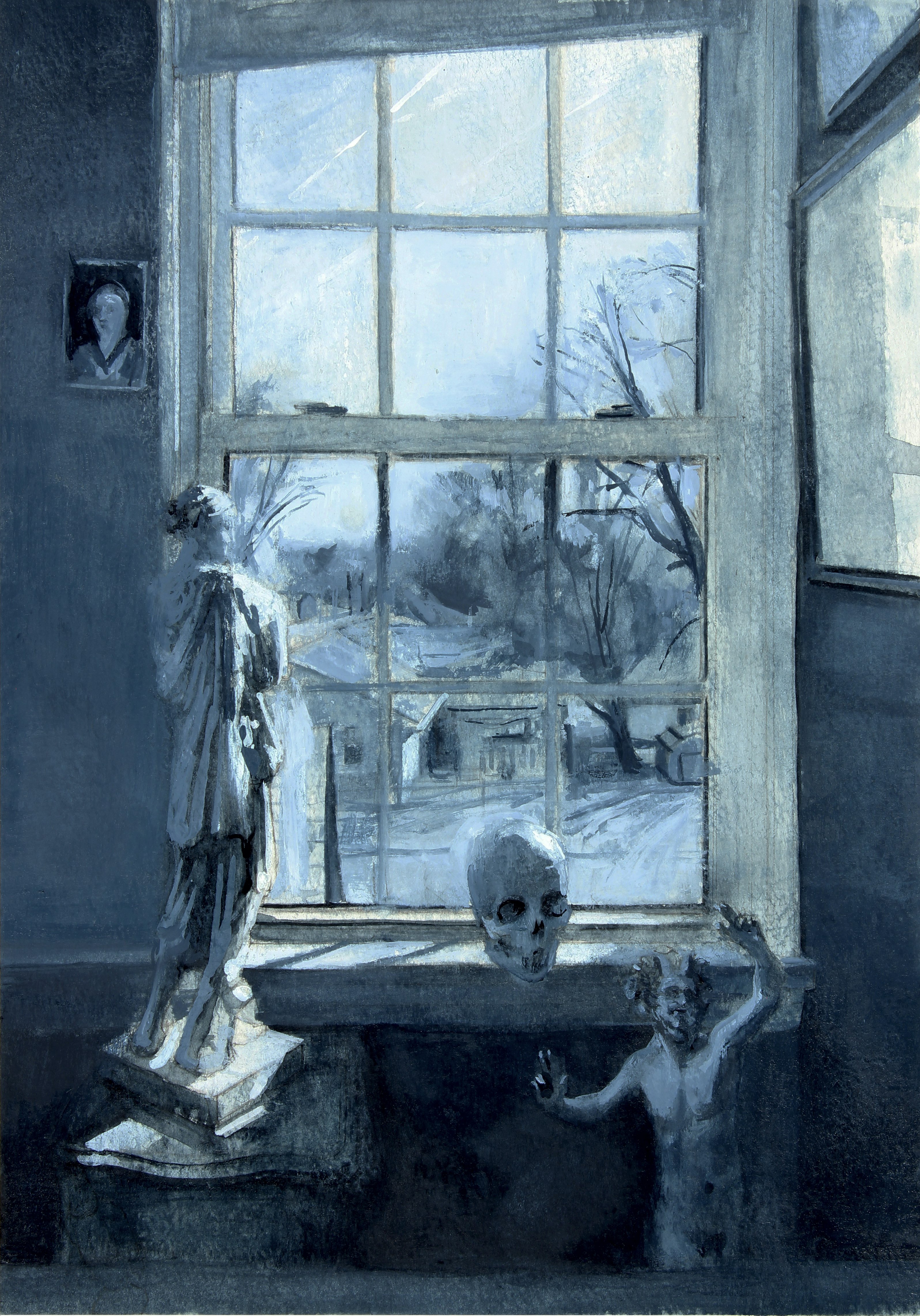
Although they aren’t part of the show at the Pam Miller, two other travel-related paintings by Gardner also exist at the intersection between his direct experiences and his observation of them.
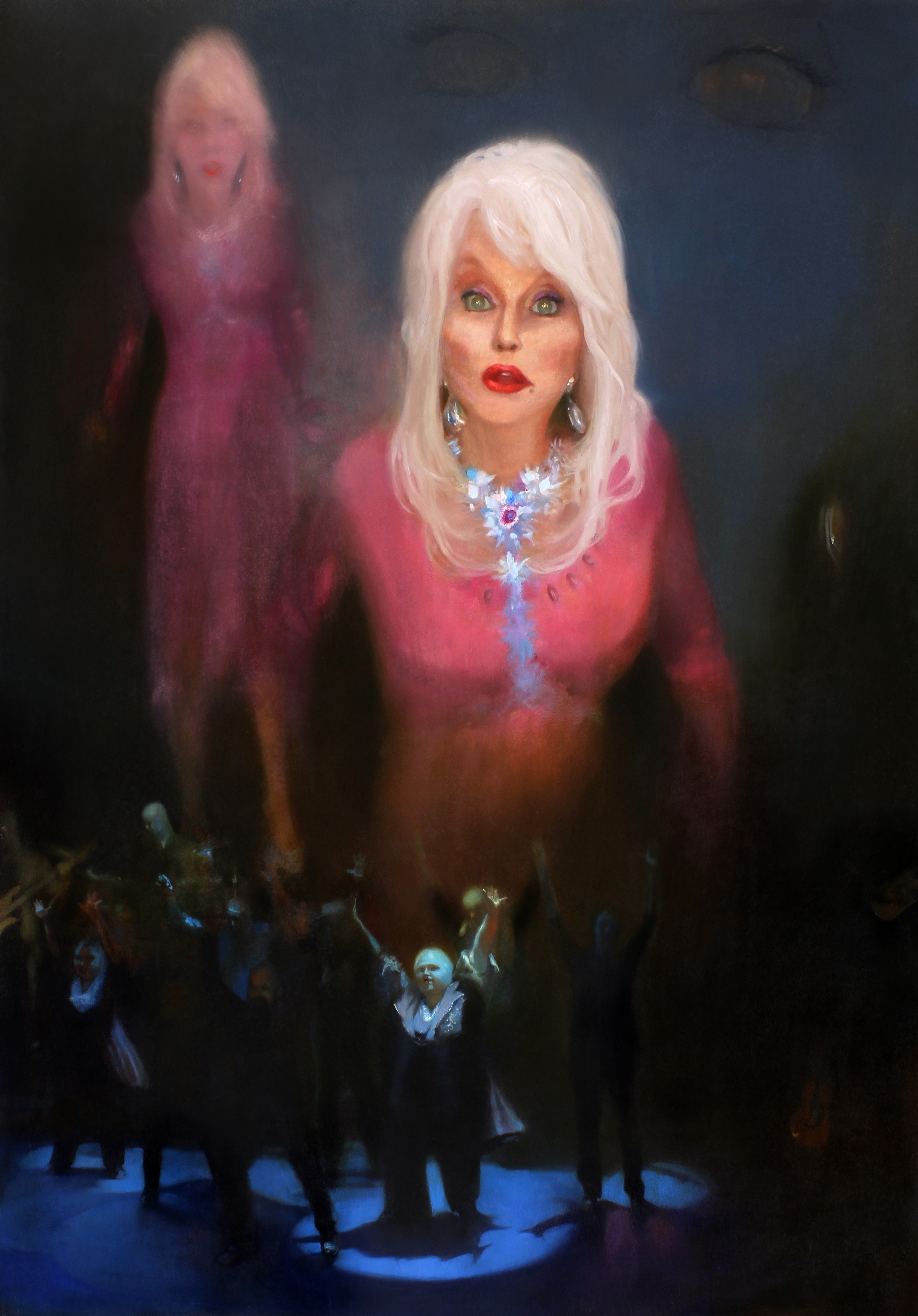
One is “The Apotheosis of Dolly” (2020), painted in response to a call by East Tennessee State University’s art department for an exhibition of works inspired by themes associated with country music legend Dolly Parton. The painting depicts a scene that followed a mishap at the Dollywood amusement park in which Gardner, his husband Tim Groninger, House and his husband Jason Kyle Howard had to be rescued from a “Daredevil Falls” log-flume car that began to fill with water.
When a subsequent rainstorm closed the park’s rides, the two couples headed indoors to see a live music concert performed by several of her relatives, including her niece, Jada Star. The live performers sang and interacted with a series of 50-foot holograms representing Dolly herself projected behind them. In the painting, Star stands at center stage with her arms raised, her head dramatically lit in a way that recalls the hero of “The Gross Clinic,” holding her own as the giant images of her famous aunt loom above her. “It was really surreal and beautiful and just weird,” House recalls. “And the painting is an example of why I love traveling with Kevin, because he’s so open-minded and open-hearted.” To Gardner the scene was irresistible. “I’m not an expert on Dolly Parton, but she’s spectacular and down-home, humble and grand all at the same time, which in most people would seem like contradictions. As soon as I saw this call for the Dolly show at ETSU, I knew I had to paint this painting.”
The other painting is “Scenes from Two Gay Bars” (2022), created in conjunction with House’s stage production “How to Be Beautiful,” a coming-of-age story set in Lexington’s Bar Complex featuring songs co-written and performed by Buffy Lawson and produced by Arts Connect. On the left of the painting is a pair of men talking (and perhaps kissing) in a dark corner of the bar; on the right is a young man having a glass of wine in Dublin under a portrait of gay icon Grace Jones. Both scenes were painted from direct observation.
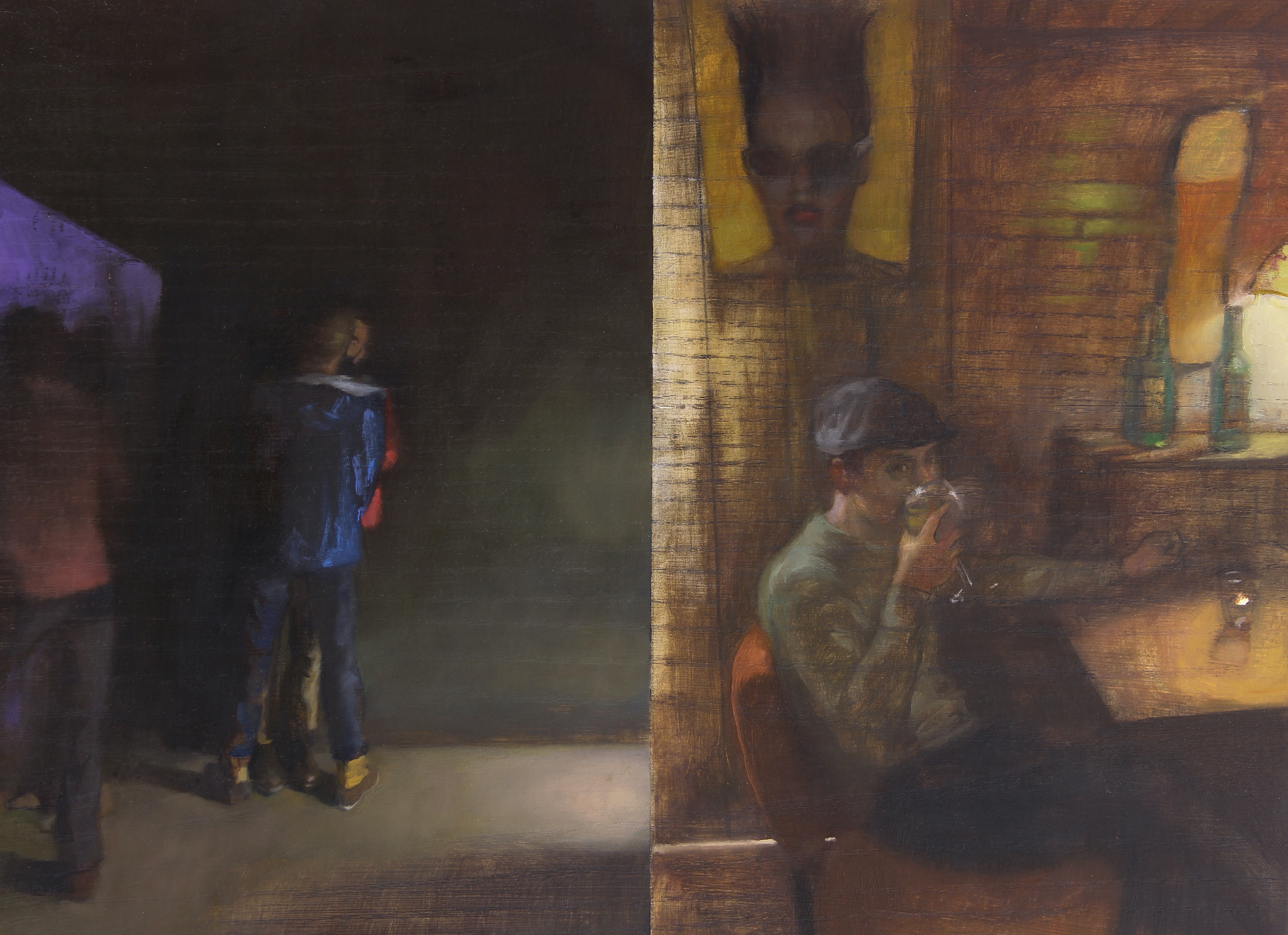
“Here I’m the observer and yet somewhat engaged in this place and with some separation from it,” Gardner says of the painting. “It tries to capture the particular and the universal—the universality of gay bars as safe places for gay people to be themselves. And I do think there’s something about a kind of gay bar that’s universal. You could go to the same one in Italy or London or Paris or Dublin.”
Or Lexington.
-0-
Pam Miller Downtown Arts Center, 141 E. Main Street, Lexington, KY, 40507 (859) 425-2562