

"I would like to see a greater, more robust way that the city and other agencies can support artists and organizations through funding. I think there's just no getting around that funding is critical.” — Heather Lyons
Q&A:
Lexington Arts & Cultural Affairs Director, Heather Lyons

Lexington Arts and Cultural Affairs Director Heather Lyons
[Editor's note: We're partnering with WEKU's Eastern Standard to bring you audio and transcripts of interviews about the arts in central and eastern Kentucky hosted by Undermain co-founder Art Shechet.]
Art Shechet: Welcome, Heather Lyons.
Heather Lyons: Thank you so much.
Art: We're glad to have you here. You're the director of arts and cultural affairs for the Lexington-Fayette Urban County Government. Tell our listeners what that job entails.
Heather: Well, honestly, it's evolved quite a bit. I've been there now five and a half years. When I first began, I worked primarily with local organizations and with city agencies in planning fairs and festivals and events that they wanted to have on city property. So all of that is ongoing work. But I've also had the opportunity now, as I was starting with the city, the city had just passed a Percent for Art resolution. So the next step to be able to activate that Percent for Art fund was to create a public art commission, create a public art master plan and then begin enacting that plan. That has been a large part of my work over these past several years.
In addition, one of my own priorities is to really look for opportunities for the city to support and engage artists and arts organizations in new ways that they haven't in the past. For instance, a new program that I established is called Art on the Town, and that provides free art carts for artists to utilize to sell their work. I'm really delighted with the way that program has grown. We have about 65 artists now engaged, and that's evolved into further professional development workshops for artists that have kind of sprung out of that program.
Then I'm involved in a number of different commissions, the Picnic with the Pops Commission, Sister Cities Commission, of course, the Public Art Commission and also the newer 250 Lex Commission preparing for the celebration of our city's anniversary. And then many other things. There's growing film production going on in Lexington. So I'm working with VisitLEX on new guidelines for that. It's just really constantly changing and evolving to support whatever needs are coming up.
Art: Sounds like a really full portfolio of activities and responsibilities. You mentioned Art on the Town. Maybe you could tell us a little bit about where people can find these art carts, how they encounter them.
Heather: Mm-hmm. Well, we have partnered with a couple of organizations, Farmer's Market, and also Thursday Night Live. Those are weekly events where the art carts and artists can participate. We also set up our own monthly event called Art on the Town in Tandy Park, and that occurs on the third Friday of every month between April and September. That is an opportunity where we can take over all of Tandy Park and not only support the visual artists and craftspeople and also authors who are utilizing those carts, but we're also hiring musicians that perform at each of those events as well. Then they're also out and about at every city downtown festival, Fourth of July, Thriller Parade, the Roots & Heritage Festival. So we're trying to provide as many opportunities as possible for them to get the carts out.
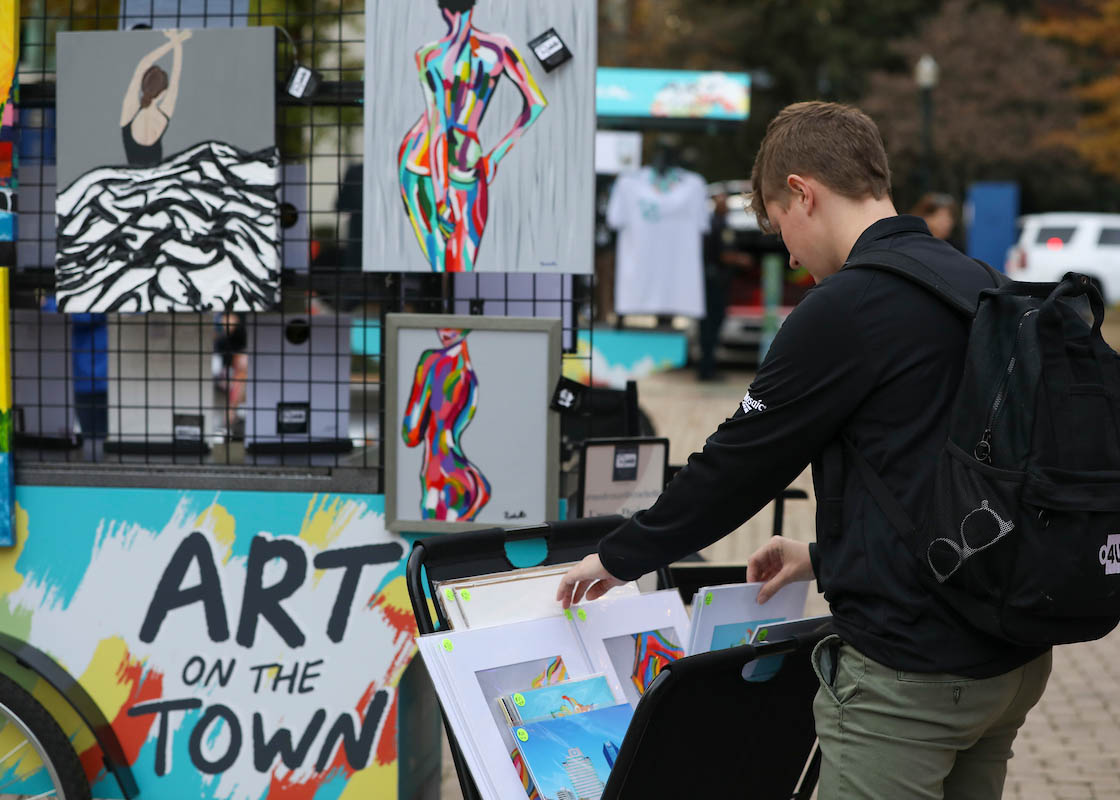
Art on the Town in Tandy Park
Art: Coming out of the lockdown years of the pandemic, there were lots of concerns about the impact of those difficult years on Lexington's arts and culture scene. What's your assessment of how arts and culture emerged from those years?
Heather: That's a great question. I think we are still seeing a really significant and difficult impact on our arts organizations and artists. Those years when our arts facilities had to close their doors and weren't able to generate revenue, artists weren't able to exhibit their work, it's had a lasting impact. Some of those organizations have not yet been able to get back up to the staffing levels they had had before. People have been slow to return to ticket purchasing. We've seen just differences in the way that people are seeking out events. I feel like this spring and summer, we're starting to get a little more out of that, but it wasn't immediate for sure. Absolutely, the organizations are all looking for additional support, especially for operating needs.
Art: What can the everyday citizen do to help with that?
Heather: Oh, well, support them in every way by attending their events. Of course, you can always make direct donations to those organizations that you feel are really doing the work that you're interested in. But buy a ticket. Buy a ticket for a friend. Attend their events. Share those events with your friends. Social media has a lot of direct impact and opportunities to let people know about events, and it costs you nothing to share or like an event that someone is trying to promote.
I think it's also important to contact your city council members and let them know that if there are particular organizations or artists or work that you see being done in the community, that they're aware of it. Because all of that, it's so important for the city to know and be aware of how they can support artists and organizations.


From Arts Connect's “Reimagine” project: (Top) Second grader Savannah’s drawing. (Bottom) "Miss Bre Goes to Hollywood.” Yvette Stephens Crossing
Art: Well, taking the big picture view of things, what do you see as the strengths of Lexington's arts and culture scene right now?
Heather: Well, we have a tremendous community of artists. I have long felt that individual artists are really the backbone of everything that happens. Our arts organizations depend on those individual artists. The Philharmonic, every one of those musicians is an individual artist as well that's not only involved in the Philharmonic but is teaching lessons. They're working in other kinds of music combos. Visual artists, of course, are working within organizations, but also creating their own individual work. So I think it's really critical first that we make sure that we're supporting artists, we're enabling them to stay in Lexington and creating as many opportunities as possible for them to do their work and to remain here.
Art: And are there any like specific areas of weakness that stand out to you that you think we can strengthen over the next few years?
Heather: Well, I would like to see a greater, more robust way that the city and other agencies can support artists and organizations through funding. I think there's just no getting around that funding is critical. Organizations cannot operate without the money. They can't have new programs unless they have staff support to create those programs. For those organizations that have facilities, they need operating support to maintain those facilities.
So I think it is important and I think there are opportunities to perhaps look at some other cities, other communities who have looked at some new ways of providing funding or of managing those funds that perhaps Lexington could consider.
Art: Such as?
Heather: Well, such as a variety of cities that have departments for the arts and funding opportunities within their city government. Certainly, that is a model that I believe more cities are involved in. Of course, anything we can do to just increase the level. Since I've been with the city, I have participated with a couple of partnerships in bringing in National Endowment for the Arts grants. We had civic artists involved working with CivicLex, which was a really wonderful program, very new for the city. Those are kinds of things that I think I'd like to see us continue to do and to do with additional partners in the community.

Kentucky Poet Laureate and novelist Silas House attends a script reading for a film adaptation by Tim Kirkman of House's 2018 novel, Southernmost. (Photo by Kevin Nance)
Art: You mentioned earlier about the upcoming celebration of the 250th year of Lexington's founding, which will be in 2025.
Heather: Uh-huh.
Art: What is the plan for that celebration?
Heather: Well, first off, the mayor created a 250 Lex Commission. There are, I believe, 25 individuals from the community, different areas of the city involved in establishing what we wanted to do and to celebrate. That's been one sort of arm of planning for that anniversary year. I'm on that commission and am a co-chair of the programming committee.
As part of that, we really wanted to ensure that local organizations had an opportunity and support to create new work or to enhance the work that they may already be doing to expand it for that anniversary year. So we established a grant program for organizations or artists, not just arts but also arts, cultural, historical organizations to apply to that.
Even prior to that, the mayor had already established that she wanted significant art to be created and presented in that anniversary year. There are two initiatives that I'm involved in working on. One is a public art work that will be installed on Main Street, and then the other is commissioning an orchestral work for the Lexington Philharmonic with Shawn Okpebholo, a Lexington native and now internationally acclaimed composer. He'll be creating a work that we'll present in a free concert to the city in September of 2025.
Art: Can we expect to see events and different kinds of programming throughout the year of 2025?
Heather: Absolutely. They're going to be announcing in October somewhat of the calendar for the year. Just within the grants themselves that we awarded, there were 18 organizations and artists who are going to be creating and presenting new work, but every single month is going to have many, many different events and activities and initiatives that are taking place as part of that celebration.
Another work kind of focus area that I'm involved in is a community group that is focusing on Lexington's literary legacy. A lot of people may not be aware, but the first newspaper, "West of the Alleghenies," was published here in Lexington. One of the first printing presses was here in Lexington. Of the past nine Kentucky Poet Laureates, seven of them are from or have been in Lexington for a very long time. So it reaches into many, into journalism, into fiction, into poetry. But the full month of April, which is National Poetry Month, we're going to be devoting to celebrating Lexington's writers, poets, authors. That's going to have many, many events and elements within it.
Art: Will all these events and programming events and materials be free to the public?
Heather: A great number of them will. That was really one of the main initiatives or interests was that as much of this programming as possible would be free or very low cost. Even events typically that may be taking place at venues that are expensive and that would require higher ticket prices, a lot of the funding is going toward them being able to subsidize those tickets, to reduce the ticket prices, to provide “pay what you can” performances, and as many of them as can be free as possible.
Art: You mentioned about a major public art piece that will be installed on Main Street. Please tell us more about that.
Heather: Okay. That was an interest of the mayor's initially, and she set aside specific funding to support that in 2023. She was really looking ahead two years to be able to create something. We first put together a steering committee of Lexington artists and design professionals, architects to really get together first to decide what is this going to be? What do we even want to ask artists to respond to?
And so a survey was done, a lot of reaching out to the community, but that steering committee determined to create first an RFQ, just a request for qualifications, where we would be asking artists to respond. They determined to set it up as a national call. We put that call onto CaFÉ which is a call for entries, it's one of the major ways, but also posted it on a number of other calls like CODAworx and that sort of thing, and then promoted it a lot within the state with emails and other artist services.
Then we established a separate selection committee. So we received about 177 applications, and then that selection committee reviewed all of them and came up with three finalists. Those three finalists were then asked to create site-specific proposals and then they reviewed. Those artists came into Lexington, presented those proposals in person, and then one artist, Benjamin Ball of Ball-Nogues Studio was selected.
Art: Can people access images of this sculpture that will be installed on Main Street?
Heather: Not yet. This is when he submitted, when all of the artists submitted their proposals, their working concepts. So right now it's in a continuing design and development phase. Our next review, the selection committee's next review is going to be at the end of September. And then we'll see what else needs to evolve, but we'll be releasing designs when we have a finished approved design.
With every public art project, they're all so unique because of the determination of the site, what you're hoping to achieve with that work, what has to be done to prepare for that work. Anyway, so there's a lot of moving parts where you have to go through a geotech survey that the artist is coordinating to find out what lies below the surface because they can't determine how they're going to install something unless they know. Is it rubble? Is it solid dirt? Is it solid rock or whatever? So a lot of technical concerns that have to be dealt with. But then absolutely, when we have a finished design, I'm very excited to be able to present that to the community.
Art: And that is often perilous territory because everybody has an opinion about public arts.
Heather: Of course.
Art: And one of the things that you do is you sit on the Public Arts Commission. Why don't you tell us about the Public Arts Commission and what its mission is and how it goes about its business?
Heather: Okay. The Public Art Commission has been a really interesting and, as I mentioned, evolving entity for the city. In 2002 it was first created. However, there was no funding for that Public Art Commission to utilize. So it took all the way up until 2018 for the council to then approve a resolution, the Percent for Art Resolution, that then gave a Public Art Commission some funding to utilize.
Since that time, as I mentioned, we created a Public Art Master Plan. That was a result of…we looked at many, many master plans from across the country, really sort of picking and choosing, taking what we felt was the best. And that is available online for people to look at. I think it's a very readable document, but it really established a mission and a vision and goals. A lot of those goals include working with the local community to encourage them to submit applications and ideas. We don't want to just be the sort of governing entity that makes all of the decisions and also is the only commissioning entity. So I've been very excited that now we're starting to see community applications coming to us and those own initiatives. That's what I want to see
more of.
But the Public Art Commission is a reviewing process for any public art that's going to be installed on city-owned property. We only review city owned. Those public art funds, some of
the goals that were established by the commission were to first try to support funding art in districts in Lexington where there isn't currently much or even any public art. So we identified those districts. We have a public art map on our website which can be viewed with images and information about the artists and the work. It's very easy to see. Of course, downtown area is one of the most significant areas where you will find public art, but we've been trying to initiate projects that will take place in other areas. So we have the Public Art Commission which commissions work and then also approves other community projects.
Art: How does the Public Art Commission get its money to pay for commission work?
Heather: The Percent for Art Fund is a percent of capital funds that come into the city. So any capital projects, buildings that are built, renovations of buildings, even streets and roads repair and purchases of large vehicles like fire trucks, those are all considered capital expenses. So 1% of those funds that are appropriated in the budget each year is then set aside for public art.
One of the distinctions within that resolution is that any capital project of $10 million or more requires that that 1% be spent at that exact property. For instance, the Lexington Detention Center had a $10 million roof. It's a huge facility. Because of that $10 million project, we're doing a public art project on the grounds of the detention center. That was the first work commissioned by the Public Art Commission, and it will be the first one to be completed. We hope to have it installed late this fall.
Art: This could be a very significant amount of money annually that goes to commissioned public works.
Heather: Yes. I mean, right now we're looking at about — again, it will vary from year to year — but about $300,000 a year, give or take, that we're able to dedicate to public art. Just to give you an idea of some of the projects, I mean, it's only been about a year and a half now that we've been able to start doing that. But for instance, we contributed to the John Henry sculpture, relocating it from the grounds of Ashland to now, I think, an absolutely stunning location in front of Central Bank Center.
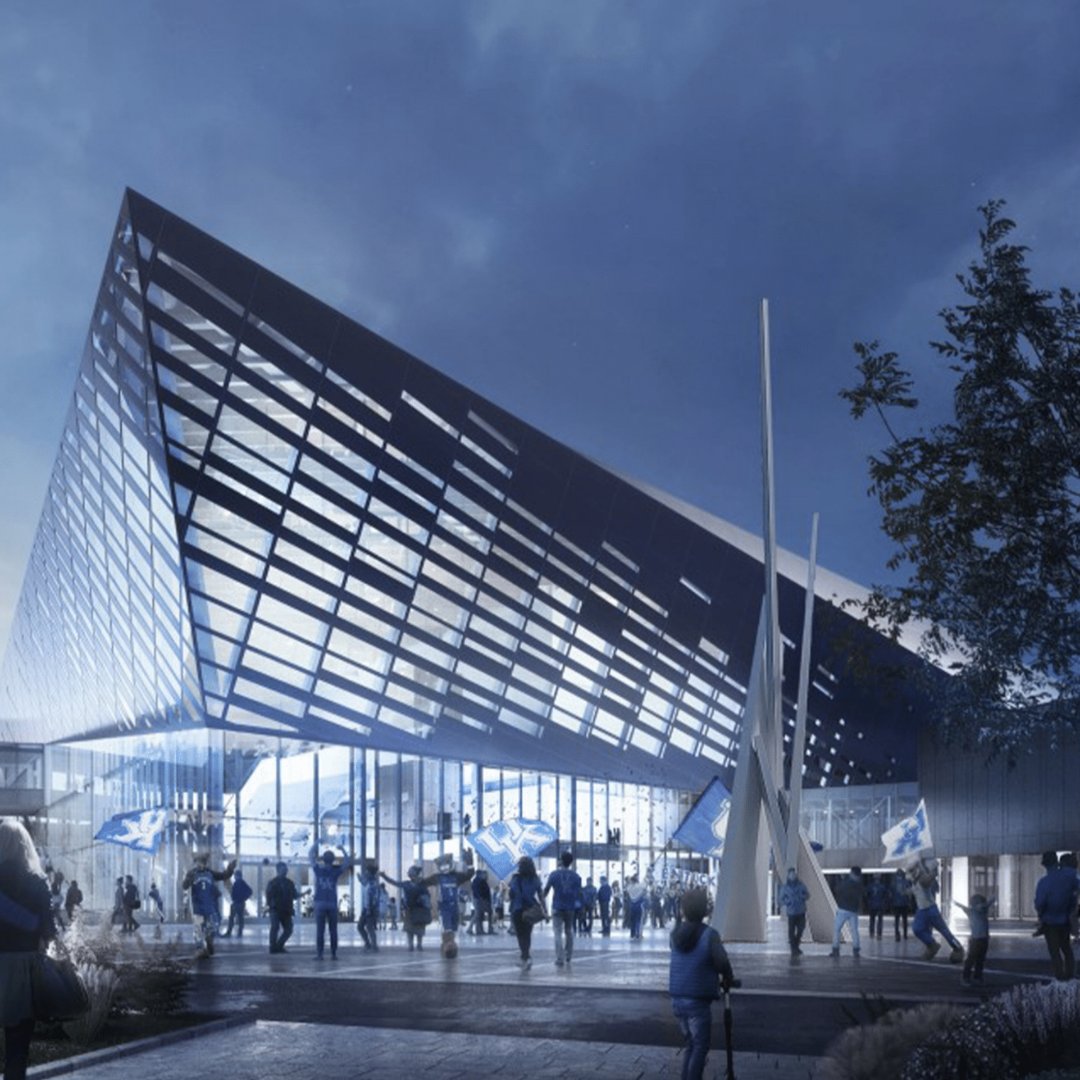
The John Henry sculpture “Publisher” at Central Bank Center (Rendering)
Art: It's really great there.
Heather: It's a perfect location. We were able to purchase LaVon Williams' local treasure, I think, incredible local artist. He created — actually, there are six carved wooden panels, three feet by six feet, that tell the story of Isaac Murphy. I'm actually working right now with LaVon because we're going to be creating a way to install those in the lobby of the government center. Those are really stunning.
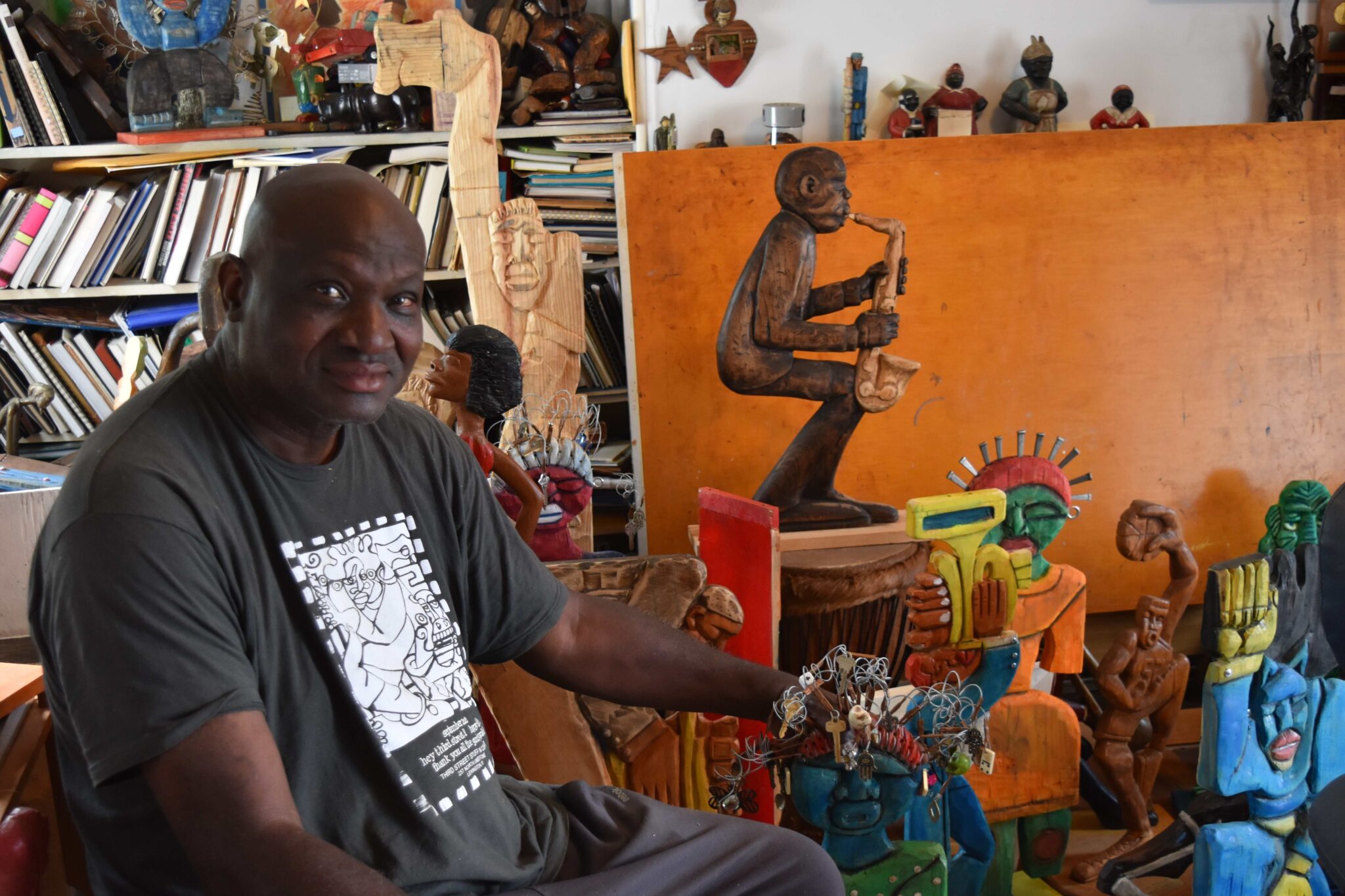
Williams in his studio, surrounded by his original art (Photo: Kim Kobersmith)
We're working on the Lexington Detention Project, which Louisville artist Dave Caudill was selected to do that sculptural project. We also have a Gainesway Park project. We have not selected an artist, but we have dedicated funds to do that. Then we've also approved funding to support the underground Lexington Freedom Train project that will be installed on 4th and Limestone. We funded a metaphor mural that the neighborhood association there wanted to put on their community center to celebrate their upcoming 75th anniversary of that neighborhood. We just supported Lexington Senior Center; a local artist, Don Ament, who created 12 stunning, large, very large format photographs that represent each season of the year that are being installed in the community center. (See slideshow below.)

And then we're doing utility boxes. So we have six ready to be installed, six new local artists whose work, and then another six in line for some that I hope to get installed in April.
Art: People are really going to be able to see the impact, big and small, that these installations and works have on our everyday life and the quality of life here in Lexington.
Heather: Absolutely.
Art: Thank you for all you do for the arts and culture scene here in Lexington and all the hard work with your busy portfolio.
Heather: Thank you so much. I appreciate it.
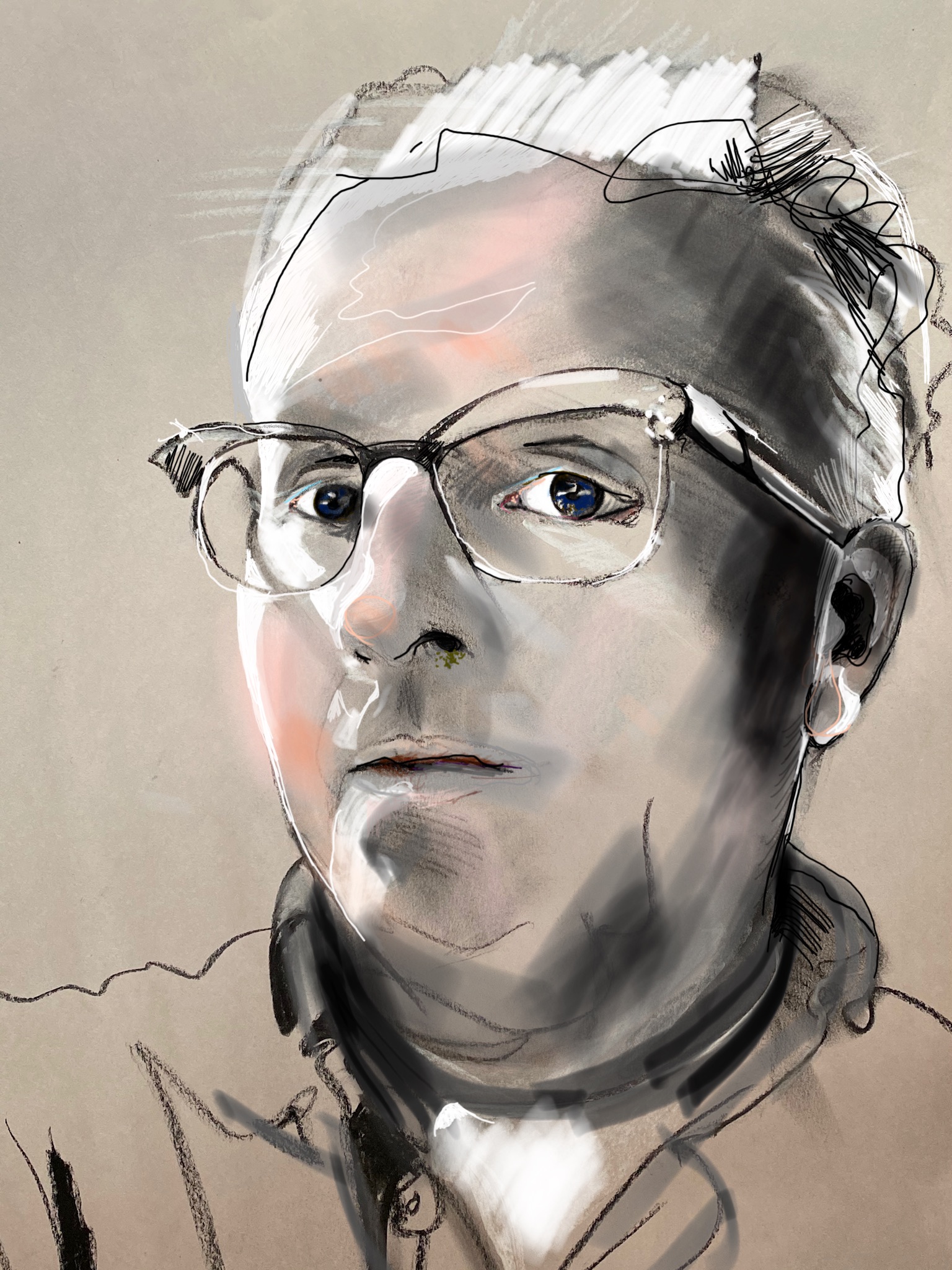
Undermain/Eastern Standard Contributing Interviewer, Art Shechet (Image by Christine Huskisson)